
Why Spain Deserves a Wonders List of Its Own
Whenever we’re asked what is our favorite place we’ve visited, the answer is always Spain. There are many reasons, including the friendliness of the people, the food, the natural beauty, and the cafe culture of the cities. But when I try to rank Spain’s attractions, I always come back to its man-made wonders, especially these seven. Spain need take second place to no country when it comes to a list of wonders of the world.
For a broader overview of where to go, what to eat, and how to plan your route through Spain, start with our Spain travel guide.
I’m putting these best places to visit in Spain in the order in which I think of them, but, honestly, the order is arbitrary. All of them are amazing, and perhaps except for the Alhambra of Granada and the Sagrada Familia in Barcelona, they are somewhat interchangeable with the additional wonders I list below. Some of the descriptions below include links to more expansive posts about the individual wonders of Spain. I encourage you to follow them for more photos and discussion.
My best advice is to go see all these wonders of Spain, and then decide for yourself. To see all seven properly, you would need at least three weeks in Spain. Think of these touchstones as anchors for a broader itinerary: base yourself in Granada for the Alhambra, Barcelona for the Sagrada Família, Córdoba for the Mezquita, and so on. It will take a lot of traveling around Spain, but you could certainly spend your time in much worse pursuits.
The Alhambra in Granada
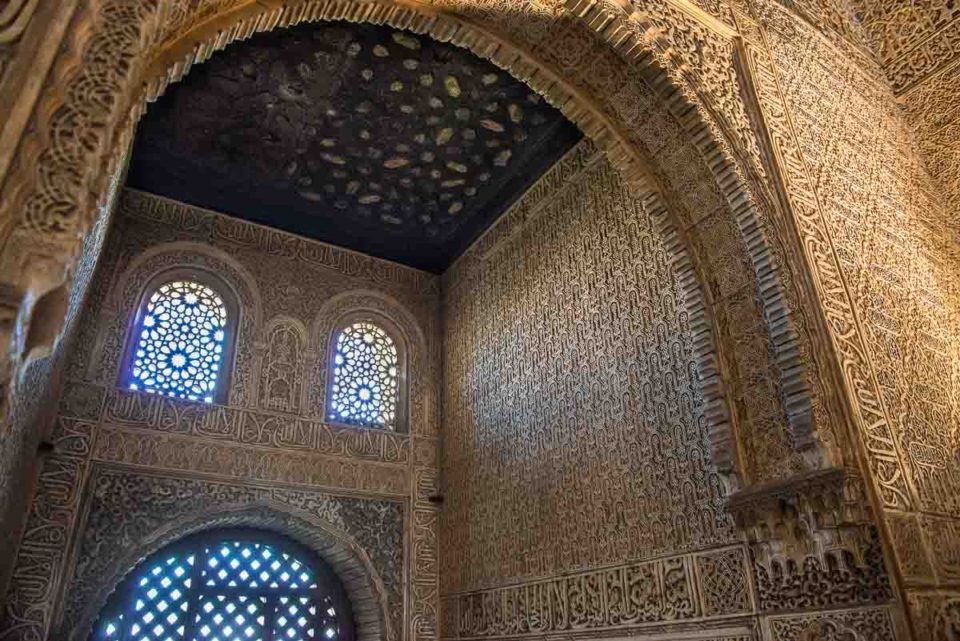
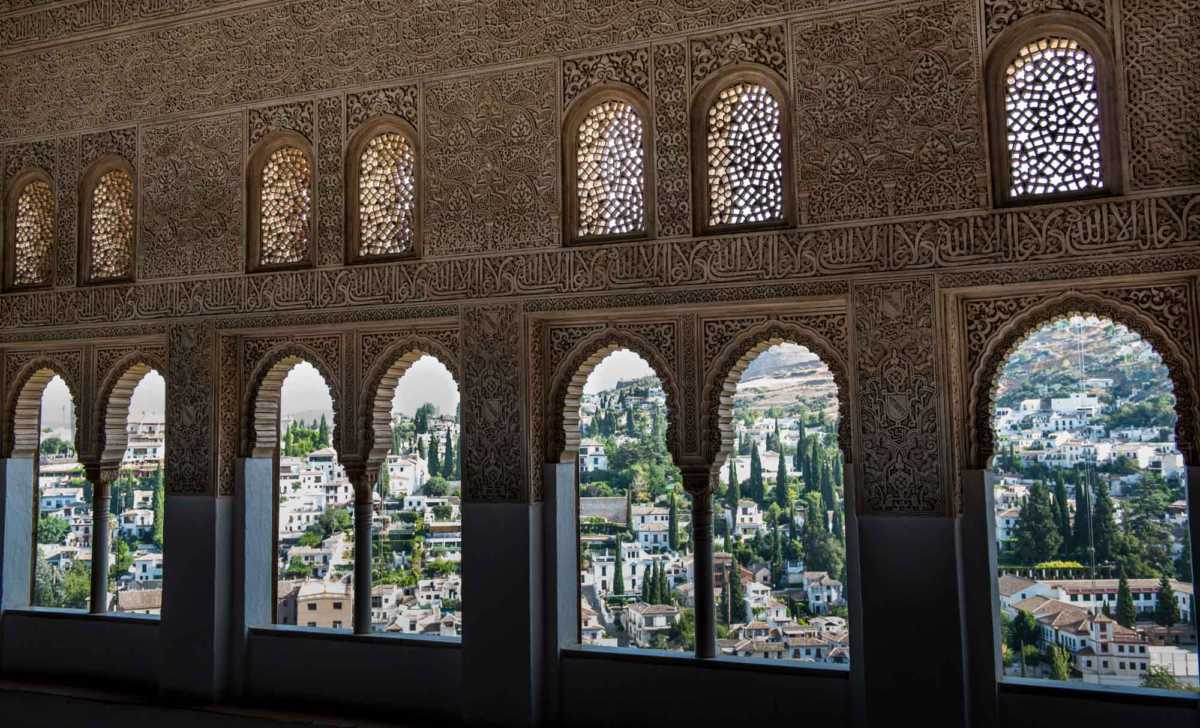
The Alhambra, the palace of the Moorish kings of Granada, is difficult to adequately describe. Perhaps the inscription above the main gate the grounds serves best. In a location where beggars used to congregate to solicit the passers-by an ancient inscription says, “Give him alms, woman, for there is no pain so terrible in life as to be blind in Granada.” I couldn’t improve on that.
The problem with photographing the Alhambra is imagining the view and thinking “Where do I start?” And, then, “Where do I stop?”
It’s so full of intricate and beautiful decoration that there’s really no end to it, except that it’s nearly impossible to get the angles you’d really like to shoot because of all the tourists. So you usually end up aiming up so as to avoid heads, and you miss the sort of expansive horizontal views that must have greeted the original residents every day before the advent of tour buses.
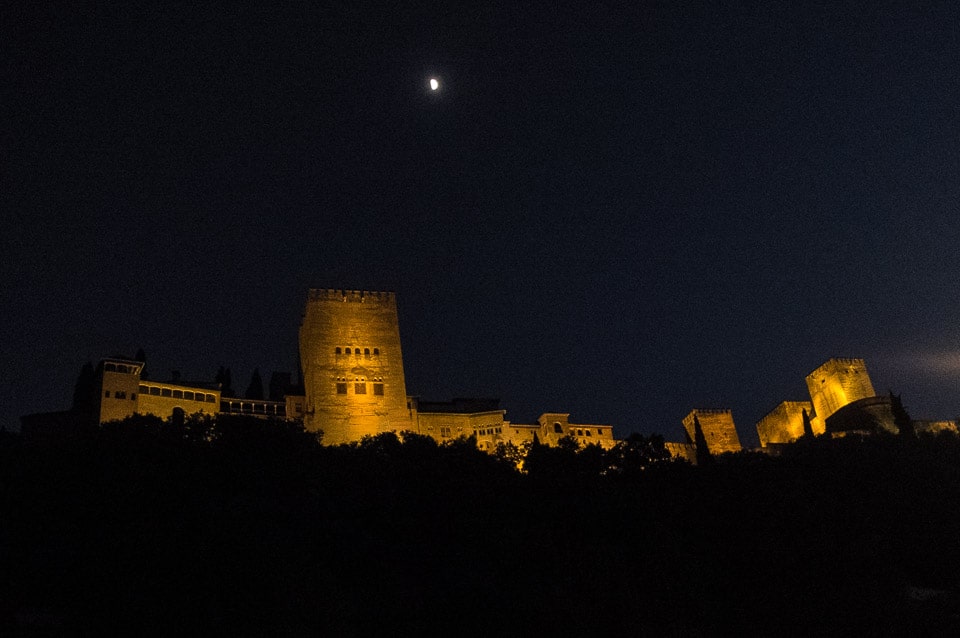
Be sure to walk around Granada at night, and look up at the Alhambra with the moon rising above it. It is a romantic vision indeed, and worth a walk up into the Albaycín neighborhood of Granada. I recommend it on a warm summer night. You can sit at one of the bars at the bottom of the hill and wait for the sun to go down while sipping on a tinto de verano and sucking the sweet meat off some delicious Andalusian olives. There’s no hurry to move on. Just wait, and imagine you are Washington Irving looking down from the windows above and writing a marvelous book of Tales of the Alhambra about the lives of the people who lived there long long ago. Before there was tinto de verano.
One special note regarding the Alhambra: It is one of the hardest-to-book attractions in Europe — tickets for the Nasrid Palaces sell out months in advance during high season. Book your tickets now or you may be disappointed. Entries are strictly timed. If you are late, you’ll be denied entry. Also, beware of a special requirement: you must bring your passport and show it at the entry. Missing the Alhambra would be akin to the curse of being blind in Granada.
The Sagrada Familia in Barcelona
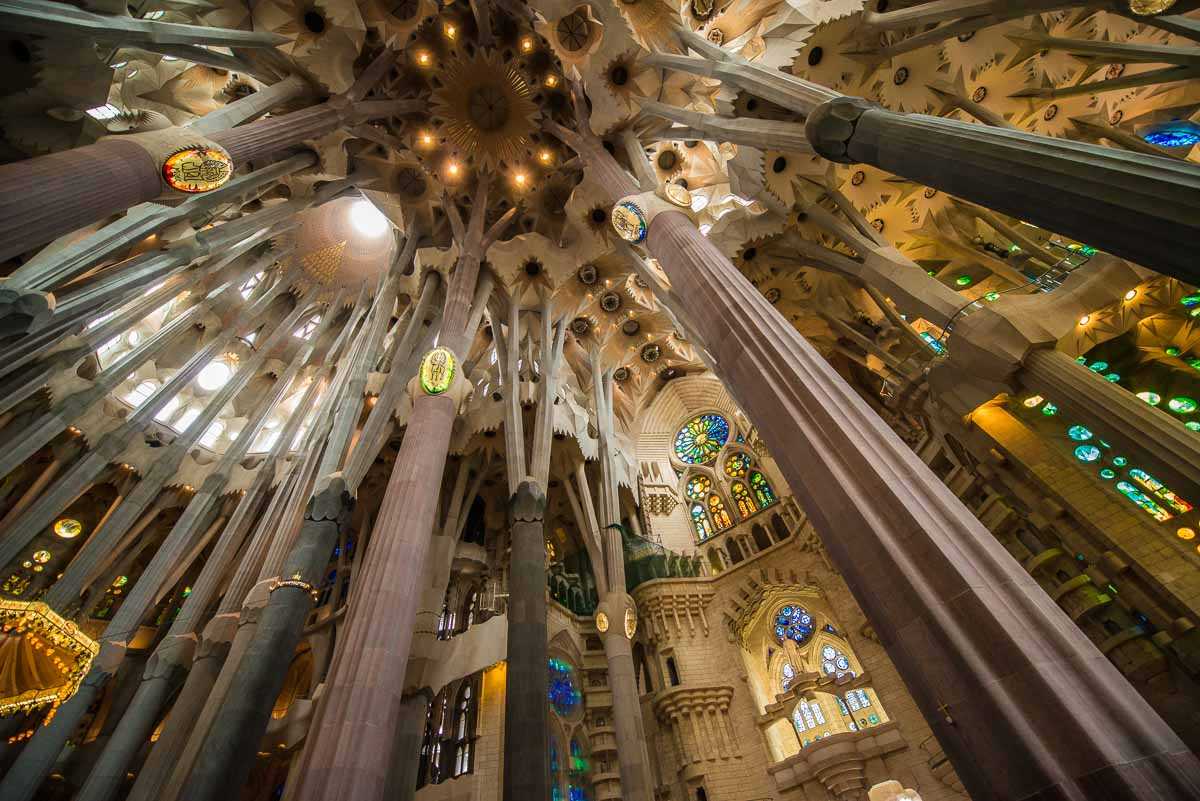
One of our earliest memories of Spain was seeing the Antoní Gaudí’s Sagrada Familia in 1975. At that time the roof was not yet enclosed, the windows were not installed. It seemed there was only the façade with its animals and vegetables, the beginnings of the fanciful interior columms that would eventually hold up the roof, four of the eventual 18 exterior towers, and side walls only completed enough to suggest the eventual expanse of the nave.
Gaudi was a visionary who utterly changed architecture in the early 20th Century, and finally his masterwork is nearing completion. The final tower, the Tower of Jesus Christ, was topped in 2026, making the Sagrada Familia the tallest church in the world. Still to be completed is some more work on some of the towers, and some of the interior design. Gaudi’s original design was not actually finished at his death, and \many of the models he had completed were deliberately destroyed by anti-clerical Republicans during the Spanish Civil War. But the models were substantially restored from the shards left on the floor, and the style has been honored and amplified by subsequent designers.
If you go, allow hours to see it. And remember to occasionally close your gaping mouth.
It is definitely required to book entry to the Sagrada Familia in advance. As of this writing, the Sagrada Familia is sold out for the next 16 days. Don’t delay in getting your tickets. Entries are timed, and if you just show up and get in line, you may find entries are sold out by the time you get to the ticket booth. If you have your ticket in advance, you won’t have to wait on line. Also, the tickets will have your name on them, so you’ll have to show ID to enter.
The Mosque-Cathedral of Córdoba
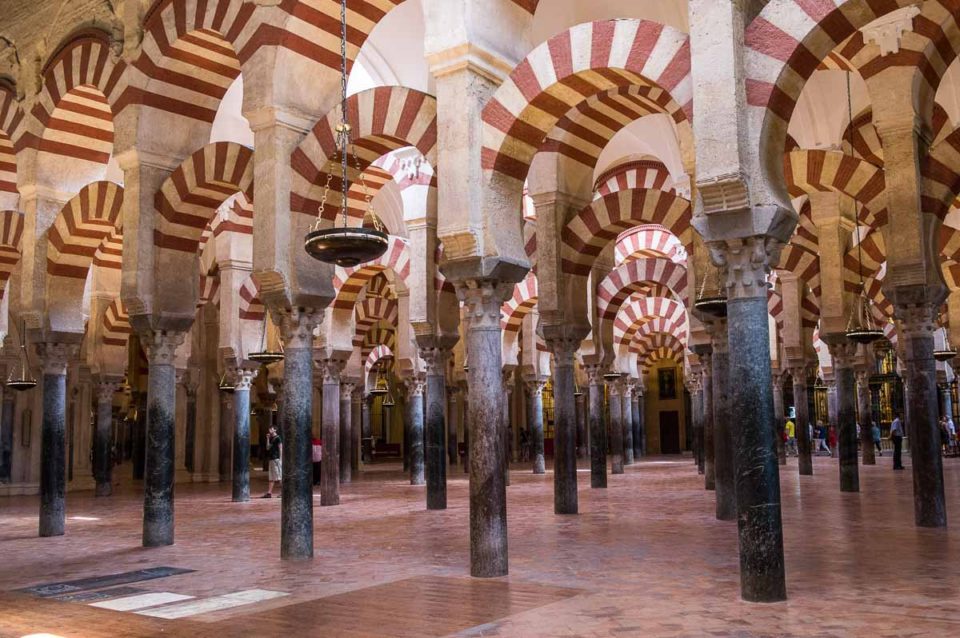
When you realize the Mosque-Cathedral of Cordoba was mostly constructed in the 8th Century, its beauty and geometry become even more impressive. The seemingly endlessly receding red and white arches leading to the vastly more intricate archways topped by the brilliant mosaics of the mihrab are literally awe inspiring. That, one realizes, was the purpose.
Unfortunately, after the Reconquest, the Spanish Christians destroyed a significant portion of the mosque to install a mediocre Christian cathedral, and fill in some of the arches with mundane Christian iconography. Luckily, when the Spanish king Carlos I realized what was happening, he put a stop to it before some o the best detail, including the spectacular mihrab, was preserved.
The Mezquita doesn’t sell out as far in advance as the Alhambra or Sagrada Familia, but it doesn’t hurt to get tickets in advance to avoid disappointment.
The Aqueduct of Segovia
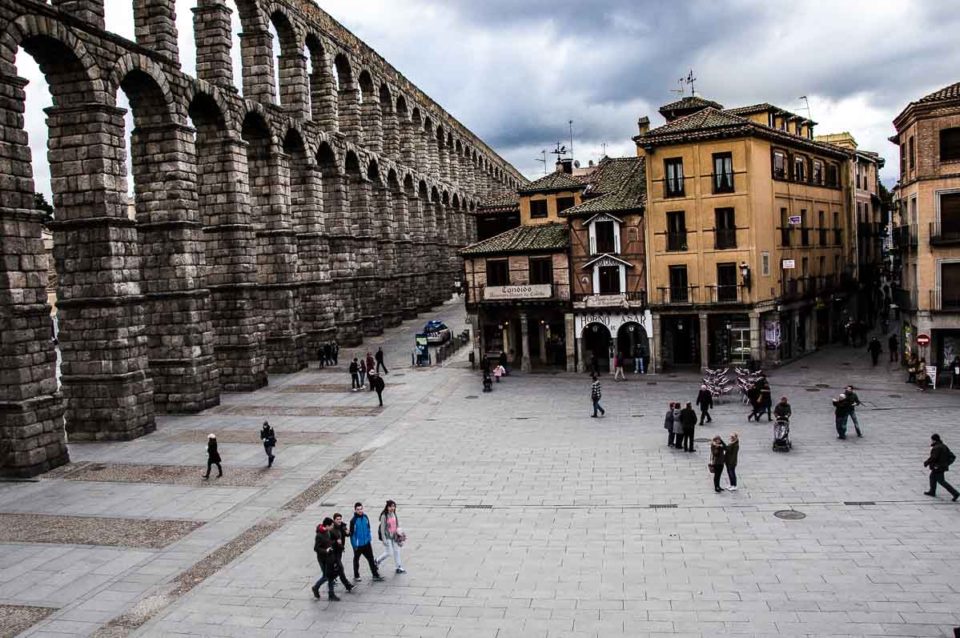
Of all the dominant architectural features in Spain, the Roman aqueduct at Segovia is perhaps the most, well, just flat out impressive. The original inscription is gone, but archeologists place its completion sometime in the First Century C.E. The beauty of the architecture is matched by the genius and skill of the engineering. It originally carried water from the mountains 17 km away. It was still bringing water to the city until relatively recently, when it had sprung enough leaks to force it out of service. The leaks were mostly due to botched repair jobs that introduced inferior materials in an attempt by the regional government to save money.
The Cathedral of León
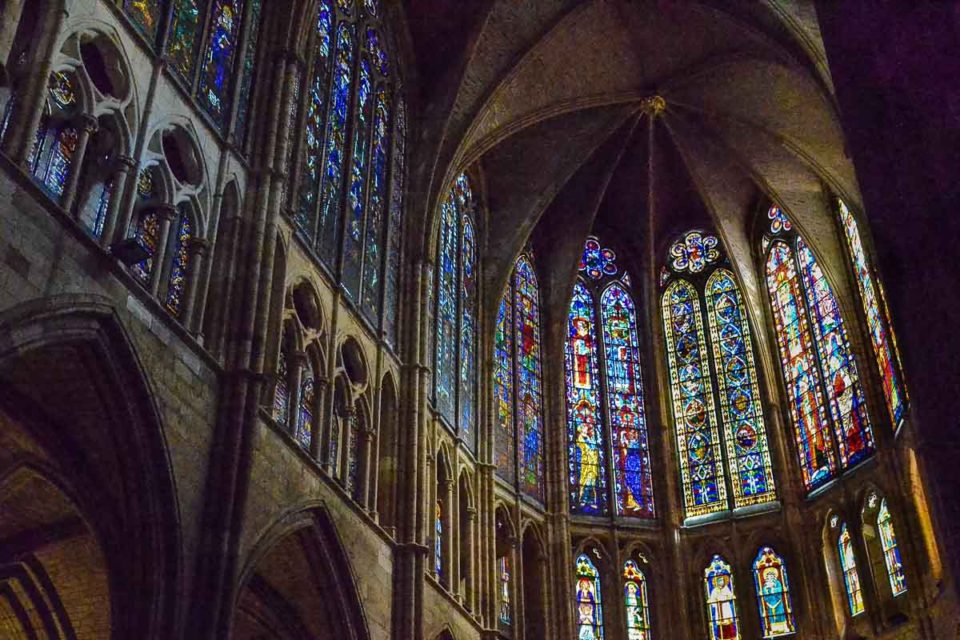
One of the problems of early church building was windows. Construction techniques of the middle ages meant you had to build very thick walls with very small window openings if you didn’t want the heavy roof to exert outward force on the walls until the whole thing come crashing down under its own weight. Later, thankfully, the problem was solved by the perfection of the airy gothic style of architecture, with its weight-bearing arches and the external flying buttresses to help support the outer walls.
The result of these engineering advances is a church like the Cathedral of León. They had a lot of window space to play with, and they made the most of it. The result is a unique and luminous work of art, with window subjects from the traditional old and new testament scenes, to representations of numerous saints, and finally fanciful gargoyle like figures. All in all, a riot of imagination in bright color.
The Cathedral of León is more than likely able to be accessed at the time of your visit. You should be able to buy entry at the door of the Cathedral. There is no mechanism on the Cathedral’s website to buy advance tickets.
The Cathedral of Sevilla (Seville)
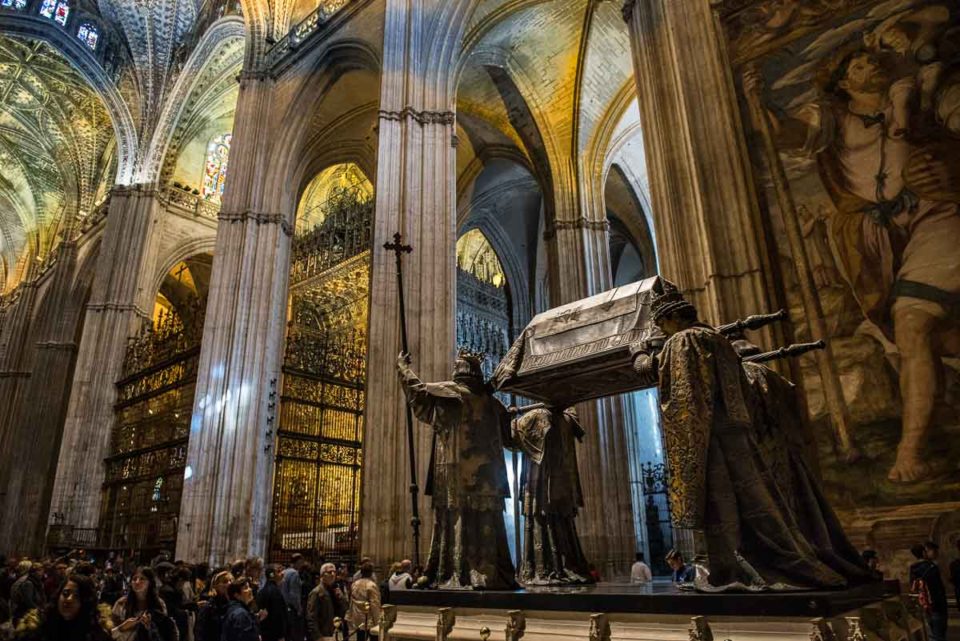
The Cathedral of Sevilla makes my list of wonders of Spain over some of the other spectacular cathedrals mostly because of its size. It is the biggest church in Spain, among the most ornate, and it’s hard to beat having the spectacular tomb of Christopher Columbus within your walls. Its detailed, arched, and decorated Gothic ceiling is hard to top. Also, unlike many cathedrals in Spain, it has some breathing room around its outside, giving you views of its interesting Gothic roofline, and even, better, its Mudejar style bell tower, called La Giralda.
The Cathedral of Sevilla usually doesn’t sell out days in advance, but entries are timed, so to get the time you want, it’s advisable to book in advance.
You can see our post on 16 of our favorite cathedrals of Spain.
The Walls of Ávila
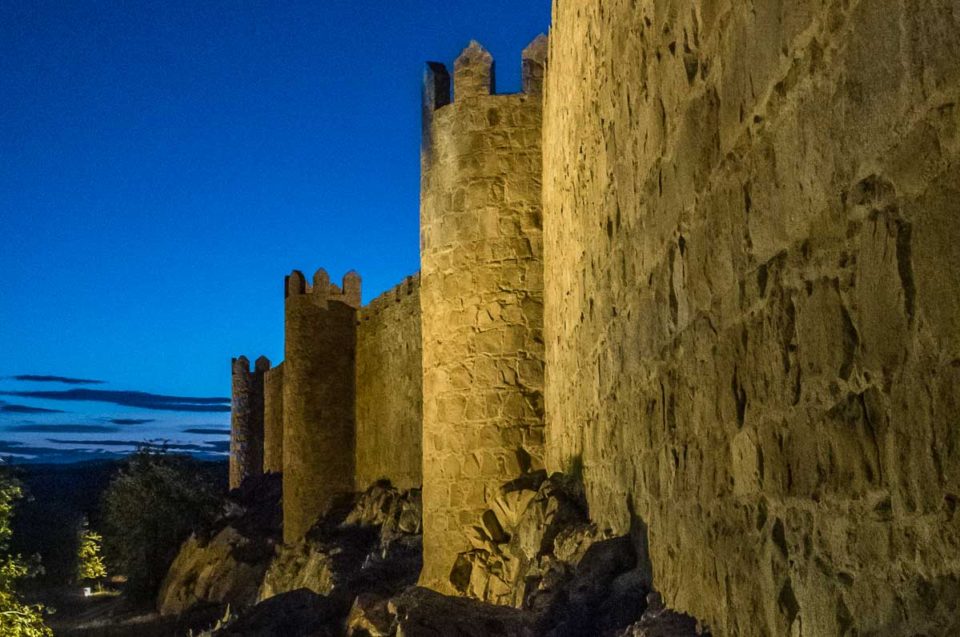
The spectacular walls of Ávila were built to impress, and they do. Of course, their first purpose was to dissuade attackers, and when they were built between the 11th and 14th Centuries they undoubtedly did. In most spots the walls are more than 12 meters (39 feet) tall. And, they’re also 3 meters (10 feet) thick.
You can traverse most of the walls on the top walkways if you like, where you can get an idea not only of their impressive bulk, but also get an elementary education in medieval defense theories and mechanics. Or, you can simply walk around the outside of the walls – as we did – and just be impressed with their unparalleled presence.
One of the interesting bits about the walls, too, is that one stretch actually makes up one of the outer walls of the Cathedral of Avila, which is worth a visit on its own.
The Next Seven: More Wonders Worth Your Time
The Palau de la Musica and the Hospital de Sant Pau in Barcelona
The masterworks of the other great architect of Catalunya Lluís Domènech i Montaner, in Barcelona.
The City and Cathedral of Toledo
The city of Toledo itself is a monument to all Spanish history featuring Jewish, Moorish and spectacular Christian monuments, including the primate Cathedral of Spain, the Cathedral of Toledo.
The City of Arts and Sciences, Valencia
Perhaps carrying on the tradition of Gaudí breaking all architectural norms is the Valencian architect Santiago Calatrava’s space age fantasy group of seven structures in the former bed of the Turia River.
The Prehistoric Caves of Cantabria
Some of the prehistoric caves with their paleolithic paintings are still open to visitors, although they’re strictly limited. But you can get a taste of what they’re like without spelunking at the Altamira museum.
The Aljafería Palace in Zaragoza
The Aljafería Palace is another well-preserved palace of Moorish kings, not anywhere on the scale of the Alhambra of Granada, but which, along with the two lovely cathedrals of Zaragoza, makes a visit to the often neglected city of Zaragoza worthwhile.
The Cathedral of Málaga
Of all the spectacular cathedrals in Spain, it’s incredibly difficult to distinguish one over another. But, the Málaga Cathedral distinguishes itself mostly because of its beautiful execution of the neoclassical style, as opposed to the predominant Gothic or Romanesque styles of most Spanish cathedrals. Since Málaga was recaptured from the Moors very late, its cathedral wasn’t built until hundreds of years after most of the others in Spain. The classic columns and the lovely ceiling decoration makes Málaga stand alone with its own brand of beauty.
The Archive of the Indies in Sevilla
The Archive of the Indies is not so visually impressive as any of the other wonders above, but is perhaps more evocative of bygone eras of adventure. The Archive is a library containing all the correspondence between Spain and its colonies in the New World, dating back to Columbus’s original letters to Queen Isabel telling her what he’d found. You can walk around the vast halls of the catalogued works, but can’t just take them down and look unless you have permission given only to scholars doing research. However, the Archive does usually have some documents on display. One time we were there, the aforementioned letters between Columbus and Isabel were available under glass for close scrutiny. Another time, there were original early copies of Don Quixote that had been carried to the colonies.
For a broader overview of where to go, what to eat, and how to plan your route through Spain, start with our Spain travel guide.
Frequently Asked Questions: Seven Wonders of Spain
What are the seven wonders of Spain?
Tom Bartel’s personal selection of the seven greatest man-made wonders of Spain are: the Alhambra in Granada, the Sagrada Família in Barcelona, the Mosque-Cathedral of Córdoba, the Roman Aqueduct of Segovia, the Cathedral of León, the Cathedral of Sevilla, and the Walls of Ávila. Every one of these is a UNESCO World Heritage Site, either independently or as part of a designated historic city center, and together they represent more than a thousand years of architectural ambition — Roman, Moorish, Gothic, Renaissance, and Modernista.
Do you need to book the Alhambra tickets in advance?
Yes — and this cannot be emphasized strongly enough. The Alhambra’s Nasrid Palaces, the heart of the complex, are sold on a strict timed-entry system with a daily visitor cap. During spring, summer, and the major holiday periods, tickets sell out weeks or even months in advance. Book as early as possible through the official Alhambra website (alhambra-patronato.es). If you arrive without a ticket, you will almost certainly be turned away from the palaces, even if you have a ticket for the gardens or the Alcazaba. Do not leave this to chance.
Can you see all seven wonders of Spain in one trip?
Yes, with three to four weeks and good planning. The seven wonders cluster naturally into geographic groups that make efficient itinerary anchors. Base yourself in Granada for the Alhambra, then drive west to Córdoba and north to Sevilla. From Sevilla, head north through Extremadura to reach Ávila, Segovia, and León in Castile — these three are within a few hours of each other. Barcelona and the Sagrada Família are a natural first or last stop for international flights. A three-week trip with this shape gives you time to see each wonder properly rather than rushing.
Which of the seven wonders of Spain is the most impressive?
The Alhambra in Granada is generally considered the single most extraordinary site in Spain, and many visitors would say in all of Europe. The complexity and beauty of its Moorish decoration, the gardens, the palace rooms, and the views of the Sierra Nevada and the city below combine into an experience unlike anything else on the continent. The Sagrada Família is a close second for sheer visual impact — particularly the interior, whose columns and colored light are genuinely unlike any other building in the world.
Is the Segovia Aqueduct free to visit?
Yes — the Roman Aqueduct of Segovia is free to view and there is no entry fee. It stands in the city center and you can walk beneath its arches and along its length at any time. The aqueduct was built in the first century CE without a drop of mortar — the granite blocks are held together by weight and precision alone — and has stood for nearly 2,000 years. Segovia itself makes an excellent day trip from Madrid (about 30 minutes by high-speed train) and the aqueduct is the most striking introduction to a very beautiful small city.
Why are the Walls of Ávila included in the seven wonders of Spain?
The medieval walls of Ávila are the best-preserved complete city walls in Europe — 2.5 kilometres of stone ramparts, 88 towers, and 9 gates, all still standing essentially as built between the 11th and 14th centuries. Unlike Rome’s Aurelian Walls or Jerusalem’s Old City walls, Ávila’s walls have never been substantially demolished, rebuilt, or interrupted — you can walk a full circuit of the city on top of them. The city itself, with its Romanesque cathedral forming part of the wall, is one of the most perfectly preserved medieval urban landscapes in Spain.
What is the best time of year to visit the seven wonders of Spain?
Spring (April–May) and autumn (September–October) are ideal for visiting most of the seven wonders. Summer is very hot in Andalucía and Castile — temperatures in Granada, Sevilla, and Segovia regularly exceed 35–40°C (95–104°F) in July and August — and the major sites are at their most crowded. Spring and autumn offer comfortable temperatures, smaller crowds, and often better photography light. Barcelona and the Sagrada Família are pleasant year-round. If visiting in summer, plan outdoor sites for early morning, rest during midday, and revisit in the cooler evening hours.

Thank you for the tour of Spain! the cathedral of Leon looks beautiful. I did visit the Toledo cathedral. I left an impression. I love Spain! Love how you write Tom.
The Cathedral of Leon is spectacular. I’m working on a post right now just about its windows. Should be up in a couple of days.
The title of this article was a challenge to me – I had to check whether I had seen them all! In fact I haven’t been to the Cathedral of Leon and there are a few places on your “extras” list I haven’t seen. But of course Spain is such an amazing country that there always seems to be more to see and do…
We’ve spent close to four years in Spain and still have much to see. So don’t feel bad. I want to go back today, in fact.
I am so happy I have seen two of these seven wonders: Seville Cathedral and Alhambra in Granada. Should have gone to Cordoba from Sevilla. But will definitely see Sagrada Familia next year.
Yes, don’t miss Sagrada Familia. We first saw it in 1975. it’s come an awful long ways since then. They’ve been saying it would be finished for years — we’re still waiting, but it gets more spectacular with every visit. While you’re in Barcelona, be sure to see a concert at the Palau de la Musica, too.
I’ve visited several of your seven wonders of Spain, and I couldn’t agree more about the Alhambra and the Sagrada Familia; these need to be seen in person to be believed! I’ve never been to the cathedral of Leon, or to Avila, so I’ll just have to return to Spain, won’t I?
Yes, those cities don’t get the traffic of Madrid and Barcelona. That west and north part of Spain are fascinating in their own rights.
When you travel to Spain, do you rent apartments or do you stay at hotels. Are there any your recommend?
Your photography is absolutely beautiful.
Gee, thanks Gayle. To answer your question, we’ve done both. It kind of depends where we’re going and how long we’re going to be there. We’ve also house sat twice in Spain. We often use AirBnB when we’re going to stay in a place for more than a few days, and if we can find one in an area near where we want to be. In Madrid, we usually stay in hotels near Puerta del Sol. It’s more likely we’ll use the AirBnb in other cities.
I agree with you. Spain is the perfect destination for anyone who appreciates architectural wonders. I love it for the food and wine. ?
Doreen, I’d have to admit I do love the food and wine as well. Best in the world, if you ask me. I could probably live on jamon and Rioja.
OMG now I want to go to Spain again, Tom. I’ve only seen a handful of these and would happily go back to complete this list!
We’ve probably been back to Spain ten times. It never gets old.
I’ve seem some of Spain but not all. The Alhambra in Granada and the walls at Ávila are definitely on my list now. Your photos are beautiful!
Thanks so much, Patti. I credit the designers of such beautiful edifices.
WOW, WOW and WOW!!! Its time for another visit to Spain methinks!!
And your photography is sublime :)
Thank you Linda. I appreciate the good words. And yes, it’s always time for another visit to Spain.
Spain is full of such wonderful sights. Your images do them justice!
Thank you, Carole. Spain is just my favorite place to shoot. It’s actually kind of easy when the subject matter is so extraordinary.
The only one of these I’ve seen so far is the Sagrada Familia. I hope I get a chance to see the others. All amazing!
Spain needs a long visit. I’ve probably spent more than 3 years there and haven’t seen all the things I want to see by any means.