The first time we rented a car in Spain – sheesh, nearly 50 years ago – we picked up the car in Segovia and headed out to the country to find a little town called Pedraza that we could afford to live in for a month before moving to Madrid. That was the first, but not the last time a rental car road trip opened new doors and vistas to us.
As easy as it is to visit various regions of Spain using trains and buses, there’s something uniquely liberating about hitting the open road in Spain. Besides sparking all sorts of possibilities, a Spain road trip checks off those cliched travel wishes as well: going off the beaten path, living like a local, and experiencing unplanned discoveries.
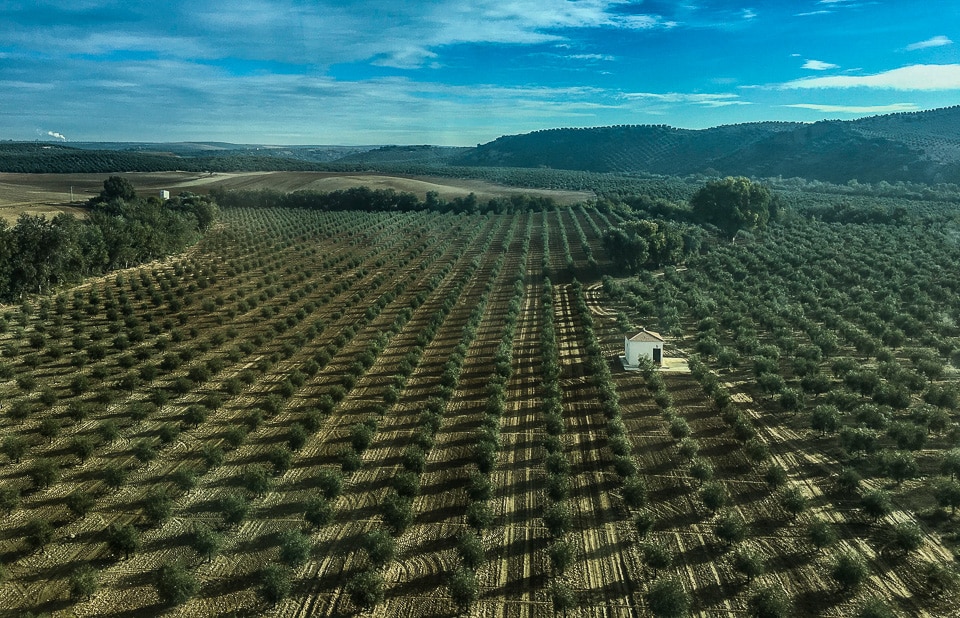
More to the point, if gives visitors the chance to take in Spain’s gorgeous landscapes – its snow-topped mountains, golden plateaus, stunning coasts, rolling olive fields, and nature parks – and the freedom to pause for interesting villages, cultural sites, or out-of-the-way events.
We’ve done many road trips in Spain over the years – into the mountains of León, along pine-lined coasts, to the beach, from back roads to toll roads – and can verify that these memorable experiences are based on the journeys as much as the destinations.
Table of Contents
Why Do a Road Trip in Spain?
Maybe you’ve traveled to Spain multiple times, and you’ve visited the major cities of Barcelona, Madrid, Seville, Granada and Cordoba. So you think you know Spain; perhaps you do. We’ve come to believe there is always more to learn and something unexpected around the next bend. Here’s why we take to the road every now and then:
- To get outside major metro areas.
- To discover small towns less well served by trains or public transit.
- To explore hard to navigate places like remote mountains and hidden coves.
- To control your own budget. Accommodations are generally cheaper outside of metro areas, and small town restaurants and markets are less expensive.
- Car rental plus gas might approximate train travel expenses, but with heaps more flexibility.
- To make (and change) your own itinerary and schedule. It’s all flexible as long as you keep it that way.
- To cover a lot of ground. Spain is bigger and more geographically diverse than you might expect.
- To access some of Spain’s swankiest and most historic hotels, the Paradores. Read on.
To glean a little more about road trip travel in Spain, check this page on Spain's official tourism website.
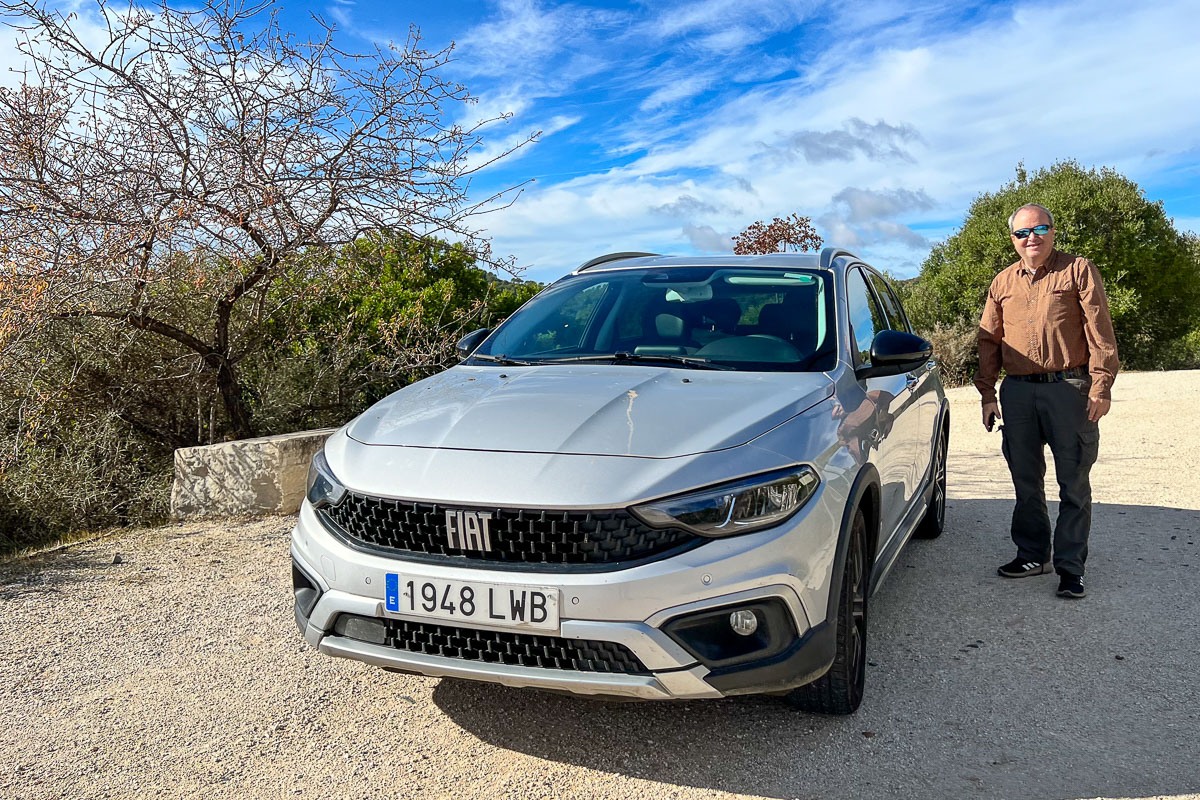
Driving in Spain
Everything that you thought you knew about driving in Spain is probably outdated.
International Driving Permit. Perhaps the first thing to know is that if you're planning on driving yourself, you'll need an International Driving Permit (IDP.) And, you'll need to get it before you go. Fortunately, they're easy to obtain from your local AAA branch. All you need is two passport photos (which you can usually get at the AAA office) and your current valid US driver's license. No exam needed. Currently, the fee is $20 and the permit is valid for a year. You can even apply online and have the permit mailed to you. Allow time if you go that route, because the permit must be printed and mailed to you. There are still no electronic permits.
Another thing to know: you must carry your US license along with your IDP. In essence, the IDP is only a translation of your home license and a certification that it is valid.
Automatic transmission rental cars. As in most of Europe, the current availability of automatic transmission rental cars in Spain means that many more Americans who never learned to drive a manual transmission can access a vehicle for their road trip. (Yes, even Europeans are becoming more used to automatic transmissions.)
Good roads and highways. Spain’s highway system has improved dramatically since the days we hitchhiked there in the 1970s! Especially since Spain joined the EU in 1986, main roads have been transformed into a top-notch highway system: modern, well-marked and well-maintained. According to Wikipedia, the Spanish highway network is the third largest in the world, by length, with over 10,000 miles of high-capacity roads. It’s also one of the safest systems in Europe. Given Spain’s sheer size, especially in comparison to its European siblings, its reliance on roads for long distance commerce, local communication, and tourism infrastructure shouldn’t come as a surprise.
The vast majority of Spain’s highways are toll free. Some, labeled as Autovía, are upgraded national roads, skirting towns but generally following the original road routes. The Autopistas, on the other hand, are purpose-built for automobile travel, banning slow traffic, and may include tolls. Alternate routes are necessarily located nearby to accommodate vehicles barred from Autopista access.
Both types of highways have controlled access (on and off ramps) and divided lanes. American drivers will feel at home. Do note, though, that your merge lane may be shorter than you're used to.
Scenic roads. Many scenic drives, while on updated roads, are confined to their original mountainous or curvy routes to take you along coastal paths or mountain passes. We enjoy these roads the most. Just remember it's important to allow time for slower traffic and rest stops.
Hiring a Private Driver-Guide
Perhaps you want the freedom of a car but without the responsibility. In Europe it’s quite common to hire a driver/guide. This way you can see the sights without worrying about directions, learn more about your environs, and still have the wherewithal to detour at will. It’s your private driver, after all. You can skip the rental car process, and be picked up at your hotel.
Consider a private driver option for day trips – especially if you’re visiting a popular place needing advance tickets and/or a guide – or for multi-day loops covering places not served sufficiently by public transport. A driver guide is a wise choice for those visiting wine country (no drinking and driving please; it's the law), for photographers who want to keep their eyes on potential shots, and for couples who just can’t seem to drive themselves from point A to point B without an argument.
In all cases, you’ll appreciate the local guide’s knowledge and recommendations. It all feels luxurious to us, and quite affordable at the same time.
Recommended Road Trip Routes in Spain
We’ve selected these road trip itineraries for the diverse ways they represent Spain and for the opportunities they offer to escape the more touristy cities. Consider yourself invited to slow down, choose your distinct regions of interest, and find your own pace to explore the natural highlights, historic monuments, and cultural treasures found in everyday life throughout Spain.
A Word About Spain's Paradores
A parador refers to any of the hotels in Spain's national hospitality network of 98 properties. The Paradores date back to the early 20th Century when the government activity sought historic properties to convert for touristic use. (The first, Parador Gredos, is still operting today.) These efforts led to the preservation of many historic properties throughout Spain, like León's Hostal de San Marcos or the Parador de Granada in the Alhambra.
Today, Paradores are found in every region of Spain and include modern properties as well as the updated historic ones, and are frequently located near remarkable natural sites. When visiting the Paradores website, it is most convenient to view the network on a map, which also delineates Paradores with History, Paradores in the City, and Paradores in Nature. Because so many exceptional properties are only accessed by car, we're focusing primarily on these accommodations for this Road Trips in Spain post.
Note, Paradores book up well in advance. Book as early as you can. Consider joining the “Amigos” program to save 5% on bookings. Other than that, you won't typically find deals or sales, but you can acquire points toward future stays or services. Even if you don't stay at a parador, you might consider their exceptional restaurants featuring local ingredients and dishes.
Catalonia Road Trips
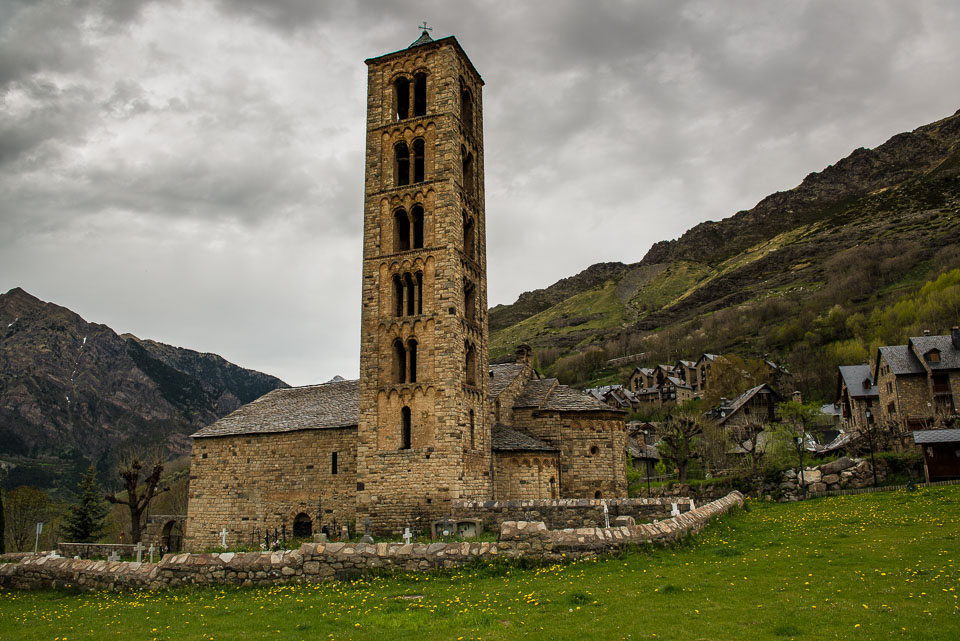
Catalonia, in the northeast of Spain, is an excellent region for road trips given its compact size, easy access from Barcelona (the region’s capital), and huge variety of points of interest. We love the combination of the rugged Costa Brava, the artsy cities of Girona and Figueres, and the remote Romanesque churches in the Vall de Boi, not to mention Catalonia's unique wine districts.
In fact, a grand circular route of Catalonia was popular even in the 19th Century for young European travelers. If you have a month, go grand. Otherwise you might want to break these ideas into two or three Catalonia road trips.
Girona and Costa Brava Highlights
- We suggest starting in the town of Girona, which features both medieval walls and modernist architecture, setting the tone for the region as a whole. From Girona, it’s less than an hour drive to some of Catalonia’s most attractive places.
- Figueres, home to the Dalí Theatre-Museum as well as the Catalan Toy Museum, and the Empordá Museum of Catalan art and history. (Empordá refers to this area of Catalonia and its prehistoric culture.)
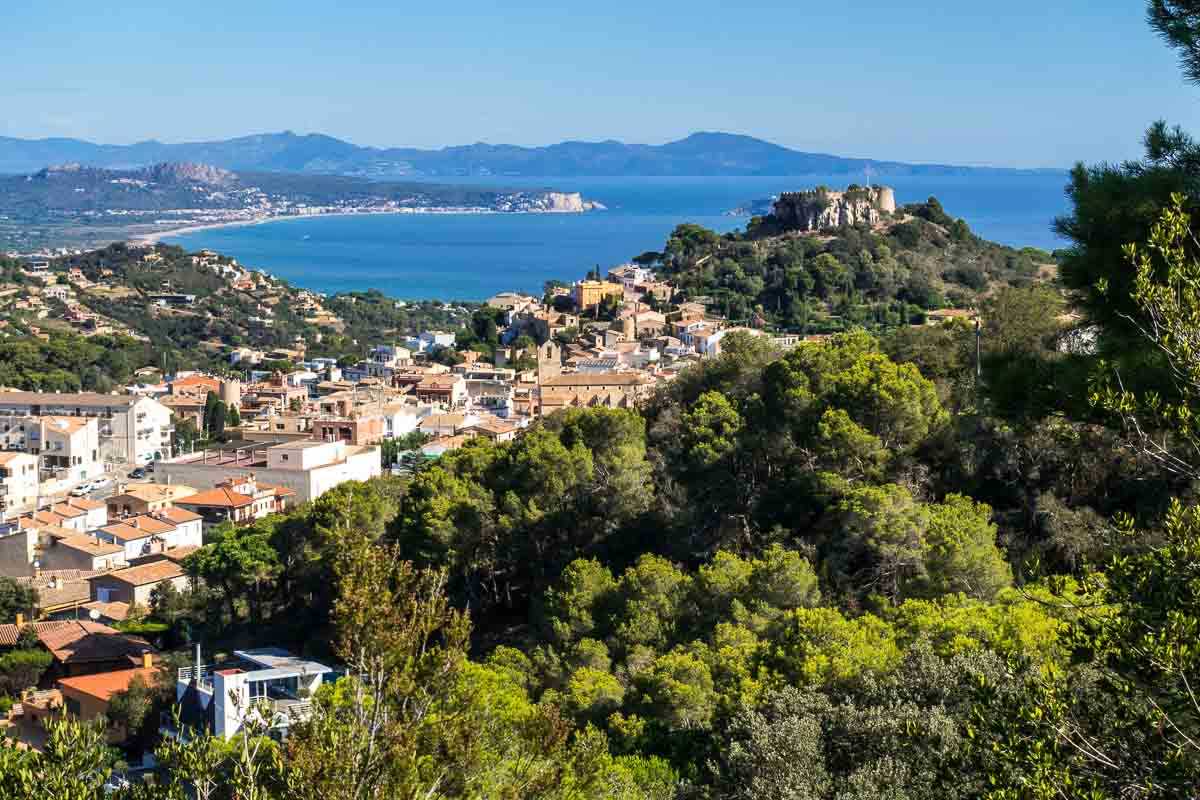
- Costa Brava. Lloret de Mar, Tossa de Mar, Palafrugell, Begur, et al. Get to know the Costa Brava by enjoying its coves, hiking trails, historic castles, and interesting casas indianas, homes built by wealthy families returning from America to Catalonia. Our Hiking Catalonia post will help you picture the possibilities.
Barcelona Highlights
- Montserrat is the famous spiritual center of Barcelona province many visit by car.
- We’ll recommend an alternate destination, Vic (sometimes spelled Vich). Vic's neoclassic cathedral alone may not draw you in, but the mural paintings by Josep Maria Sert are worth a stop, even a detour.
Lleida Highlights
- In Lleida, one of the four provinces of Catalonia, find the Romanesque churches in the Vall de Boi. Collectively, these are designated World Heritage sites by UNESCO. The Seo de Urgell Cathedral is a standout example.
- Depending on the time of year and your adventure quotient, while in Lleida visit the Aigüestortes i Estany de Sant Maurici National Park. Here, at the foot of the Pyrenees, you can participate in snow sports, bird watching, or fishing. Great scenic views year round.
Tarragona Highlights
- Finally, swoop south to visit the province of Tarragona. Honestly, this could be a complete road trip of its own. The port city of Tarragona, down the coast from Barcelona, has gotten a facelift and WHS designation over the past decades. It boasts a Roman amphitheater, circus, and aqueduct, and cheery Costa Dorada overlooks from the city's historic quarters.
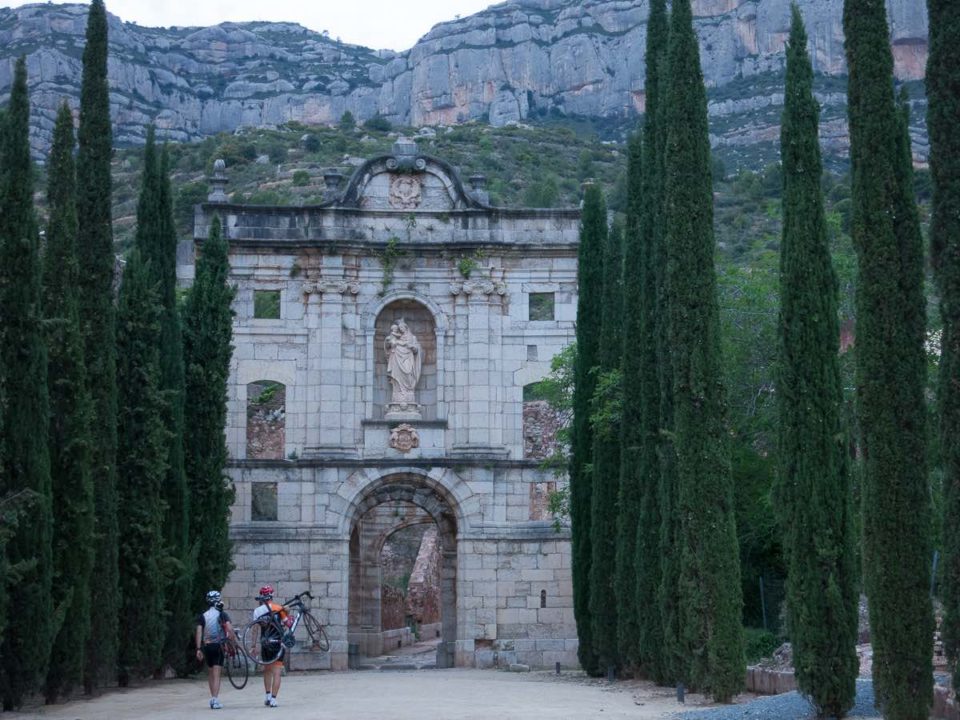
- In the hills of the province, highlights include the Monastery of Poblet and others on the Cistercian Route tracing the UNESCO-recognized group of monasteries established here in the 12th Century. For walkers, established pilgrim routes connect these historic sites.
- A good Catalonia road trip will wind through vineyards – think Penedès and Priorat, – and ultimately cross paths with Spain's fine cava, or sparkling wine.
- Make an obligatory visit one of the area's Wine Cathedrals. These modernist architecture cellars are famed for their soaring parabolic arches managing heat and delighting the eye. See an example in Falset, pictured in our post about touring the Priorat region. Don't leave without a refreshing vermut on ice.
- Delta de l'Ebre Nature Reserve. We've yet to visit the Ebro River delta area, but the estuary of Spain's longest river is a sanctuary known for dunes, bird watching, rice cultivation, and its partner biosphere reserve, continuing from the Mediterranean coast up to the mountains.
Find more Catalonia road trip ideas in this Sustainable Destinations post by Spain Tourism.
Where to Stay Catalonia
A Catalonia road trip is a perfect excuse to find a Parador, and there is at least one in each of the four provinces of Catalonia:
Parador de Tortosa (Tarragona). Parador de Cardona (Barcelona). Parador de Aiguablava (Girona). Parador de la Seu d'Urgell (Lleida).
Andalucía Road Trips
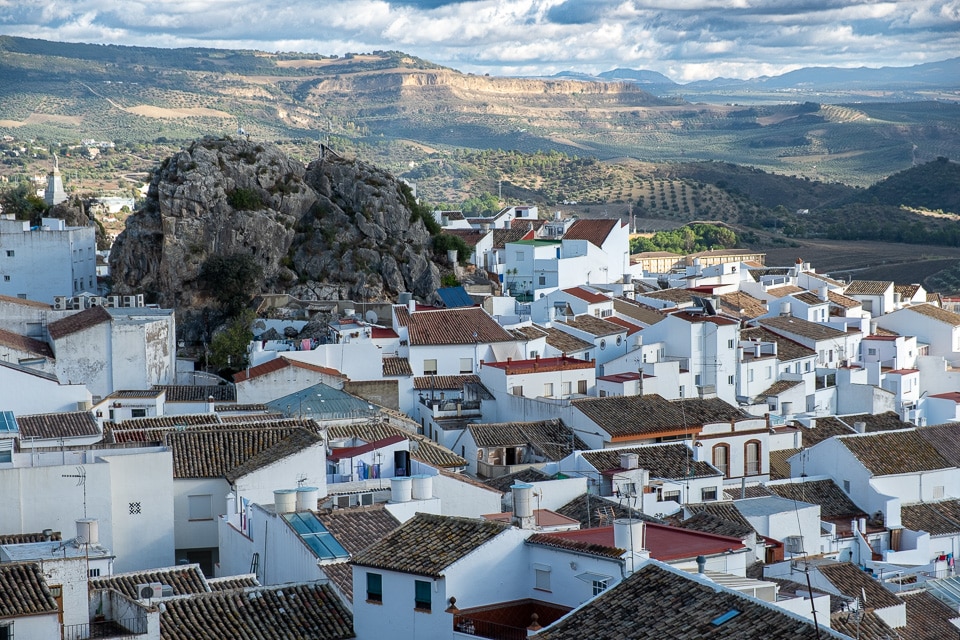
This large and sparsely populated region of southern Spain is widely recognized for its Moorish influence. Under Moorish rule for 700 years, up through the 15th Century, the architectural landscape of Andalucía brings its history to life. But while visitors flock to the Moorish monuments of the cities (Cordoba’s Mezquita, Granada’s Alhambra and other churches, and the Alcázar in Sevilla), our road trip itineraries will take you on roads less traveled.
White Village Route Highlights
The pueblos blancos, or white villages, are so called because their white-washed walls, along with the villages’ prominent hilltop locations, make these picturesque communities stand out from the browns and greens of the surrounding earth and pines.
The villages can usually be seen from a distance, as they are perched alongside the historic watchtower or castle. In fact, several of the towns are called ‘de la frontera' because they are situated on what was once the border between Christian and Arab lands. Approaching by car allows you see the distances and imagine the defenses and communications among these villages.
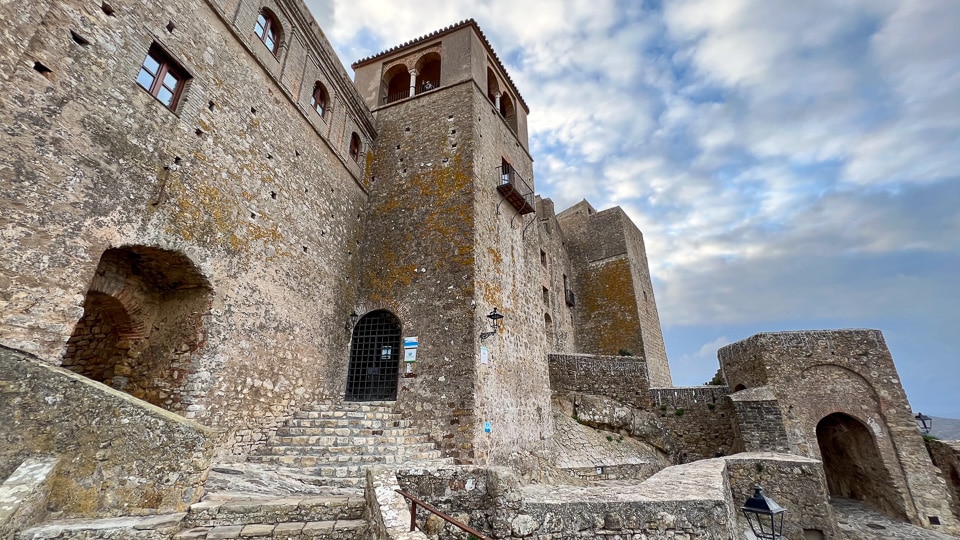
There are at least a couple pueblos blancos routes, passing through Málaga and Cádiz. We found our way based on renting a car in Seville and using some hotel credits in the impressive Castellar de la Frontera castle hotel. See the details of our Andalusia road trip, including where we ate and stayed.
More Andalusia Road Trip Highlights
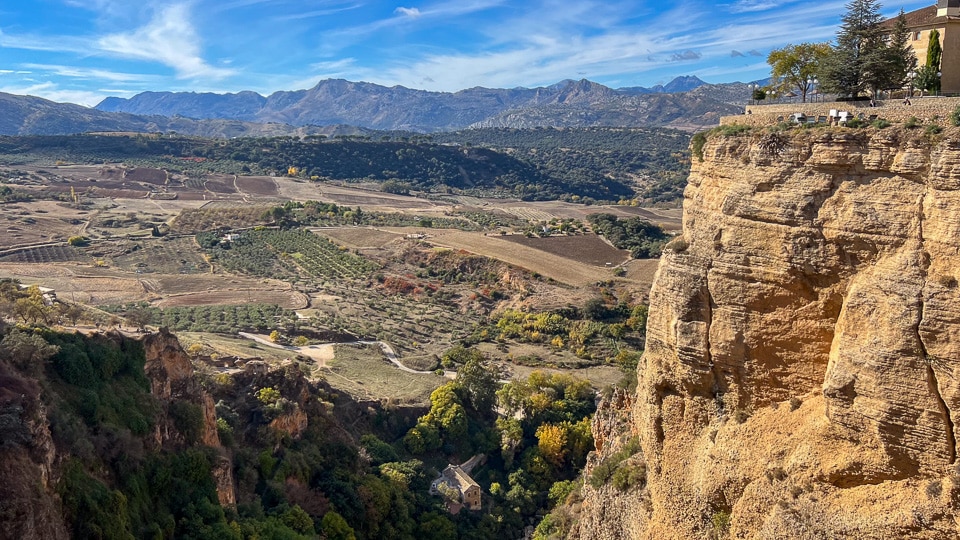
- The town of Ronda, in the province of Málaga, is a highlight of the area. It's also an example of a popular place that is quicker to drive to than access by train. With a couple days' stay, you'll have time to explore museums and walks (follow the link), and pity the people who are bustled through in a matter of a couple hours.
- Ronda's famous Plaza de Toros is currently a museum of bullfighting. The grounds are also home to Spain's Royal Cavalry and offer ongoing training and exhibits of horsemanship.
- Unexpected Views of Gibraltar were an unexpected highlight for us as we drove the white villages route. Scenic turnouts offer drivers a chance to pull off the road for views and short walks.
Where to Stay in Andalucía
Among the many Paradors in Andalucía is one right over the gorge in Ronda. The hotel we stayed in, in Castellar de la Frontera, the Tugasa Sierra y Cal, is not a Parador, but an exclusive bit of fun. We thoroughly enjoyed the Hotel Catalonia Ronda, with great views over the Plaza del Toros from the breakfast room.
Extremadura Road Trips
Even more sparsely populated than Andalucía, and far less visited by tourists, is the region of Extremadura. Tucked up against Portugal on the west side of Spain, Extremadura basically requires intention; chances are tourists aren't just passing through.
While the cities of Mérida and Cáceres are wonderful destinations themselves, a road trip here is a bonus because it will cover rural highlights. This is the land of oak forests and foraging pigs and of rolling agricultural fields.
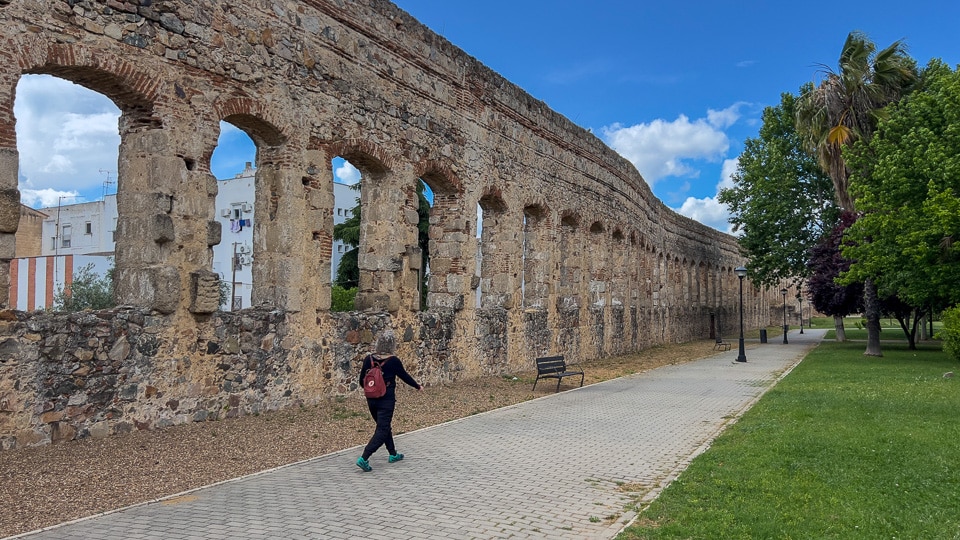
Following one of the oldest routes in Spain, the Roman road that stretched from Mérida all the way north to Asturias, now known as the Via de la Plata, still services road-trippers, pilgrims, motorbikes and cyclists today.
Extremadura Road Trip highlights
- Mérida and its exquisite roman ruins.
- The Roman and medieval remains in Cáceres.
- Badajóz shows off rural architecture from the Middle Ages.
- The Castillo de Luna in Alburquerque is one of the best preserved medieval fortresses on the Iberian Peninsula.
- Monfragüe National Park, a biosphere reserve at the convergence of the Tajo and Tiétar rivers. This wild area is home to holm oaks, cork trees, black vultures and other birds of prey.
- Night Skies. Check out Extremadura's Buenos Noches project. The region offers plenty of camper van sites, too, to make stargazing that much easier.
- Cuisine. Consistent throughout Extremadura is its spectacular cuisine, linked to this productive land.
Check out Spain Tourism's recommendations for travel in Extremadura.
Where to stay in Extremadura
There are no shortage of fine hotels in the region, and budget options, too. Find Paradores in each of Extremadura's four major cities. The NH Collection Cáceres Palacio de Oquendo is top notch as well.
Galicia Road Trips
Galicia, the northwest region of Spain in the northwest corner of the Iberian peninsula, is recognized as the home of Santiago de Compostela, the final destination for Camino de Santiago pilgrims. It's remarkable for both its mountains and coasts and for the rias that flow into folds of inlets repeating along both the Atlantic Ocean coast to the west and the Cantabrian Sea coast to the north.
Costa de Morte Route Highlights
The renowned Costa Morte Route (Coast of Death) along the Atlantic is dramatic in name and imagery. Beyond the sheer scenic spectacle, find points of interest like these highlights:
- Prehistoric Sites. The Dombate Dolmen and the Borneiro Castro (Celtic settlement).
- Cape Fisterra, or Finisterrae, was thought to be the earth's westernmost point; that the world ended here. Camino de Santiago pilgrims often continue their trek to this point.
- Rias Baixas. The lower estuaries famous for Albarińo white wine.
- Seafood. Especially percebes, barnacles harvested from the coastal rocks.
Where to Stay in Galicia
Pilgrims looking for a post-camino splurge might book the Parador de Santiago de Compostela, considered one of the oldest and most luxurious hotels in Spain. It was built as a royal residence for the Catholic monarchs.
For those embracing the open roads, look for Parador Costa da Morte (A Coruńa) near Cape Fisterra, or the neo-gothic castle overlooking Rías Baixes, from the far south of the coastal route, Parador de Baiona.
For a city twist, book Parador de Pontevedra in the Rías Baixes area. In Pontevedra's pedestrian-only city center, this hotel offers no onsite parking, though staff will direct you to convenient options.
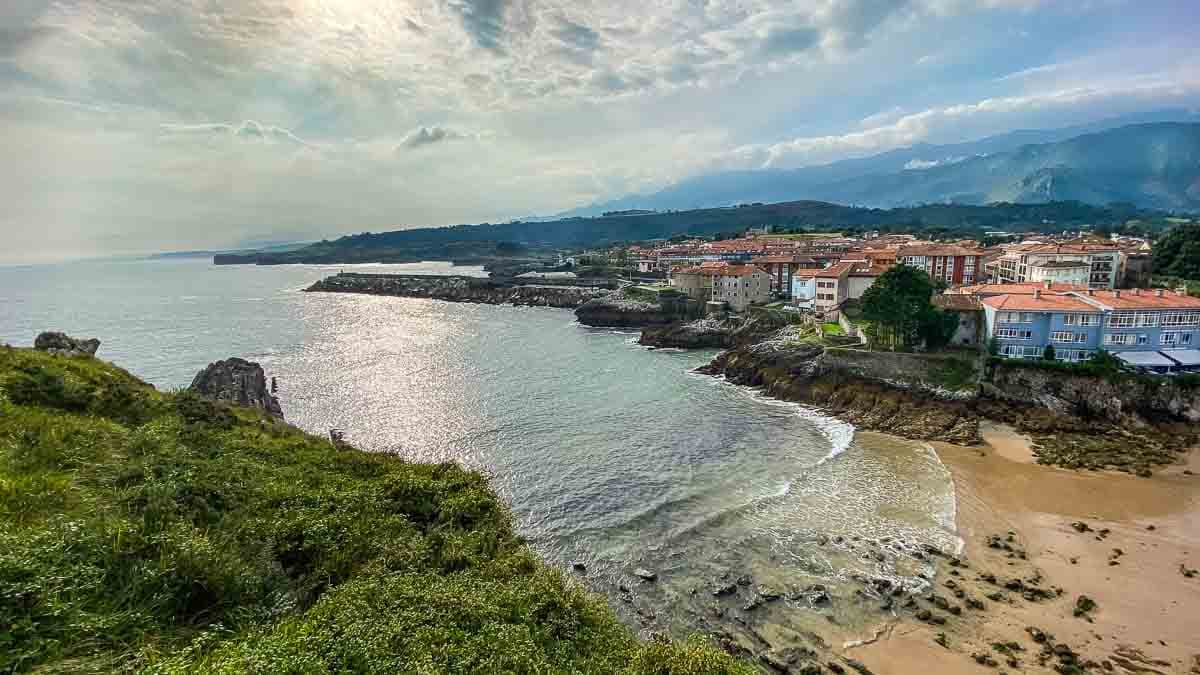
Asturias and Cantábria Road Trips
We've covered Spain's Northern Way in detail in this post, The Camino del Norte: Northern Way to Santiago. Even so, there are dozens of places we'd still like to discover on a road trip of our own.
While the Northern Way refers to this alternate pilgrim route to Santiago de Compostela, the provinces of Asturias and Cantábria are shining examples of Spain's beautiful mountain and coastal interface, of the blend of ancient fishing traditions and modern cities, and the offerings of both pure recreation and historic/cultural studies.
Northern Route Highlights
- Don't overlook the region's cities, both underrated and overflowing with history and international flair. Santander (Cantabria), Oviedo and Gijón (Asturias) merit your time.
- Santillana del Mar (Cantabria) is famous for the prehistoric Altamira Caves and the museum recreating its Paleolithic paintings.
- Comillas and El Capricho by Gaudí. This tony little town is known for its Casonas Indianas, large homes built by families returned to Spain after earning their riches in the New World. Tour El Capricho, Gaudi's intimate design for a single gentleman.
- Picos de Europa National Park, including Covadonga Lake and the Cares Gorge hike.
- Fishing villages like Llanes and Ribadesella.
- Pre-Romanesque Monuments including UNESCO World Heritage site Santa Maria del Naranco near Oviedo.
- Mirador Providencia, a magical viewpoint with plenty of space for dogs and kids to run and play, and for paragliders to drift overhead.
Where to Stay in Asturias and Cantábria
In the mountains, look for Parador de Cangas de Onís, a fabulous entry point to the Picos de Europa mountain range, and situated in the Benedictine monastery of San Pedro de Villanueva, dating back to the 8th Century.
Parador de Fuente Dé, in Cantabria's Liébana region, is located near the town's cable car. Read our introduction to the area in our Camino del Norte, the Northern Way post, and this background on the historic Camino Lebaniego.
For a city stay, enjoy the Parador de Gijón in a renovated mill house. Walk to the beach, to the city center, or nearby botanical gardens.
La Rioja Road Trips
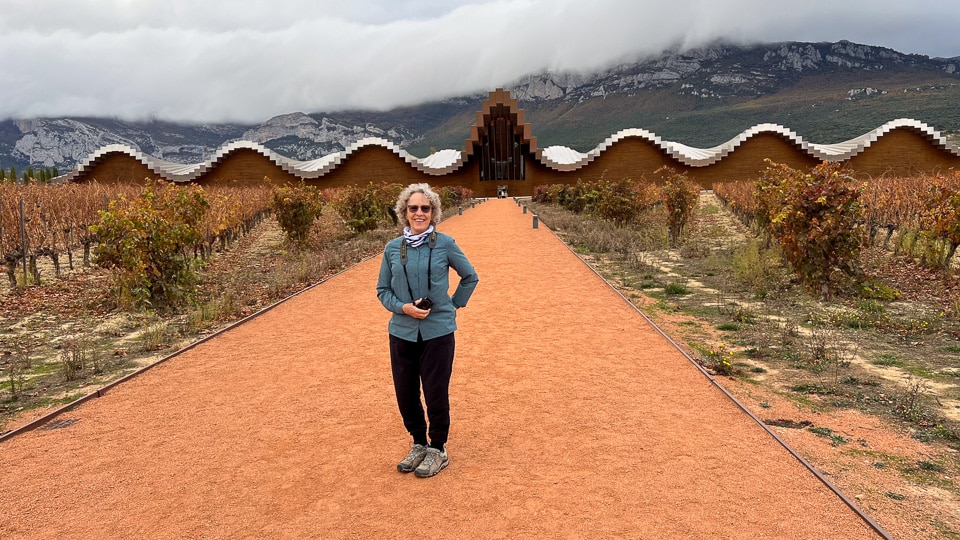
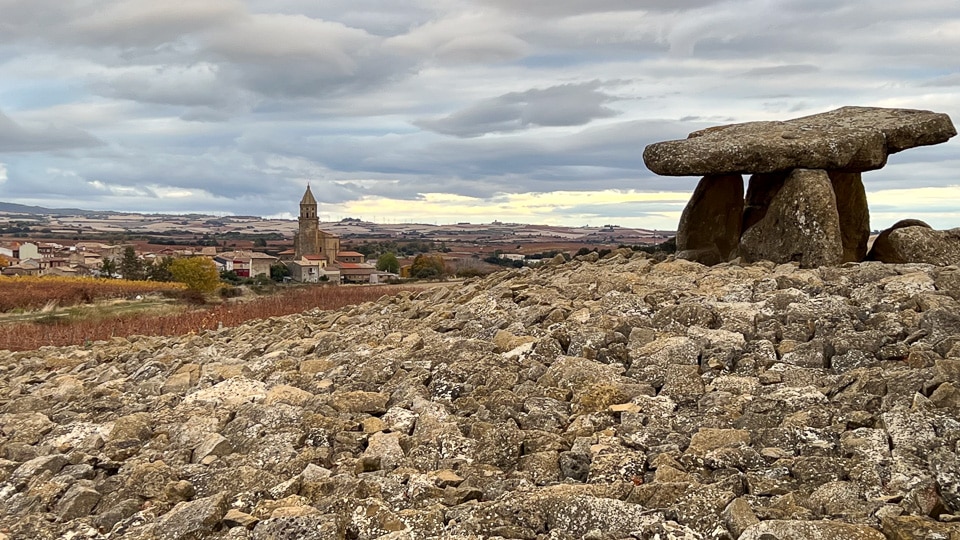
La Rioja, Spain's most famous wine region, is ideal for a road trip. Easily accessed from Logroño, one of Spain's best foodie cities, La Rioja combines vineyards (of course), medieval villages, ancient dolmens, and world class winery architecture. Take it slow and savor.
La Rioja Highlights
- Bodegas Ysios, identifiable by its undulating roof mirroring the Sierra de Cantabria behind it.
- Marqués de Riscal, the spectacular Frank Gehry-designed winery and hotel. If I wish hard enough…
Where to Stay in La Rioja
The Parador de Calahorra offers both proximity to wineries and the historic town of Calahorra with its Roman, Muslim, and Christian influences.
We'd probably opt for the Hotel Marques de Riscal by Marriot, though, just for the chance to live for a day or two in a Frank Gehry-designed space.
Castilla y León Road Trips
You might say our Spanish road-tripping ways started here in the heart of Spain, in the Castilla y León region which sits just northwest of Madrid. The region is large, encompassing the vast plateaus between Madrid and the Picos de Europa. Because of its proximity to Madrid, its wealth of historic cities, and its traditional Spanish cuisine and culture, Castilla y León road trips promise an immersive tour of classic Spain and an easy driving road trip.
Highlights of Castilla y León Routes
In this part of Spain, the monumental cities take center stage.
- Salamanca. Spain's oldest university town.
- Burgos. The Cathedral of Burgos, a UNESCO World Heritage Site, is a living museum and a top feature along the Camino de Santiago pilgrimage.
- León. Don't miss the Cathedral's famous stained glass windows. Stay to check out the convent of San Marco, now a León city center Parador.
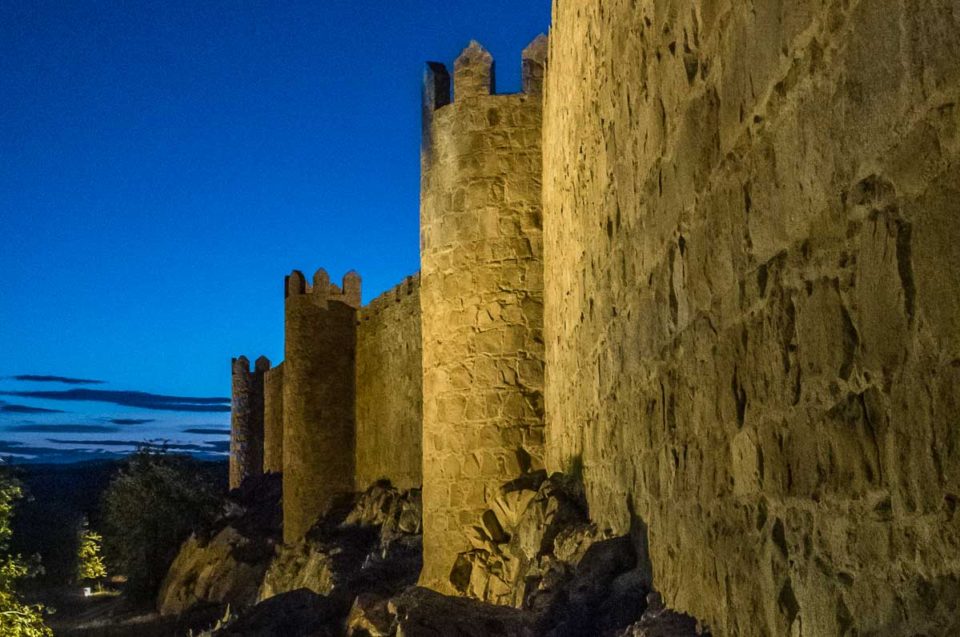
- Avila. Surrounded by the incredible (and largely intact) thick, medieval walls.
- Segovia. Home to the iconic Roman aqueduct and the Disney-like castle, or is it the other way around? Segovia also has bragging rights to some of the country's best roast suckling lamb.
- Ribera del Duero wine region. We first fell in love with this area while walking the Camino. Later we learned this was our favorite Spanish wine, Ribera del Duero.
Where to Stay in Castile y Leon
For one of the most renowned, historic and luxurious stays in Spain, visit Parador de León in the historic convent of San Marco. Other historic properties in the region include Parador de Lerma (Napolean slept here) in the province, not city, of Burgos; Parador de Ávila, in an old palace built into part of the city walls; and both the Parador de Segovia and the Parador de La Granja in Segovia province.
In the mountains (parts of León that few visit), drive to Parador de Cervera de Pisuerga (Palencia) in a nature reserve.
More Road Trips in Spain
With these seven regional road trip outlines, we've discovered two things. First, we've been lucky to have had the time to explore so many corners of Spain and to have enjoyed so many road trips. Second, it appears we've just begun. From the Canary Islands to La Mancha and on to Mallorca and Menorca, we've driven more of Spain than we can cover here. Consider this a moveable feast, and a story that will be expanded and updated. We'd be happy to hear about your road trips in Spain, too, and add your notes to this survey.
In the meantime, enjoy Spain's wide world and every mile (er, kilometer) of your travels. Drive safely.
Up Your Travel Skills
Looking to book your next trip? Use these resources that are tried and tested by us. First, to get our best travel tips, sign up for our email newsletter. Then, be sure to start your reading with our Resources Page where we highlight all the great travel companies and products that we trust. Travel Accessories: Check out our list of all the accessories we carry to make getting there and being there a lot easier. Credit Cards: See our detailed post on how to choose the right travel rewards credit card for you. Flights: Start finding the very best flight deals by subscribing to Thrifty Traveler. Book your Hotel: Find the best prices on hotels with Booking.com. See all of the gear and books we like in one place on our Amazon shop. If you use any of the links in our posts to purchase our recommended products, we'll receive a small commission at no extra charge to you.Got a comment on this post? Join the conversation on Facebook, Instagram, or Threads and share your thoughts!