Our love affair with Spain began the first time we first stepped across the border. Pausing at the frontier town of La Junquera to figure out what’s next (we were hitchhiking), we ordered a glass of red wine. To our delight, each glass was only 6 pesetas and we were presented with a “tapa” of olives, the best we’d ever tasted in our lives. That was our first meal in Spain.
Since 1975, we’ve been discovering the outstanding produce, creative dishes, and delicious wines from every corner of the country. We set out to write about the top ten traditional or “national” dishes of Spain and where to find them, focusing on the most famous among them, like paella and gazpacho. Once we started collecting ideas, though, it occurred to us a “top ten” list would just skim the surface. To tell the story of Spain’s famous dishes, we needed to survey the regions they come from.
Looking for Spain’s ultra-regional gastronomic masterpieces, we learned that there are 249 Protected Denominations of Origin (DO) and Geographical Indications (PGI) foods and wines in Spain! That’s way too much to handle in a post. We don’t want to bore you or bite off more than we can chew. We want you to travel to Spain, all around Spain, and start eating!
For a broader overview of where to go, what to eat, and how to plan your route through Spain, start with our Spain travel guide.
This guide covers traditional Spanish food by region, from Madrid to the Canary Islands.
Any comprehensive guide to traditional Spanish foods, then, combines information on regional agriculture and the ingredients that distinguish Spanish cuisine, highlights of the most famous dishes by region, mention of local desserts and beverages, and a smattering of recipes, too!
Whether you’re planning your first Spain trip or your fifteenth, knowing what to eat in each region is one of the best ways to plan your route.
Pull up a chair!
Traditional Spanish Foods by Region: Quick Reference
Spain’s cuisine varies dramatically from region to region. Use this table to guide your eating as you travel — then dive into the detail below.
Most regional specialties can now be found throughout Spain — but traveling to the source is always worth it.
| Region | Signature Dish | Don’t Miss Drink | Best Known For |
|---|---|---|---|
| Madrid | Cocido madrileño, Churros con chocolate | Madrid DO wines (Tempranillo) | Hearty stews, tapas culture, calamari bocadillo |
| Catalunya | Pa amb tomàquet, Crema catalana | Cava · Priorat reds · Vermut | Creative Catalan cuisine, seafood, Barcelona pintxos bars |
| Andalucía | Gazpacho, Jamón serrano, Salmorejo | Fino or manzanilla sherry · Brandy | Moorish flavors, chilled soups, cured ham, fresh seafood |
| Valencia | Paella Valenciana, Horchata | Agua de Valencia (OJ + cava) | Birthplace of paella, oranges, rice dishes, fresh produce |
| Aragón, Navarra & La Rioja | Tortilla española, Trucha a la Navarra | Rioja red · Garnacha | Spain’s finest wines, lamb, trout, tapas capital Zaragoza |
| Basque Country & Cantabria | Pintxos, Bacalao al pil pil, Percebes | Txakoli · Basque cider | World-class pintxos, hand-packed anchovies, Gâteau Basque |
| Galicia & Asturias | Pulpo a la gallega, Fabada asturiana, Tarta de Santiago | Albariño · Sidra (cider) | Atlantic seafood, scallops, mussels, Camino de Santiago cuisine |
| Castilla y León | Cochinillo (suckling pig), Cordero asado | Ribera del Duero red | Roast suckling pig, lamb, Spain’s finest red wines |
| Castilla-La Mancha | Pisto manchego, Marzipan (Toledo) | Valdepeñas red (Tempranillo) | Manchego cheese, game, peppers, La Mancha olive oil |
| Extremadura | Jamón ibérico de bellota, Migas | Local reds · Torta del Casar cheese | Spain’s finest jamón, La Vera paprika, acorn-fed pork, truffles |
| Canary Islands | Papas arrugadas, Mojo sauces | Local white wines · Rum | North African influence, mojo dipping sauces, fresh fish |
| Balearic Islands | Sobrassada, Ensaimada | Xoriguer gin (Menorca) · Pomada | Mahon cheese, spreadable sausage, flaky pastries, island seafood |
Understanding Spanish Cuisine: History and Key Ingredients
What is traditional Spanish food?
First, in broad terms, we’ll dispel any notion that Spanish cuisine has anything to do with Mexican or South American food. Other than the Spanish language – which also departs from American Spanish in surprising ways – Spain’s food is nothing like South-of-the-Border fare.
Instead, much of Spain’s cuisine is decidedly in the Mediterranean camp. Defined by olive oil, citrus, fresh meats, seafood, and vegetables. It is not as rich and saucy as French food, and it delivers more depth than Greek food, owing to the incredible agriculture of the country.
Traditional Spanish food is primarily defined by excellent fresh ingredients, olive oil, regional produce, and centuries of Moorish, Roman, and Mediterranean influence. The cuisine varies dramatically by region — from the seafood of Galicia to the Moorish-inflected dishes of Andalucía to the hearty stews of Castilla.
Understanding Tapas: Spain’s Most Important Food Tradition
One more note: Tapas. Now ubiquitous, Spain’s contribution to light bites was born from climate and social norms and probably a hundred other reasons. It’s fair to say that Spanish people enjoy socializing, and they typically socialize in public places rather than in their small homes. With an inclination to linger over drinks and food, the tapas style moderates the intake of wine or beer and punches up the palate with small portions of flavor.
This phenomenon is best described in our interview with Margit Sperling of Walk and Eat Spain as she speaks rapturously about the food and wine and social habits in Madrid. The essence of this applies across the land.
Historic Influences on Spain’s Cuisine
History plays a part in Spain’s cuisine, too. Over the past 2000 years, Spain’ occupants have included Romans, Barbarians, Moors, Jews, Christians, kings and queens, seafaring explorers, star athletes, farmers, fishermen, industrialists, revolutionaries, and more than a few expats. Paprika and saffron spices and the Moorish influence might surprise newcomers. The regional differentiation of dishes strikes anyone with an interest in historic and geographic impact on diet.
Common Ingredients in Spanish Cooking
Top cuisine can’t be delivered without excellent ingredients. Think olives, nuts, fruits, vegetables, fish and seafood, meats and spices, all grown here in the breadbasket of Europe. The development of Spain’s rich regional culinary arts was born from both necessity and opportunity. What is available in some regions and not in others? What required transport, refrigeration or preserving processes? What are the regional causes for celebration? Whether it is a family, religious or civic celebration, the party is enhanced by food.
Getting Used to Spanish Meal Times
For travelers not used to the Spanish eating schedule, especially 50+ travelers who might be used to the early bird special at their local favorite, know that the Spanish eat late. How late? Lunch is typically at least at 2 p.m., and maybe 3. The evening meal, at its earliest is at 9 p.m. and restaurants usually don’t really begin to fill until 10.
This can be a little challenging for first timers used to eating on an American schedule. Here are a couple of strategies that will help you get through the day.
Breakfasts are usually very light, a tostada, or croissant, or churros with a café con leche. If your stomach is growling long before your lunch date at 2 or 3, it’s perfectly acceptable to drop into a bar at say, 11 a.m. and get a small slice of tortilla (potato omelet.)
Similarly if the late supper is a problem, again, drop into a bar at 5 or 6, and get a media ración (half a portion) of something light, such as jamón and a small slice of bread, or perhaps a small plate of boquerones, anchovy fillets marinated in vinegar and spices.
A note on food allergies, if you have them, be sure to let your server know. The word for allergy is alergia, pronounced ahl-ur-hee-ah. It might also be useful to know the words for what you’re allergic to, such as peanuts (cacahuetes) or shellfish (mariscos.) If you’re gluten intolerant, most Spanish restaurants are aware of that and offer gluten free (sin gluten) options.
How to Order Like a Local
Other than at a restaurant when you’re ordering appetizers, main courses, desserts, etc., you’re probably going to be ordering smaller portions of the rich variety of choices at bars. Four terms you need to know:
Tapa
A tapa is usually a small bite of something. It could be six olives, a bite-sized portion of tortilla, a handful of nuts, or a few potato chips. Whether this just comes with a drink, or costs a euro or two, depends on the region you’re in.
Pintxo (or pincho, or sometimes montadito)
A pintxo is usually a little bigger than a tapa and is more than likely a slice of bread with maybe some meat, fish slice, and some garnish piled on top and skewered by a long toothpick. This style is particularly prevalent in the Basque and Cantabrian regions of the north, and will usually cost around €2 each. You usually order them by pointing at them where they’re lined up on the bar, and your bill will be calculated at the end of the evening by counting the toothpicks left on your plate.
Ración
A ración, like it sounds, is a ration (plate) of something delicious. Typical raciones are cured meats and/or cheeses, cured or marinated fish, grilled mushrooms, ensaladilla rusa (potato salad), meatballs, or the like. These usually range from €8 on up, and a ración of top flight jamón de bellota (acorn fed ham) can be €30. Raciones are meant for sharing.
Media ración
Essentially, a media ración is half a ration, as above. Often, but not always, available if you’re not quite so hungry. Ask. Most places are happy to accommodate if you want a bit less.
Vegetarian or Vegan?
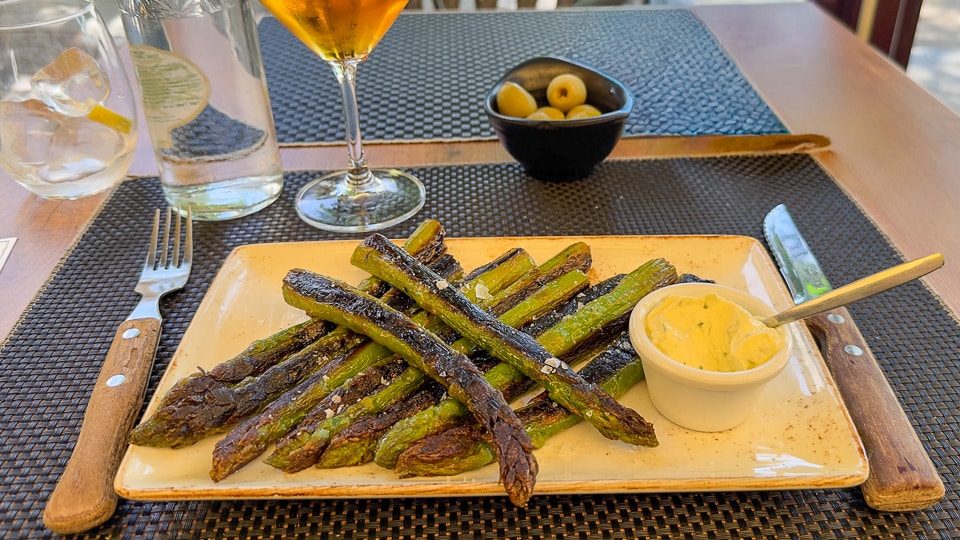
Spain’s cuisine is not particularly vegetarian-friendly in traditional form, but most regions have outstanding vegetable dishes worth knowing about. For example: Trigueros (wild asparagus, usually grilled with olive oil, common in Castilla); Pimientos de Padrón (grilled green peppers – not spicy); Salmorejo or Gazpacho (tomato-based cold vegetable soups from Andalucía): Pa Amb Tomàquet (grilled bread with crushed tomato, from Catalunya); Escalivada (a traditional Catalan dish of smoky, slow-roasted vegetables – primarily eggplant, bell peppers, and onions); and Tombet or Tumbet, (a traditional Mallorcan vegetable dish, similar to a ratatouille, but with potatoes.)
Spain’s Food and Wines by Region
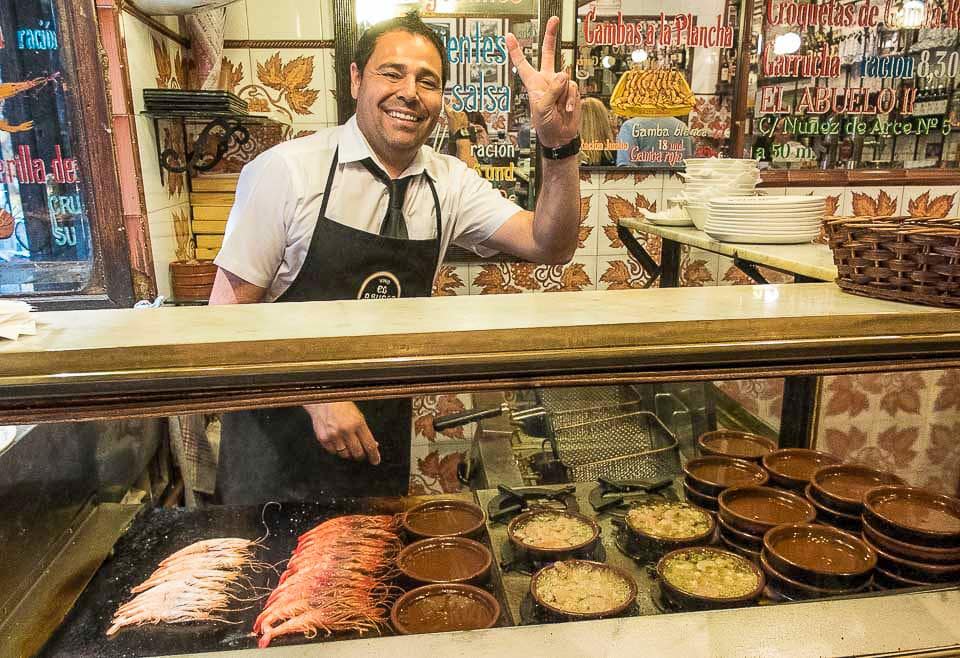
These days, many regional specialties can be enjoyed throughout the country. Most of the popular dishes named here could be listed in multiple regions. For the sake of simplicity, and to guide you to the source of the most interesting dishes of Spain, we’re doing our best to sort by region. (Our twelve regions here don’t exactly coincide with the 17 autonomous communities of Spain, but you get the idea.)
In each region, we attempt to highlight produce, typical dishes, drinks and sweets.
Madrid
Spain’s capital city, in the geographically most central province of Spain, has taken its licks for offering lots of traditional fare without a lot of innovation. This is changing. It’s increasingly common to find, say, an Asturian restaurant down the street from an Andalucian or Castilian venue, and around the corner from a Basque pintxo bar. I wouldn’t be surprised to find every regional plate we highlight in this post somewhere in Madrid.
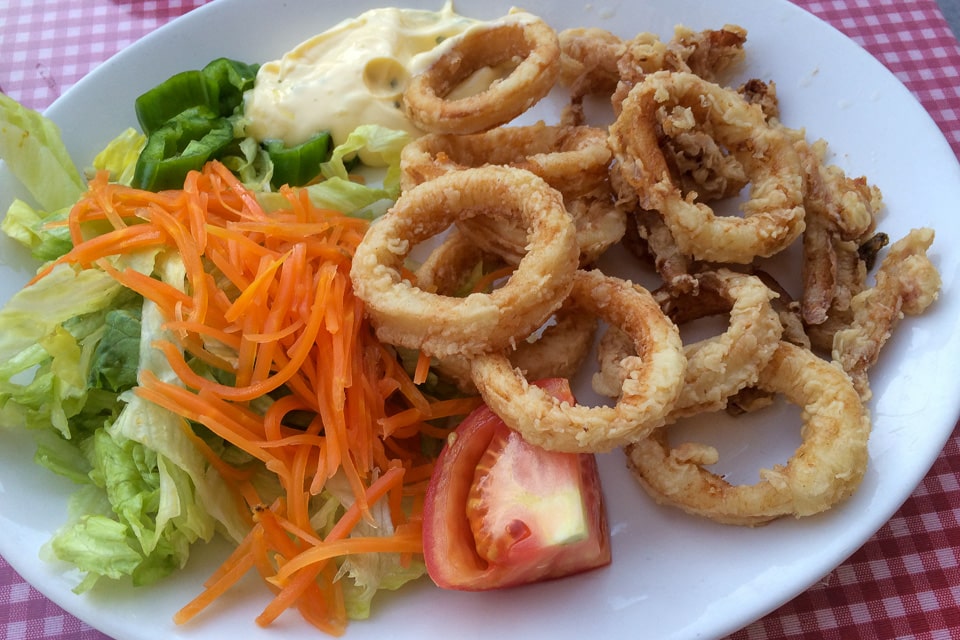
The province of Madrid, despite its population density, still produces wines, cheese, almonds, assorted vegetables, wheat, and more from the surrounding plains and the Sierra de Guadarrama mountain range to the north.
Cocido Madrileño is Madrid’s staple ‘comfort’ food, an inviting stew of rich broth with chickpeas, sausages and meat, potatoes and vegetables, designed to warm body and soul during the area’s cold winters. The classic restaurant best known for its cocido, La Bola, happens to be (still!) on the corner of the block we lived on in 1978!
In Madrid, one will inevitably sample one of the typical potato dishes, both satisfying and affordable. During our first year in Madrid, I practically lived on Ensaladilla Rusa, a creamy potato salad made with a smattering of carrots, peas and onions, and sometimes with tuna. Midday, a ración (a plate-sized portion, bigger than a tapa) was my go-to dish when I just didn’t know what I wanted. Recipe: here’s our favorite version of Ensaladilla Rusa.
A universal Spanish tapa found in Madrid and everywhere is the simple croqueta. The doughy fried croquette is a perfect backdrop for adding touches of ham (Croquetas de Jamón Serrano), cod (bacalao), or mushrooms. I’ve never attempted these at home, but an expert chef can make these the stuff of dreams.
As for wine, we enjoy bucking the trend. Instead of choosing between reds from Rioja or Ribera Del Duero, ask for some Madrid-based wines. Three subzones share responsibility for Madrid’s little known DO (Denominación de Origin) wines: Argana, Navalcarnero, San Martín and El Molar, favoring tempranillo and garnache grape varieties.
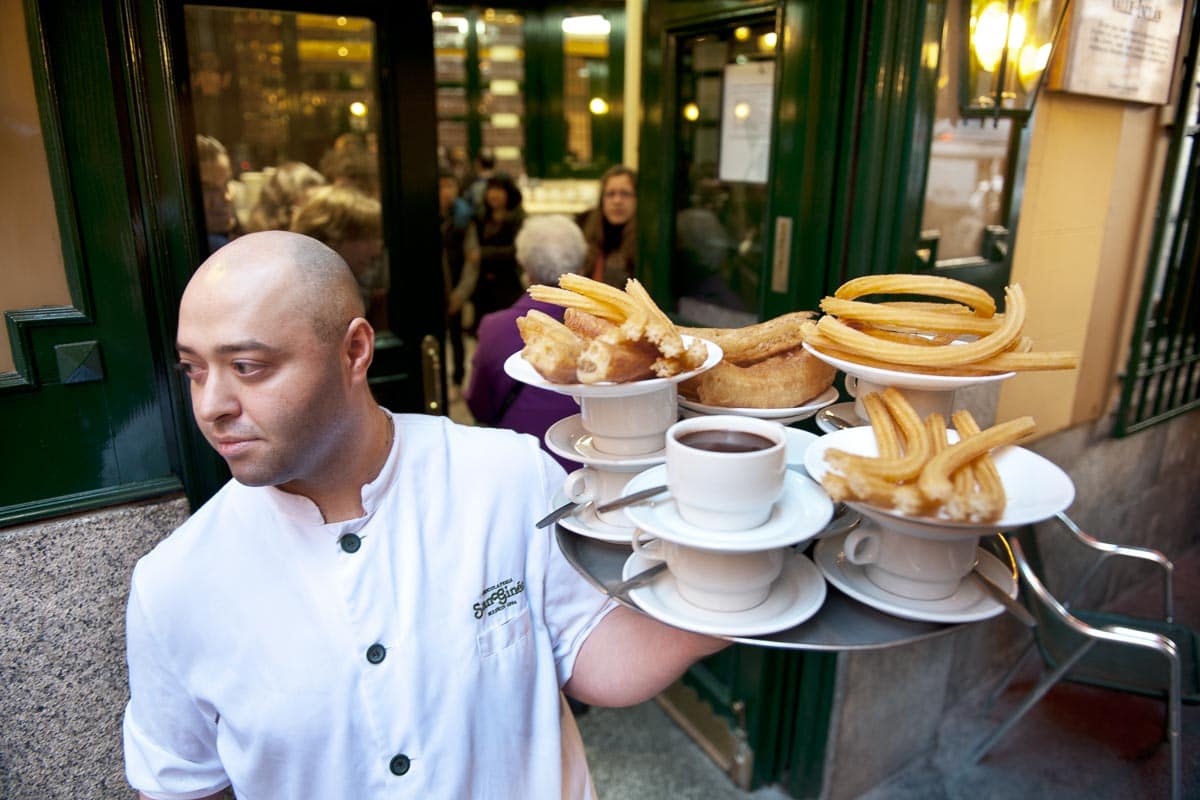
Finally, at the other end of the comfort food spectrum from cocido are Madrid’s famous churros – crispy fried dough, not unlike doughnuts, served hot and fresh. (Churros and the thicker porras are common in Andalucía, too.) To eat churros like a Madrileño, enjoy dipping them in thick chocolate after trasnochar, that is, staying up all night partying. To enjoy as we do, order both churros and porras and both chocolate and café con leche as soon as you get going in the morning.
Barcelona and Catalunya
I’m doomed to fail here, summarizing the best dishes of Barcelona. This is where we first lived in Spain, and where we discovered the riches of Catalan cuisine.
From the region, which includes the City of Barcelona plus the spectacular Costa Brava, Gerona, Lérida and Tarragona, comes seafood, tree fruits like apples and peaches, pine nuts, hazelnuts and chestnuts, artichokes, honey, cork (!), wine, cava, vermouth, and even olive oil. Keep in mind the artistic heritage here, too, of Gaudí, Dalí, and Pablo Casals, and you have the creative foundation for a top culinary scene. (Catalunya was awarded the 2025 World Region of Gastronomy by the International Institute of Gastronomy, Culture, Arts, and Tourism (IGCAT).)
We associate a delicious seafood paella with Barcelona, but below you’ll see why we’ve adjusted our thinking and positioned paella in the Valencia region. Here’s one version of a seafood paella, or shall we say, arroz con mariscos, rice with seafood. We could add notes on Tom’s version, but it’s forever being adapted. We suggest taking notes while you cook in case you produce your paella masterwork.
Authentic and typical Catalan dishes? We’ll start with pa amb tomàquet, Catalan for bread with tomato. It’s another dish we often prepare at home, because it is simply a toasted or grilled section of bread brushed with olive oil, rubbed with tomato pulp, and sprinkled with salt flakes.
For dessert, Crema Catalana, the soft custard dish topped with a thin, crisp layer of burnt sugar, may well be my favorite sweet in all of Spain. Perhaps that’s because I’ve never attempted it at home (though I do make a near-perfect flan, or so I’m told).
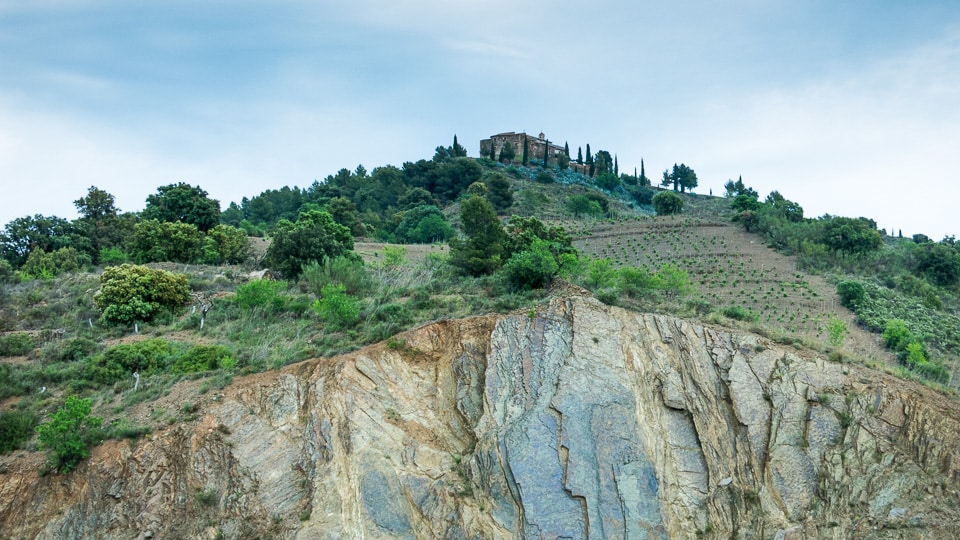
Wines of Catalunya are legendary, even alongside the more famous wines of Spain. With around twelve DO wines produced by more than 750 wineries and 9,500 winegrowers, an aficionado can get lost here. We’re partial to the Priorat wines from the slate mountainsides, Penedés from the area nestled between sea and mountains, and the fascinating contrast of cava (sparkling wine) production on one hand and vermut (vermouth) on the other.
Andalucía
From our personal experience, we can be forgiven, perhaps, if we confuse Andalucía with the soul of Spain. Again, this is based on our early introductions to Spain. (Don’t worry, we’ve since discovered the distinct soul of every other region, too!)
From the vast Andalucía region along Spain’s southern coast right up to the border with Portugal comes jamón serrano, the dry-cured ham Spain is so famous for. This is the delicacy, in the form of bone-in legs, you see hanging from the beams above most bars. The super-thin slices can be enjoyed solo or tucked into a mini bread roll.
Andalucía, encompassing farm and grazing lands, rivers and hills, produces other meats, fruits and vegetables, olives and olive oil. And here, the Moorish heritage that has influenced so much of Spain and Spanish cuisine is evident. Beyond the ever-present jamón serrano, the region delivers a long list of seafood to the table, drawn from both the Mediterranean Sea and Atlantic Ocean.
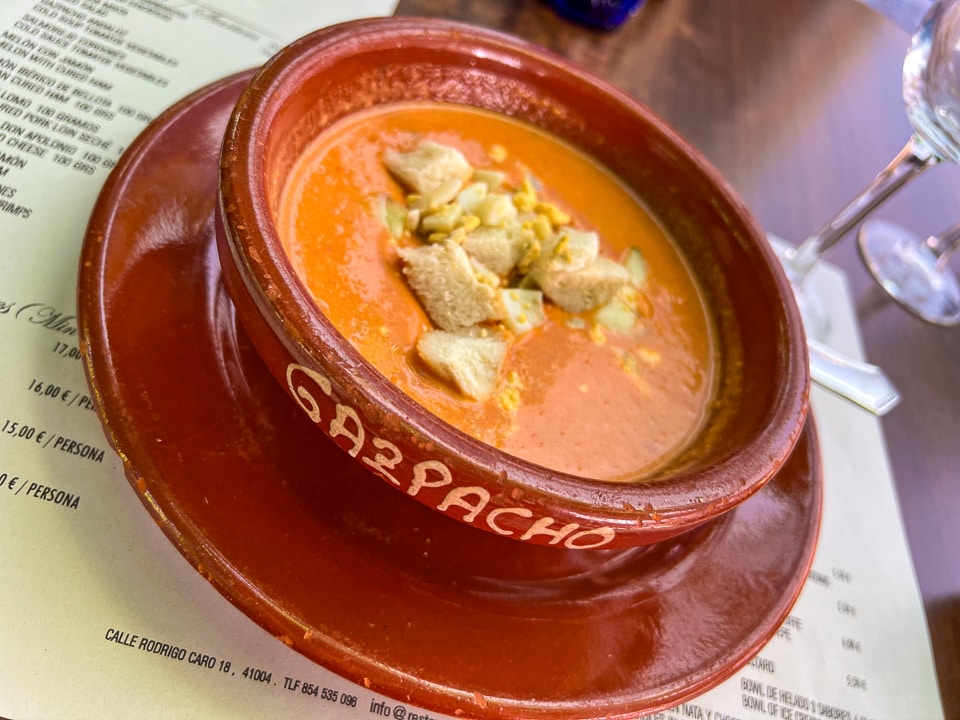
The most typical Andalusian dish besides the meat and fish? Gazpacho! We love this refreshing chilled tomato-based soup, and we enjoy that there are so many variations on this classic. Some variations are just the usual differences in preparation from household to household, town to town. Some depend on the variety of tomato or cucumber. Other distinctions might be the garnishes, or the use of bread crumbs.
During summer months, we make a batch of gazpacho almost weekly. Find our recipe here, something I’ve been tinkering with for decades. By all means, watch the Pedro Almodovar movie Women on the Verge of a Nervous Breakdown if you want to really juice up your gazpacho.
From Córdoba comes a different soup altogether, or is it a variation on a theme? Salmorejo is a thicker, creamier version using breadcrumbs, sometimes topped with chopped hard boiled egg. Still, its a cold tomato soup that some argue could be served as a dip! Or look for ajoblanco, prepared with garlic and almond.
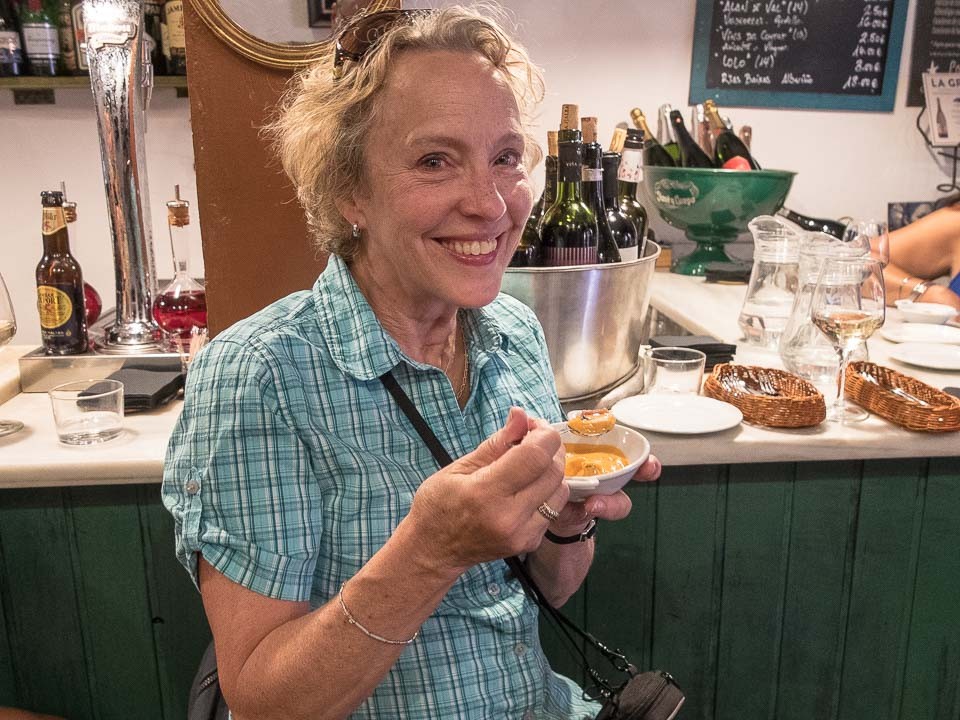
Just for you, two more recipes. This Salmorejo is from the always reliable Spanish Sabores. We slipped over to Extremadura to find this recipe for Gazpacho Estremeño. It’s much like ajoblanco, but with asparagus.
Famous sweets in Andalucía include marzipan and quince jelly, the latter specially yummy with cheese for dessert.
Read much more about foods from Andalucía in our guide to Jerez de la Frontera, awarded Spain’s Gastronomic Capital of 2026.
Andalucía is home to some of Spain’s biggest names in spirits (Pedro Domecq, Gonzalez Byass and Lustau, for example), producers of brandy, wines and sherry. When in Andalucía, head to Jerez for sherry. The name ‘sherry’ is an adaptation of the region’s name by the British, who famously adopted the beverage. Styles of sherry vary dramatically in color and from dry to sweet. We love the cold dry fino or manzanilla on a hot day, or the more complex amontillado or oloroso after dinner. On the brandy front, we enjoy Torres 10 in the USA, and Cardinal Mendoza when we can purchase a reasonably priced glass in Spain.
Valencia
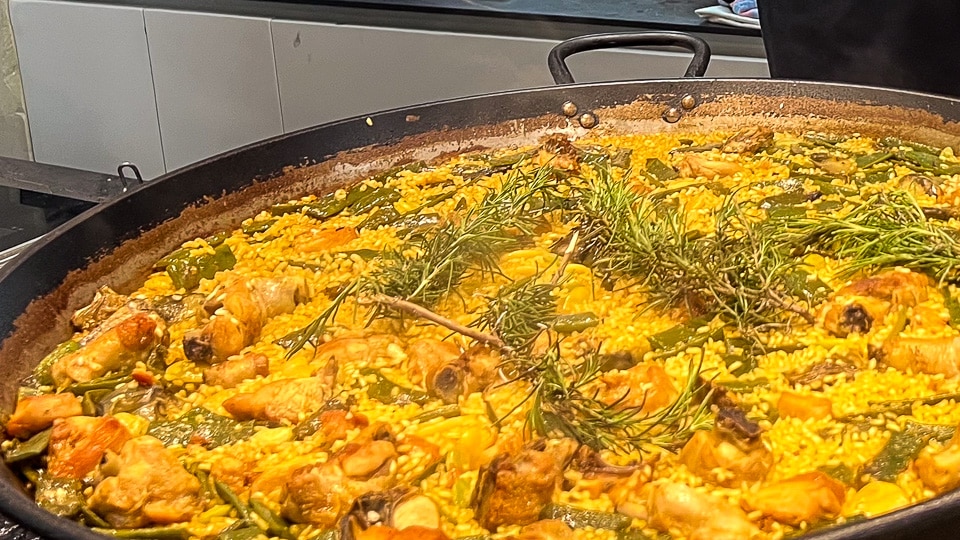
Hardly any introduction is needed for the region of Valencia, widely regarded as the breadbasket of Europe…and known for the eponymous granddaddy of paellas, Paella Valenciana. The source of its culinary leadership is naturally the depth and quality of its local produce, namely rice, oranges (introduced in the 10th Century by Moors), vegetables, legumes, fruit, and seafood.
Paella is the star of the show. The traditional rice dish is made with chicken, rabbit, a long flat green bean and large white beans, artichoke, garlic and onion, saffron and paprika. A common variation called fideuá is made with vermicelli instead of rice. Check out this YouTube video with a paella recipe and instructions. The cooking video is courtesy of Club Cocina Valencia where we enjoyed a cooking class.
Horchata, a sweet milky drink from the area, is made from local tigernuts. Buñuelos, soft melt in the mouth pastries best sprinkled with sugar, and turrón (nougat) round out the sweets category from Valencia.
Outside of popular wine and beer selections, the local beverage is Agua de Valencia – fresh orange juice with local cava. It’s so drinkable, they have every right to call it the ‘water of Valencia.’
Check out our Valencia post for lots more about food from this region.
Aragón, Navarra, La Rioja
Aragon, between Barcelona and Madrid, is frequently passed over by hurried tourists. Zaragoza stakes claim to the invention of tapas and hosts a creative and competitive tapas event each year. Combined, the three provinces that make up the Aragon region (Zaragoza, Huesca and Teruel) extend from the Ebro valley up to the Pyrenees, supplying the bountiful produce supporting the region’s gastronomy. Navarra (Pamplona) and La Rioja (Logroño) to the northwest encompass Spain’s most famous vineyards.
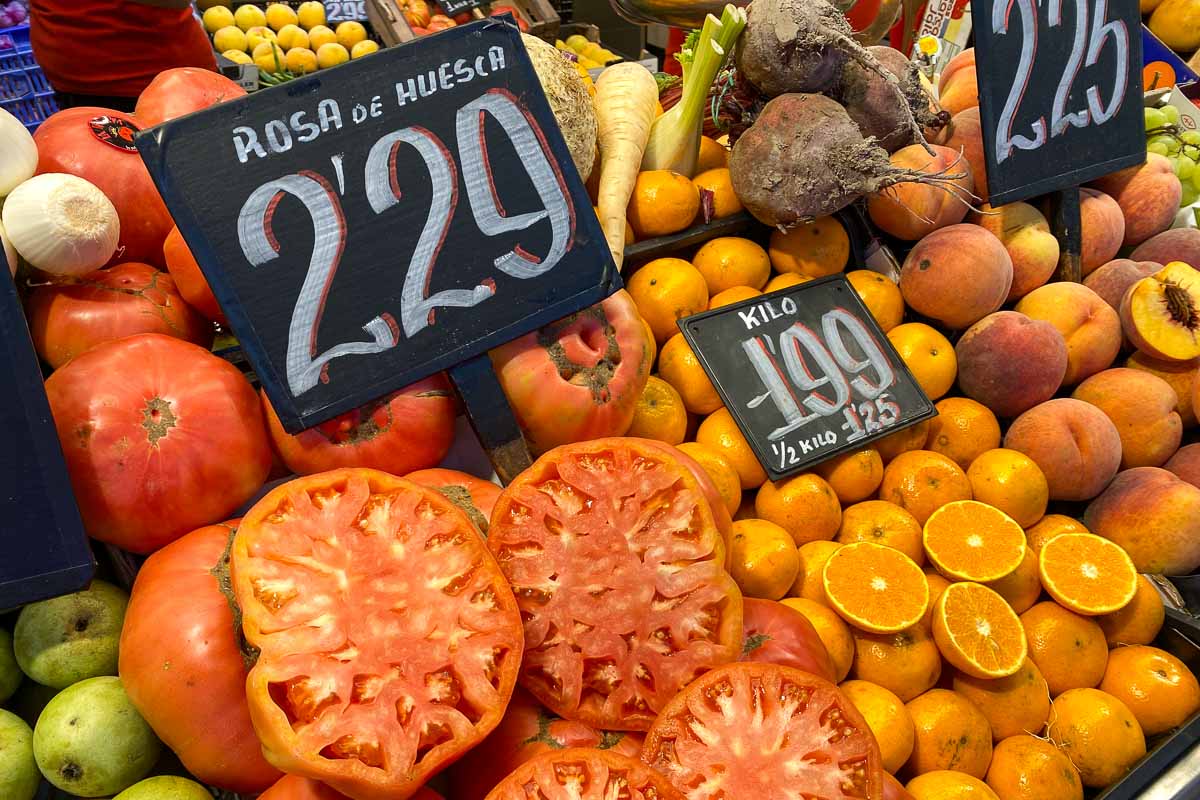
From this rich region come several Protected Denomination of Origin products and dishes, including lamb, Teruel ham, Calanda peaches, Fuentes onions, and a couple olive oils. Among the sources of gastro pride here are lamb and grilled meats, trout, vegetables such as artichokes and asparagus, grains, corn, peaches, cherries, plums, Iberico cheese, and the Teruel ham. The most representative presentation of dishes, ‘a la Riojana,’ involves cooking with tomatoes and peppers.
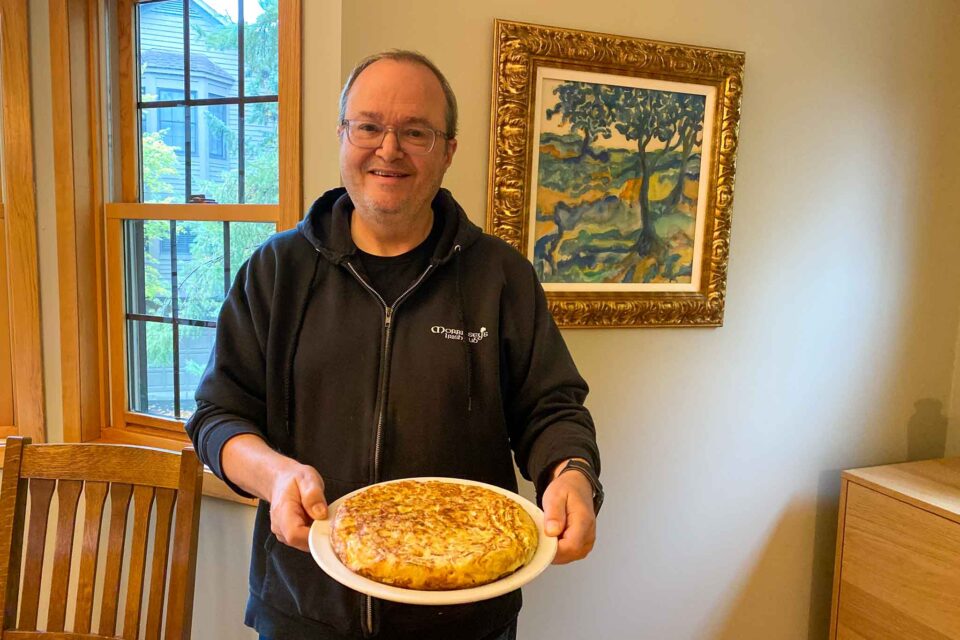
The Tortilla Española (potato omelet), though, might be the most ubiquitous Spanish taste treat. At breakfast, lunch, or any time, even a tapa portion will revive the weary traveler. While Spaniards everywhere will debate their personal style (with onions or without?), we’ll always associate this dish with Zaragoza, where we first tried our hand at cooking it. It remains a regular on our menu back home.
A recipe for Tortilla Española is included in this post about cooking and food tours in Zaragoza.
Trucha a la Navarra is a dish we discovered at a restaurant in Barcelona when we were first studying there. It brings to mind Hemingway fly fishing in Navarre, and the mountain regions of Spain that few tourists visit. A thick slab of ham is inserted in the whole trout, which is then gently baked in the oven. Here’s a recipe that seems to replicate what I remember.
Wine and the wine industry are central to this part of Spain. Rioja is recognized as the Spanish wine and is commonly available around the world. There’s plenty to learn, though, to distinguish the greats. We recommend a wine tour to learn about La Rioja wines and garnacha grapes, along with the region’s DOs: Dos Campo de Borja, Calatayud, Cariñena and Somotano. Find luxury hotels with extravagant architecture to complete the wine tour experience. We’re pining for a stay at the Frank Gehry-designed Marqués de Riscal Hotel. Click for some pretty pictures.
Basque Country and Cantabria
Defined by their North Atlantic coast on the Bay of Biscay, the Basque Country and Cantabria are rightly known for their quality seafood. Scores of fishing villages and Santander, the capital city of Cantabria, provide sardines, anchovies, barnacles, crabs, clams, langostinos, prawns and squid to Spain and the world. But meat and vegetables are also readily available from the Pyrenees.
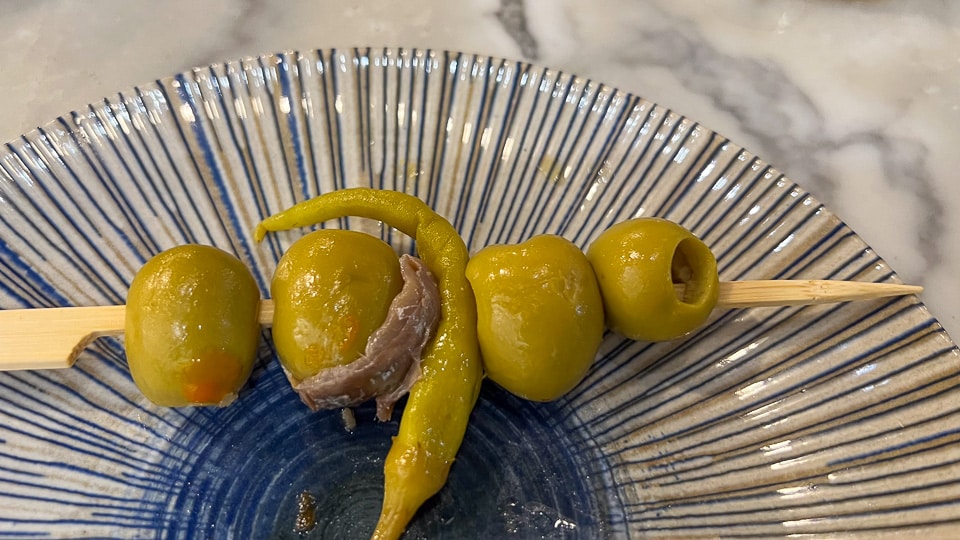
The most famous contribution to Spanish cuisine from these parts are pintxos – the stacked-up tapas using the best of local products. Read more about San Sebastian, the City of Pintxos. It’s maybe here that I should interject one sentence about one Spanish food that we first tried at a bar in San Sebastián: orejas, or pigs ears. Let’s just say there are a lot better things you can get at a pintxos bar.
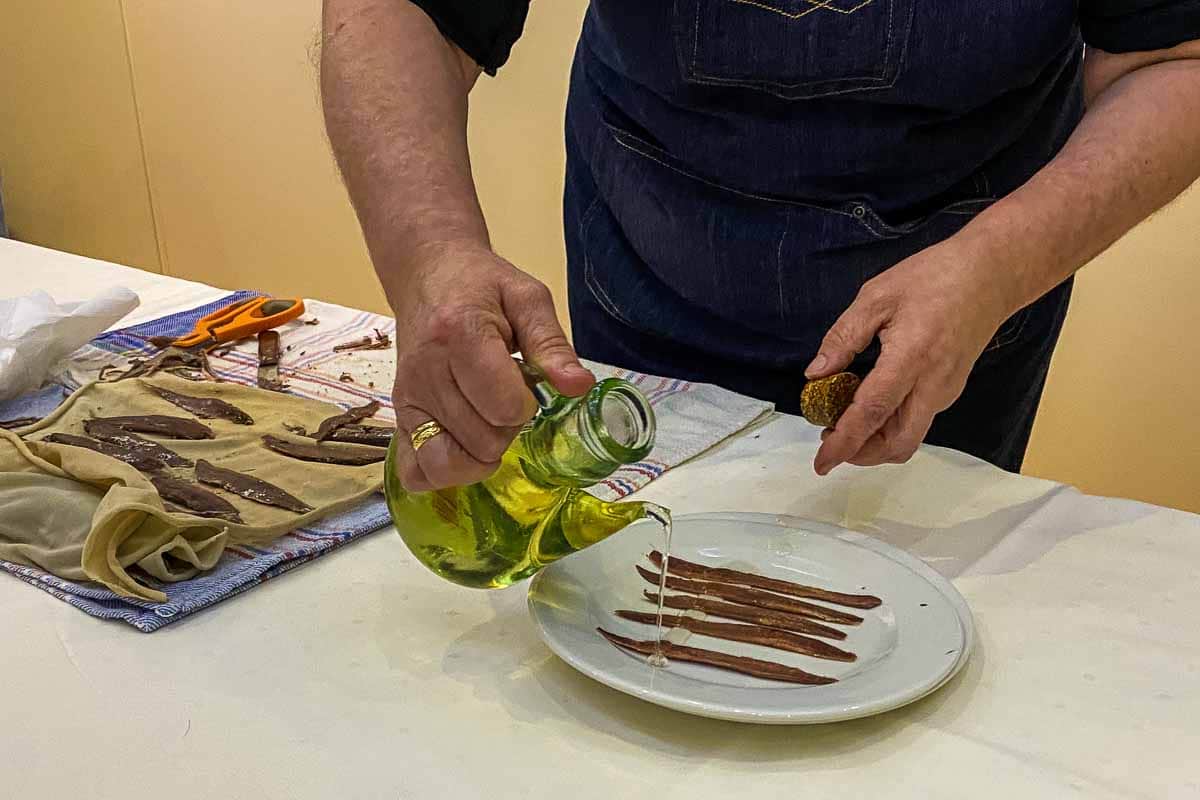
Among those precious products are the hand-packed anchovies you can find in Santander. I never knew I liked anchovies until I tried these, and the same may be said for fresh prepared sardines.
Other typical dishes include Bacalao al Pil Pil (cod with garlic and olive oil) and chipirones en su tinta, little squid in their ink. Don’t pass up a chance to order percebes (barnacles) if you see them available. Trying them for the first time in Cantabria was a real revelation. It’s work to eat them, but the succulent little bits are a seafood flavor revelation.
For the sweet tooth, dig into a Gâteau Basque, a delicious shortbread-type cake embracing an almond or black cherry filling. Another popular dessert is Idiazabal cheese (readily available in the U.S.) with quince (membrillo.)
With that cheese dessert, try a Basque cider. Or, the effervescent white wine Txakoli is excellent with seafood.
Galicia and Asturias
The Northwest corner of the Iberian Peninsula (think Santiago de Compostela in Galicia and Oviedo in Asturias) contributes some unique dishes to the national culinary profile, and a unique language, too. Asturias makes up an Autonomous Community of its own. Galicia combines the provinces or La Coruña, Lugo, Orense and Pontevedra, some of which will be familiar to pilgrims on the Camino de Santiago.
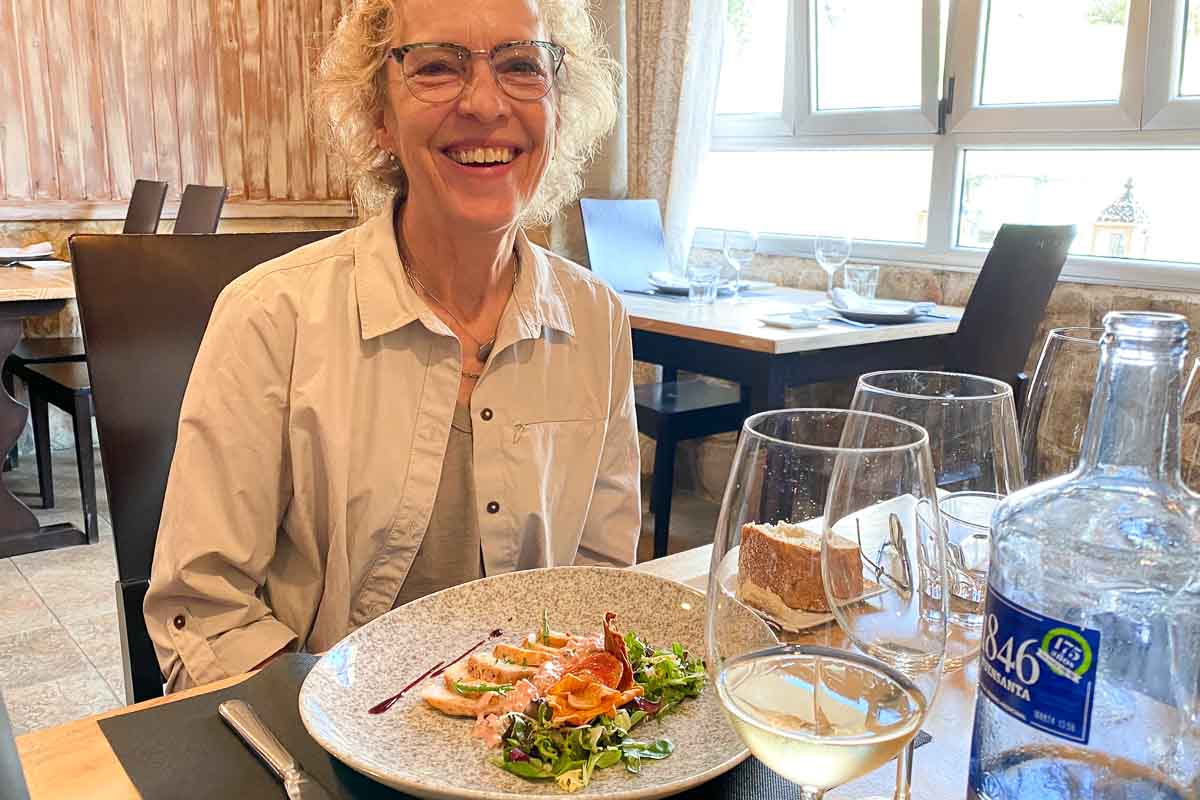
The Atlantic Ocean provides for this region, as do the fields and forests. At the fish market or in restaurants, look for pulpo (octopus), scallops, oysters and mussels, and all sorts of fish like sea bass, red bream, and turbot from the cold North Atlantic waters. From the land, latch onto the DO foods of the region: Fabada white beans, peppers, and the delicious Cabrales blue cheese.
Pimientos de Padrón, popular across the country, are the blistered peppers from the village of Padrón, served with large flakes of salt.
Fabada Asturiana, a white bean stew with chorizo and morcilla is the region’s hallmark dish.
Cachopo, a thick slice of veal stuffed with ham and cheese then breaded and fried is another mainstay of the region. Try it and you won’t be hungry again for a week.
Empanadas are another source of pride for the Galicia region. With ties to the Latin American staple, empanadas are pastries folded over a savory concoction. Imagine every sort of filling: tuna with peppers, vegetables, beans, meat. You can purchase empanadas at the market as well as the bar. Just ask for the most typical local variety.
Whether you’ve walked the Camino or not, an order of Tarta de Santiago (almond cake) is a must. For pilgrims, the typical St. James Cross decorating each slice makes consuming this treat almost an obligation.
Albariño wine from the region, among our favorites to have on hand in the summer, pairs especially well with seafood. Enjoy sidra (cider) anytime, poured dramatically from on high into a glass held low, aerating the crisp beverage.
Castilla y León
We love this region for its history, particularly from the Middle Ages, and for its sincere cuisine. Stretching from Madrid up to Galicia, this huge region includes nine provinces and plenty of agriculture: Avila, Burgos, León Palencia, Salamanca, Segovia, Soria, Valladolid and Zamora. (Our various Spanish teachers over the years declare this region to have the most pure – that is, without accent – spoken Castillano of the peninsula, too.) The beautiful landscape across the Ribera del Duero wine region meets classic high plains and cities packed with historic universities, churches, castles, and modern urban areas.
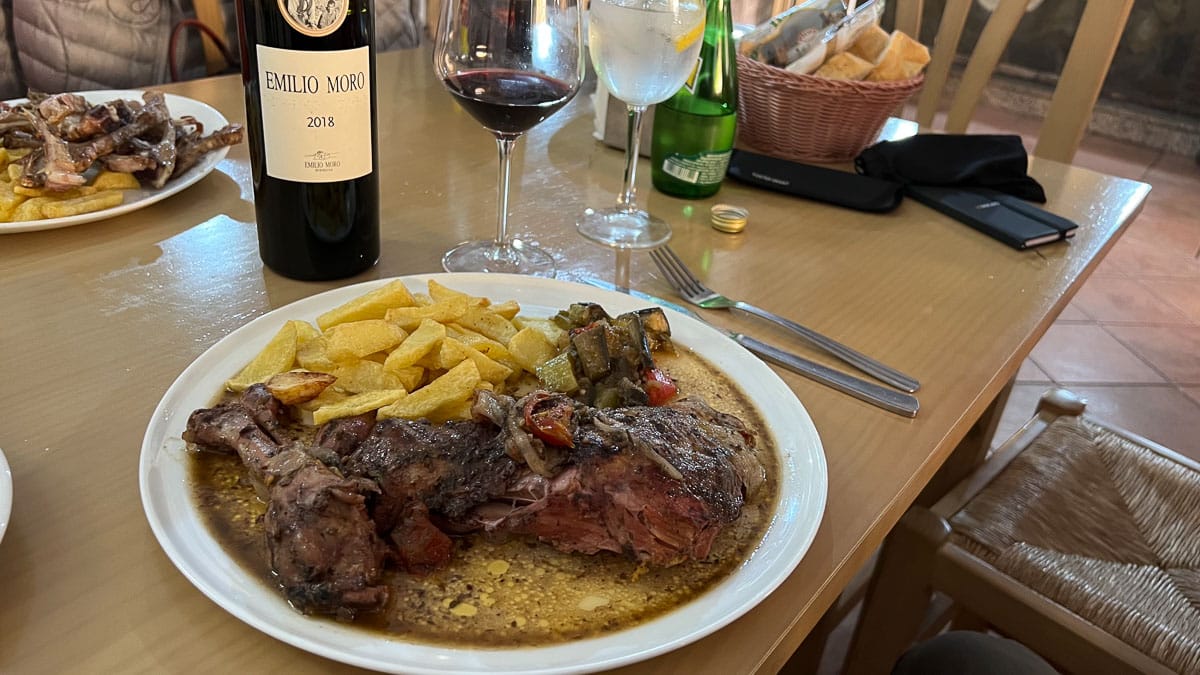
We lived for a month in a small town in Segovia, a long time ago, and still prepare roasted leg of lamb the Spanish way on holidays. Besides roasted lamb (cordero asado) and suckling pig (cochinillo), this is a great region for veal, sausages and legumes.
For holidays and special occasions, you may find us gathered for dinner with our version of Cordero Asado. For dessert, we’re suckers for a simple Flan to wrap up our meal. We’re pleased to share our recipes here. When ordering flan in a restaurant, you can ask if it casero, or homemade.
In our opinion, the most outstanding wines of Spain are from the Ribera del Duero region. In fact, if given a choice of Rioja or Ribera del Duero at a restaurant in other parts of Spain, choosing the Ribera may give you some cred with the wait staff.
Castilla-La Mancha
On the opposite side of Madrid from Castilla y Leon, we find Castilla-La Mancha drifting off to the southeast. It provides yet another distinct gastronomic environment. This region, along with Extremadura, is one of the most sparsely populated sections of Spain. No wonder it’s home to vast grazing lands. Basically, we’re talking about the space between Madrid and Valencia: Toledo, Cuenca, Albacete, Ciudad Real and Guadalajara.
Highlighted products from Castile-La Mancha include both game and farm animals and the sorts of ingredients that naturally complement them: peppers, tomatoes, garlic, onions, and olive oil. Manchego cheese hails from here.
The dishes you’ll want are pisto Manchego (a sort of ratatouille I would cook up when we lived in Madrid, using La Mancha eggplant with tomatoes, peppers, garlic and olive oil). Roasted red peppers are a local product I’m happy to buy prepared at the market to brighten main or side dishes.
For sweets, definitely go out of your way for some marzipan. It’s made throughout the country, especially around the holidays, but is a perennial favorite of Toledo and this region.
Wine lovers will recognize Castile La Mancha’s DO wines, in particular the Valdepeñas reds, generally made from Tempranillo grapes and imbibed young.
Extremadura
Oh, the oft-neglected Extremadura region (by tourists, at any rate) is one of our favorites, largely due to the local cuisine. This remote region’s two provinces, Cáceres and Badajoz, border Portugal, and the landscape shapes everything on the table: river valleys, mountain ranges, and rolling hills of oak groves feed an extraordinary larder.
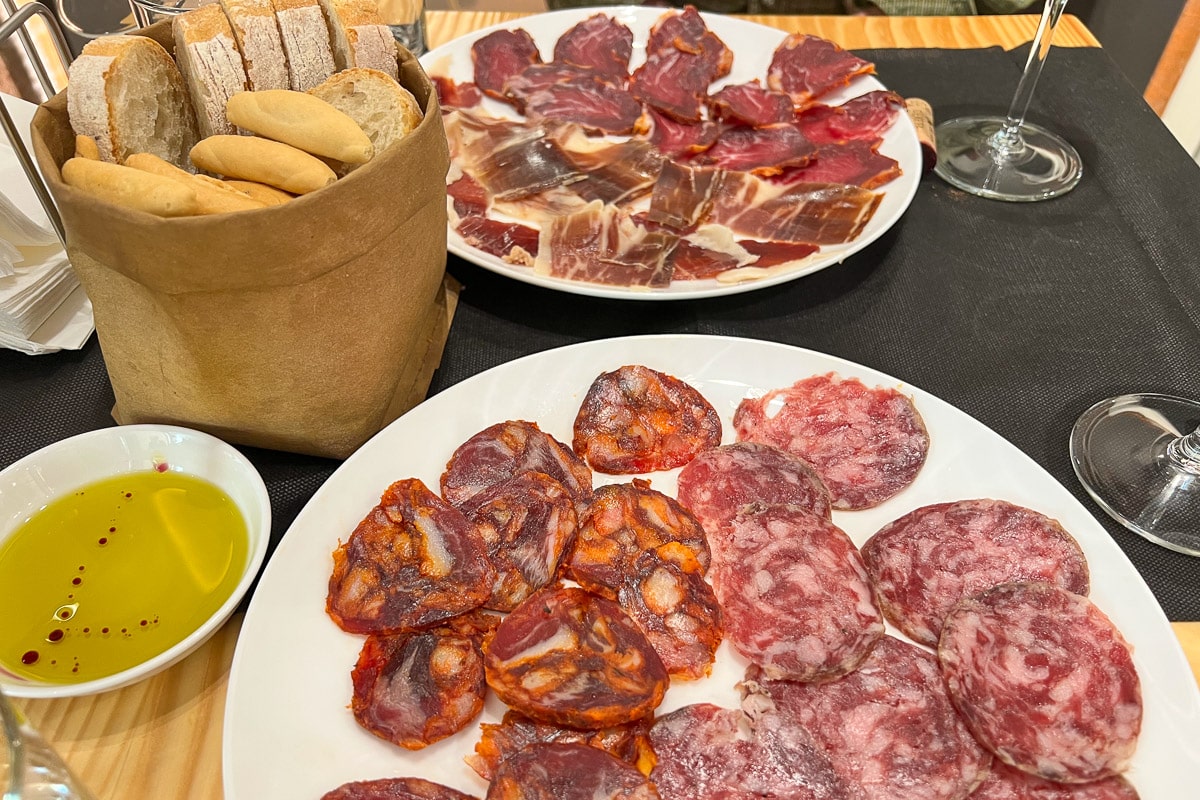
What’s produced here? Pretty much all the essential ingredients of Spanish cuisine: paprika, rice, tomatoes, and (drum roll) acorns perfect for pig consumption. That’s why this jamón bellota, above all other Spanish jamón, has its stellar taste and reputation. Please, just eat this top-of-the-line jamón like candy: thinly sliced, nothing added.
Typical in Extremadura is another great national dish, migas. This is to Spain as a casserole or ‘hot dish’ is to middle America. At its most basic, migas are fried breadcrumbs with chorizo. But imagine this dish as a creative and utilitarian way to feed the farmhands or neighbors, using whatever seasonings, meats, and vegetables on hand.
The best Extremadura dishes, outside of jamón, are meat-based but accompanied by generous and inventive vegetable options. Also look for pheasant, game hen, or partridge dishes. Truffles, mushrooms, and wild asparagus complement all of the above and attest to the ‘farm-to-table’ essence of gastronomy here. Extremadura offers my kind of desserts: cheeses, honey, nuts, melons, figs.
Read more about our wonderful food experiences in Cáceres in the post. For more, dive into this useful site from Tourism Spain, outlining the gastronomy of Extremadura.
Canary Islands
The Canary Islands, including Las Palmas and Santa Cruz de Tenerife, are an exciting culinary destination, as the cuisine combines the Spanish basics with North African twists. (These Atlantic islands lie along the same parallel as Morocco.)
Available food is based both on geography (yes, fish is a good bet) and the history of explorers (and pirates) who passed this way. Even today, dining options tend to be organized by tastes of European visitors, from Italy to Scandinavia to the UK. Although the winters are not all that cold, a hearty stew is one of the island’s most popular dishes.
After a couple of visits to the Canaries, my culinary memory is fixed on the delightful red and green dipping sauces familiar to these parts. The herb and olive oil mojo sauces can be drizzled on the popular local Papas Arrugadas, over grilled cheese, or swept up with Spain’s course crusty bread. Lauren at Spanish Sabores shares her Mojo Picón and Canarian Mojo Verde sauce recipes here.
Or enjoy an overview of the traditional dishes of the Canary Islands.
Balearic Islands
Just as important as every other region’s cuisine, that of the Balearic Islands is rich, historic and distinct. The four islands comprising the Balearics are located in the Mediterranean Sea east and northeast of Valencia, and I’ve been lucky enough to visit two, Mallorca and Menorca.
These islands still produce a significant share of their food, including olive oil, sausages, fruits and vegetables as well as seafood. Famous Mahon cheese is named for the capital city of Menorca.
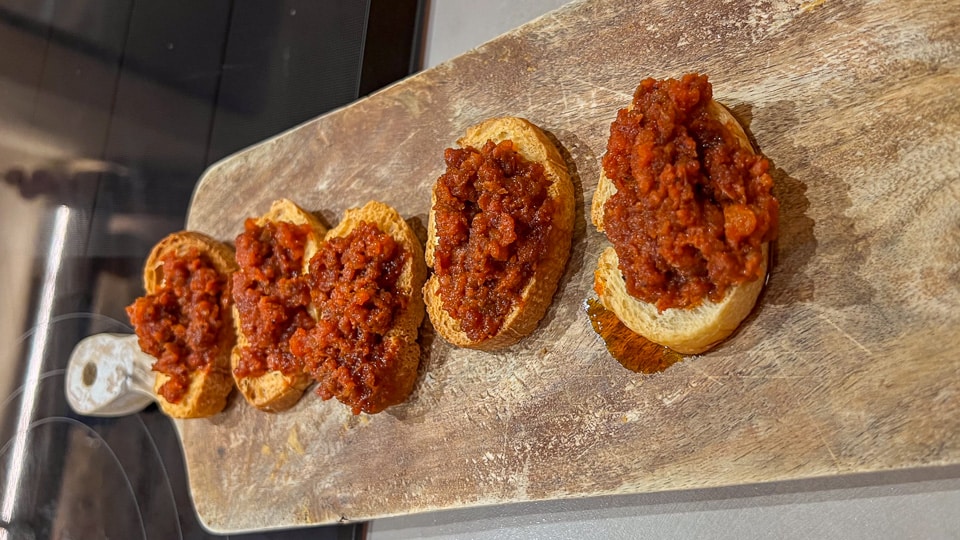
When on the islands, try sobrassada, a colorful, spreadable sausage of pork with paprika and other spices. Because the climate here is too humid for the typical meat curing process of the Iberian Peninsula, this alternate preparation results in a delightful savory departure for a tapa or appetizer.
You might just have to travel to Mallorca to find the world’s best ensaimada, a flaky spiral pastry available year-round here and maybe for holidays on the Peninsula.
My colleague and travel companion, Courtney Drake-McDonough, reported on the food scene of Mallorca for her blog, Real Food Traveler. With wonderful detail, she includes ensaimada in her list of 12 Favorite Foods in Mallorca.
Though the limited Balearic wines don’t generally make it off the island, visit the Xoriguer Gin Distillery on Mahon, Menorca, to learn about juniper berries and gin-making. And to sample, of course. One of their refreshing products is Pomada, a gin and lemonade blend which you can order at most local bars and restaurants, or purchase at the distillery.
Best Resources for Spanish Food and Wine
If you travel to any one place in Spain, chances are you can sample the variety of foods and wines from the entire country. But to travel around Spain and visit multiple Autonomous Communities means you’ll taste the best of the best: ultra-fresh, hyper-local products prepared in the distinctive style of the area. Dig in to understand, even to taste, the regional pride and national character that come together across a table.
Spain’s Tourism website is excellent. Use it to plan your visit to all parts of the country. Simply type ‘recipes’ into the search bar for a number of Food and Oenology posts that include recipes. Or start with this one, featuring recipes for the most famous dishes of Spain.
Devour Tours is one of our favorite resources for food tours and recipes from all over Spain. (They, in fact, operate elsewhere in Europe, too.) Check out the blog pages on Devour’s site, too, very useful for planning your foodie outings.
Walk and Eat Spain concentrates solely on food tours in Madrid. That’s a plus; we’ve discovered so many new and classic food purveyors through them, and gained a wealth of knowledge about wine and agriculture in the region of Madrid and beyond.
To go down the rabbit hole that is tracking all the Protected DO (designation of origin) and GI (geographical indication) foods and beverages, visit FoodsWinesSpain. It offers maps of all the designated wines, olive oils, cheeses, meats (fresh and meat products), fruits and vegetables. Fascinating and a great way to be sure you are sampling the prized products in each Autonomous Community.
Spanish Sabores (sabores means flavors) provides recipes and cooking tips for all sorts of Spanish dishes. Spanish Sabores was created by our friend and Devour Tours founder Lauren Aloise. And believe me, once getting a personal food tour of Madrid with Lauren is a treat we will not forget.
The Foods and Wines of Spain, by Penelope Casas (with introduction by Craig Claiborne) is a comprehensive yet hugely accessible cookbook of Spanish dishes in English.
La Tienda is our go-to online shop for specialty Spanish food products. It was a god send to us to finally find a place where we could get Spanish foods in the United States. It is worth noting that La Tienda was the first company that received permission to import Spanish cured meats such as jamón and chorizo into the United States. So, to people like us, who had once had chorizo confiscated at the border, that was critical. Shop for kitchenware, too, and find recipes.
Finally, go to Spain and enjoy the food! Use Spain’s events calendar to home in on Spain’s fabulous food and wine festivals, and plan your next itinerary accordingly. Buen Provecho!
First time here? Visit our Start Here page → to get oriented and get a link to our 50 best travel tips.
Frequently Asked Questions: Traditional Spanish Foods
What are the most famous traditional Spanish foods?
Spain’s most internationally recognized traditional foods include paella (the rice dish from Valencia, made with chicken, rabbit, and vegetables), gazpacho (the cold tomato soup from Andalucía), jamón ibérico (dry-cured acorn-fed ham from Extremadura and beyond), tortilla española (the potato and egg omelette found everywhere from bars to home kitchens), and pintxos (the stacked tapas of the Basque Country). Each of these is deeply regional in origin and telling you something about the landscape and culture it came from.
What is the difference between tapas and pintxos?
Tapas are small portions of food served in bars and restaurants throughout Spain — originally a small bite served alongside a drink, now a full eating style. The word comes from the Spanish verb tapar, to cover, and the tradition likely evolved from covering a glass with a small plate of food. Pintxos (or pinchos in Castilian Spanish) are the Basque Country’s version: small bites typically served on a slice of bread, skewered with a toothpick, and lined up on the bar for customers to help themselves. The key difference is that pintxos are usually pre-assembled and displayed, while tapas are typically ordered.
What is paella and where does it come from?
Paella is Spain’s most famous rice dish, and it comes from Valencia on Spain’s eastern Mediterranean coast. Traditional Paella Valenciana is made with short-grain rice, chicken, rabbit, a flat green bean called bajoqueta, large white beans, artichoke, garlic, saffron, and paprika — cooked in a wide, shallow pan over an open fire. Despite what you find in most tourist restaurants, seafood paella is not the “original” paella — it’s a popular variation. The best paella is still eaten at lunchtime in Valencia, ideally outside, with local wine.
What is jamón ibérico and how is it different from regular ham?
Jamón ibérico is Spain’s finest cured ham, made from black Iberian pigs that roam the oak forests (dehesas) of Extremadura, Huelva, and Salamanca, fattening on acorns. The acorn diet gives the fat a uniquely nutty, silky flavor that sets it apart from ordinary jamón serrano (which is made from white pigs and cured more simply). The best jamón ibérico de bellota (acorn-fed) is among the most expensive foods in the world — and worth every euro. It should be served at room temperature, sliced paper-thin, with nothing added.
What should I eat for breakfast in Spain?
A traditional Spanish breakfast is light by northern European or American standards: a café con leche (half espresso, half hot milk) with a tostada (toasted bread rubbed with tomato and olive oil, or simply with butter and jam), or churros dipped in thick hot chocolate. In Madrid, the famous Chocolatería San Ginés has been serving churros with chocolate since 1894. A mid-morning second breakfast — a bocadillo (sandwich) or a portion of tortilla española — is common and keeps you going until Spain’s late lunch hour.
When do Spanish people eat dinner?
Much later than most international visitors expect. Lunch is the main meal of the day in Spain, typically eaten between 2pm and 4pm — often a leisurely multi-course affair, especially on weekends. Dinner is rarely eaten before 9pm in most of Spain, and in Andalucía and Madrid, 10 p.m. is common. Restaurants often don’t even open for dinner until 8:30 p.m. or 9 p.m. If you arrive at 7 p.m. expecting dinner, you may find the kitchen closed or the restaurant empty. Adjust your internal clock, embrace the late schedule, and you’ll eat far better — the Spanish way is worth the wait.
What wine should I order in Spain?
It depends where you are. Rioja (Tempranillo-based reds from La Rioja) is Spain’s most internationally recognized wine and is reliably excellent. For something more distinctive, ask for a Ribera del Duero red — in Kris’s view, the finest wines Spain produces. In Galicia, order Albariño with seafood — a crisp, aromatic white that is one of Europe’s great food wines. In Catalunya, explore Priorat reds (powerful, minerally) or Penedès whites. In Andalucía, a cold glass of fino or manzanilla sherry with jamón is one of the great food-and-wine combinations in the world. In the Basque Country, try Txakoli, a lightly sparkling white that’s perfect with pintxos.
What is the menú del día and how does it work?
The menú del día (menu of the day) is one of the great bargains in Spanish dining and is how most working Spaniards eat their main midday meal. Available at most restaurants from Monday to Friday at lunchtime, it typically includes a first course (often soup or salad), a second course (meat or fish), dessert, bread, and a glass of wine or water — all for €12–18 depending on the city and quality of the restaurant. The dishes change daily based on what’s fresh. Ordering the menú del día is both economical and the best way to eat like a local — and at lunchtime, not dinner, which is the Spanish way.