The Andalucia region of Spain has had a special place in our hearts since we first visited in 1975. That was before I spoke any Spanish, before the fast trains, and before we returned to live in Spain for a couple years in the late 1970s. Jerez de la Frontera was not on our itinerary back then, though we got as far as nearby Seville (Sevilla) and have returned to Andalucía many times since.
Planning a broader trip to Spain? Our Spain Travel Guide for Travelers Over 50 covers everything from Madrid to Andalucía, with tips on trains, food, itineraries, and slow travel.
Inspired by Jerez being named the 2026 Gastronomic Capital of Spain, we recently explored the city of Jerez and this sherry region of Cádiz. Our Travel Past 50 guide to Jerez takes into account that Jerez de la Frontera is not only the largest city in Cádiz province, but also the world capital of sherry wine and one of Spain’s great living museums of equestrian culture and flamenco.
In this guide, you’ll find everything you need to plan several days in Jerez: which bodegas to visit for sherry tastings, where to catch authentic flamenco, how to experience the world-famous Carthusian horses (including a little-known breeding center most visitors miss), the best restaurants, from roadside ventas to award-winning tasting menus, and how to use Jerez as a base for the wider Cádiz province. This is a corner of Andalucía you won’t want to miss. By the way, both the Spain tourism site and the Cádiz province website offer great, up-to-date itinerary suggestions.
The Sherry Triangle
Jerez’s location in the South of Spain explains much about its heritage and its current appeal. Located about an hour and a half south of Seville, Jerez is just one point of the defined sherry triangle – the official region of the sherry D.O. – between Jerez, El Puerto de Santa Maria, both on the Guadalete River, and Sanlúcar de Barrameda to the west at the mouth of the Guadalquivir River. From Jerez, it’s only 22 km (13 miles) to Puerto on the Bay of Cadiz, and under 30 km (18 miles) to Sanlúcar and the Atlantic Ocean.
Facing the Atlantic, below seasonally hot sunshine, and laden with an almost-white, sandy, salty soil still rich with remnants of sea life, this small area creates all the right conditions for the dry sherry wines.
For starters, it’s nice to know that the word ‘sherry’ is derived from the city’s name Jerez (originally Xérèx), which evolved from the Roman name Cesaris and the Arabic version, Sherish. In Spanish, the city and the wine, Jerez, are pronounced (hare-ETH).
(You can jump below for more history of the city.)
Jerez has been the center of wine production since the Phoenicians introduced viniculture to the area around 1100 B.C. Once the Moors introduced distillation, the fortified wines – including brandy – grew steadily more popular. They are primarily made from the white Palomino grape, with the sweeter versions using the Pedro Ximenez grape, or occasionally Moscatel.
The process utilizes a velo de flor (literally ‘flower veil’, or layer of yeast) to prevent oxidation, and a solera (ground floor) system that, step by step, adds a portion of younger wine to the barreled older wines to extend the aging process and enhance the flavors.
Not coincidentally, the wines – at 17% alcohol or more – were adapted to withstand long, long journeys by ship. Christopher Columbus’ third voyage across the Atlantic and Magellan’s around the world were both launched from this Cádiz area, loaded with barrels of sherry. It’s said that sherry comprised the biggest expenditure of all Magellen’s supplies.
By the 18th Century, the bulk of sherry was exported to Great Britain, hence the ownership of many bodegas by United Kingdom families and companies. (You’ll find the same is true of Portugal’s port wines.)
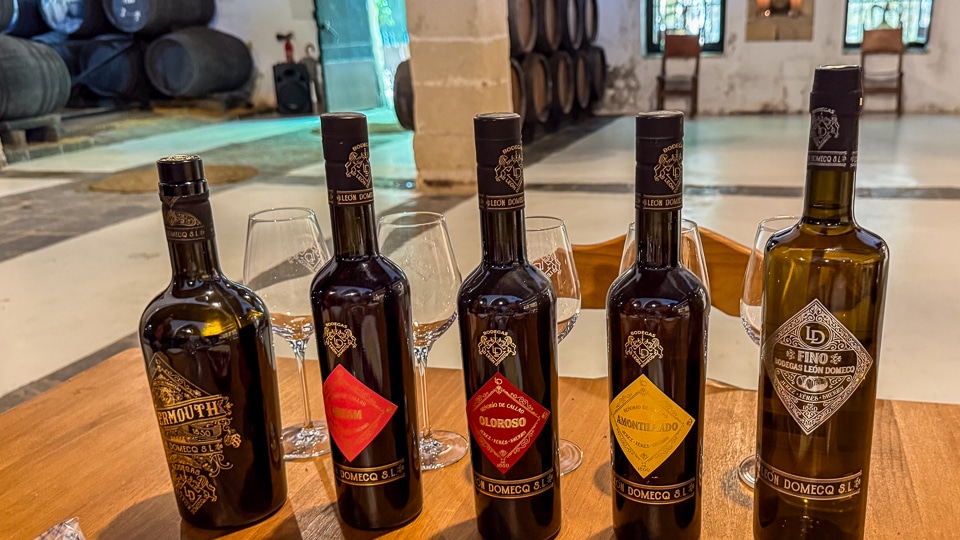
The golden wines – from dry fino and amontillado sherries to the progressively sweeter oloroso, cream, and Pedro Ximenez varieties – are a pleasure to look at and to sip, no matter the time of day. Like any great wine experience, sherry wines are best enjoyed by exploring their place of origin. But they are also easy to purchase in the U.S. Just keep a bottle of fino or amontillado well chilled in your fridge to welcome unexpected guests, or an oloroso to enjoy with rich foods or after dinner.
A sherry primer and tasting notes
Fino. Generally 10 years old, dry, notes of honey. Pairs with almonds, olives, anchovies, jamón, fish, sushi. (Less than 1 gram of sugar per liter; 15-17% alcohol.)
N.B. Manzanilla is an especially light fino from nearby Sanlúcar, essentially the same as fino, but from a different place. When in Sanlúcar, do opt for a manzanilla. Elsewhere, you can’t go wrong comparing tastes of the two.
Amontillado. 30 years. Amontillado is sometimes dubbed mentiroso (liar) because it smells sweet but tastes dry. Complex, one of my favorites, and delicious with shrimp and clam stew, or with semi-cured cheeses, asparagus, artichokes. (2 grams sugar per liter; 17% alcohol).
Oloroso. Meaning aromatic. 40 years. A dark varnish color. Lovely to sip or pair with rich foods or cheeses. (Around 20-22% alcohol.)
Palo Cortado. This has the nose of amontillado but tastes smooth like an oloroso. The name, ‘cut stick’ refers to the chalk notation on a barrel if the sherry has surpassed the defined alcohol level of 17%. It’s then removed from the normal production process and bottled and sold separately, a rare potion worth a try if you’re lucky enough to find it.
Cream. Cream sherries are blends of dry and sweet varieties, for example 80% oloroso and 20% Pedro Ximenez. (135 grams sugar per liter. 18-22% alcohol.)
Pedro Ximenez. Named for the grape, this sweet version of sherry is made by stopping the fermentation to keep alcohol low while the sugar climbs to 450 grams per liter. Still, this is not a cloying sweet wine, but intense and fresh.
Bodegas and vineyards
By all means, visit a winemaker’s bodega to learn more with tastings and explanations of the process. There are many tour opportunities right in and around central Jerez at authentic sherry bodegas. Some are operated by the big dozen or so major companies: González Byass (Tio Pepe), Domecq (Fundador), Lustau, Grupo Estévez, and Grupo Garvey are examples of top wineries. The Tio Pepe Hotel and Bodega beside the alcázar (castle) dominate the Jerez city center.
But dig further and you’ll find inviting small bodegas right in the city, with their high ceilings, cool interiors, and pyramid-shaped stacks of barrels. Or grab a taxi and get out of town and into the vineyards.
Here are some recommendations:
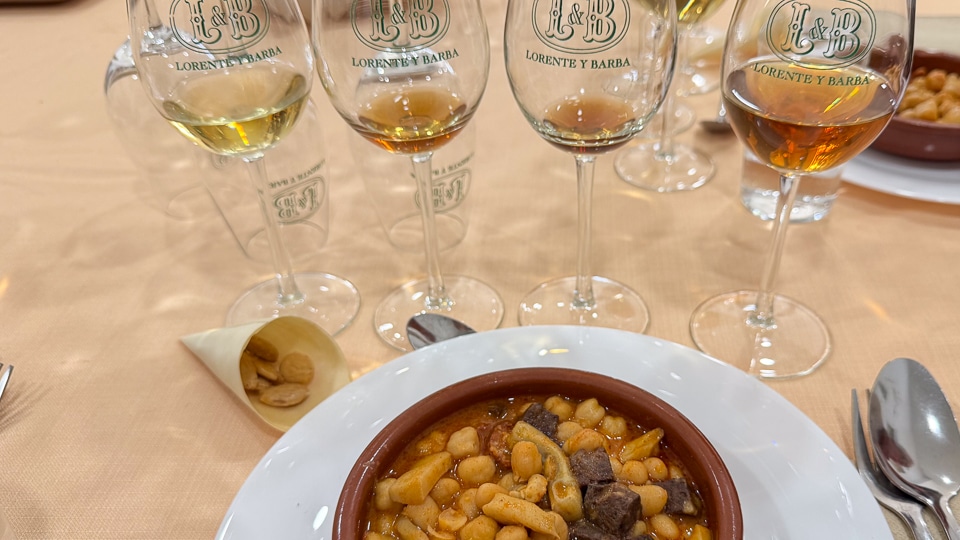
Bodegas León Domecq is available for private tastings and wonderful paired dishes, accommodating groups of two to seventy or more. Here we learned about the velo de flor (yeast) process, and were introduced to their extraordinary sherry vinegars, some aged 100 years. Yes, I purchased a bottle of 20 year old sherry vinegar. And here is where we were treated to, among other courses, a wonderful fideo soup with shrimp – spiked with a bit of sherry, of course – a dish I’ll do my best to recreate at home. Highly recommended for a convenient location in Jerez, equipped to educate and entertain out of the adjacent kitchen.
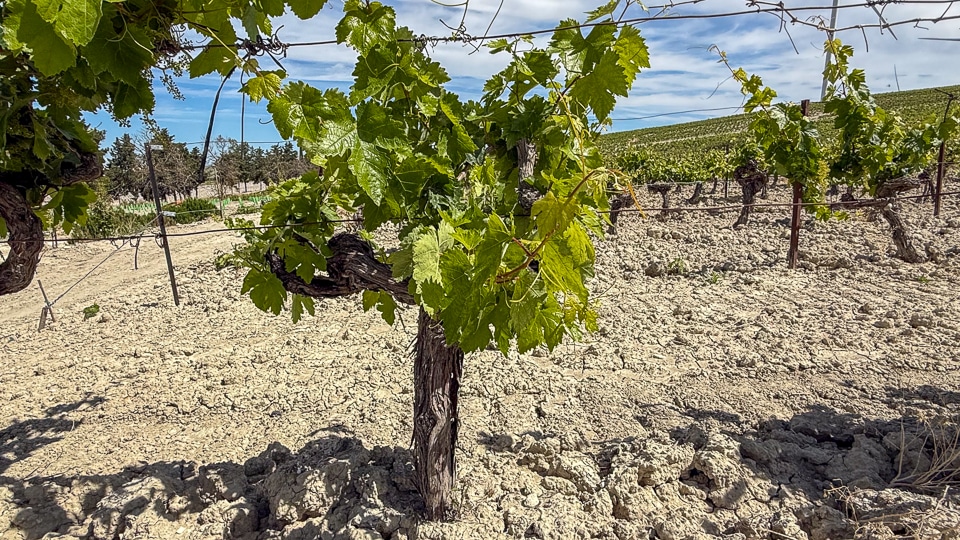
Viña Lorente y Barba. Tour the property and engage in a discussion about the science of grape-growing and winemaking – and our capacity to smell and taste – with proprietor Mauricio Lorente Sánchez, M.D. Visiting the vineyard in a horse-drawn carriage (or mule for larger parties) provides scenic overlooks and a chance to hear about how the winery came to be. One of the most memorable experiences of our trip was simply walking through the vineyard. We could examine the “arm and thumb” procedure for cutting vines annually to promote the most long-lived plants. We could sense the sun, wind, and weather conditions, imagining the differences at slightly different elevations, different seasons, and between night and day. And we had the most fun discussion of how our personal memories are sparked by smell. The comaraderie here certainly contributes to the fine wines. Inquire in advance.
Bodegas Tradición. It’s a bit of a splurge to visit this sherry bodega in the heart of Jerez, but the tour comes with some extras. Tradición represents centuries and generations of winemakers, narrowing down to the Ribero family: Joaquin in the 1970s and Elena from the 1990s. The focus at Bodegas Tradición is on VOS (20 year) and VORS (30+ year) products.
Along with the tasting comes entrance to the family’s private art collection, an impressive exhibition including El Greco’s painting of St. Francis of Assisi, a set of paintings of the Annunciation from three centuries of Spanish artists, and notable works by Velázques, Goya, Zuburán, and Murillo.
Food and Restaurants in Jerez and Cádiz Province
The awarding of Jerez’s designation as Spanish Capital of Gastronomy 2026 is, above all, recognition of both the local heritage products and traditional cuisine with the contemporary approaches to cooking and presentation. Notably, chefs are recognized for their use of sherry wines in cooking, and for their use of the region’s diverse products. The best dishes draw from Cadiz’s unique access to the Atlantic and Mediterranean seas, the mountains and the coast, giving nod to Romani cuisine, tabancos, flamenco culture, and Spain’s highly developed haute cuisine.
Notably, the other Gastronomy Capital finalist this year was Antequerra, another Andalucían town in the province of Málaga. Sanlúcar de Barrameda in Cádiz was given the honors, too, back in 2022, more testament to the rich food culture here.
For more about specialty dishes from all parts of Spain – and for select recipes, too – read Travel Past 50’s Ultimate Guide to Traditional Spanish Foods.
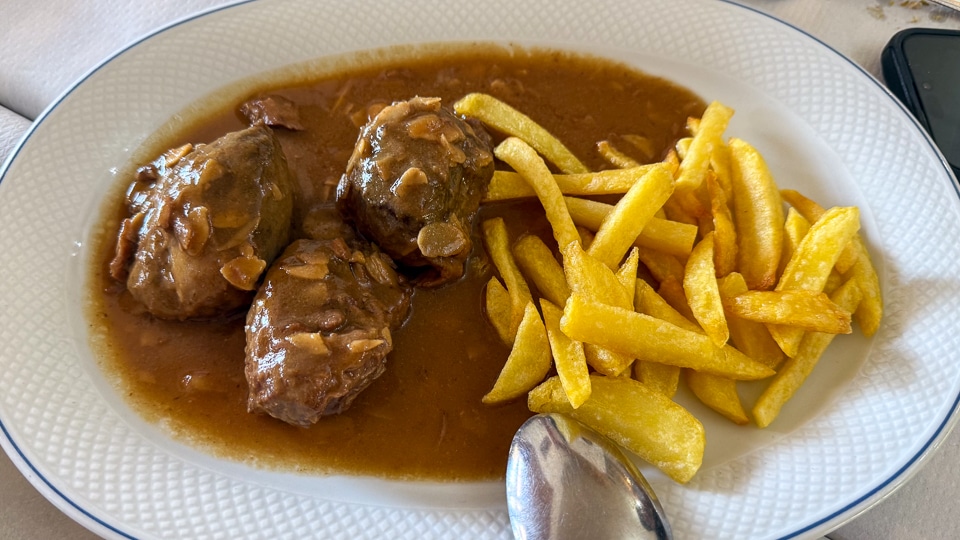
The food culture of Jerez de la Frontera goes well beyond tapas. Besides shared plates of jamón serrano (cured ham), for example, look for lomo, other wonderful cuts of pork, and varieties of artisan sausages. Typical meat dishes include carrillada (pig cheeks) and tender ox tail. Local products include payoyo cheese from local sheep and goats, and exceptional olive oils, vinegar, paprika, and almonds. The olive oil is not to be underestimated. After our asking for recipes on multiple occasions, our guide just offered the short cut, “Assume olive oil.”
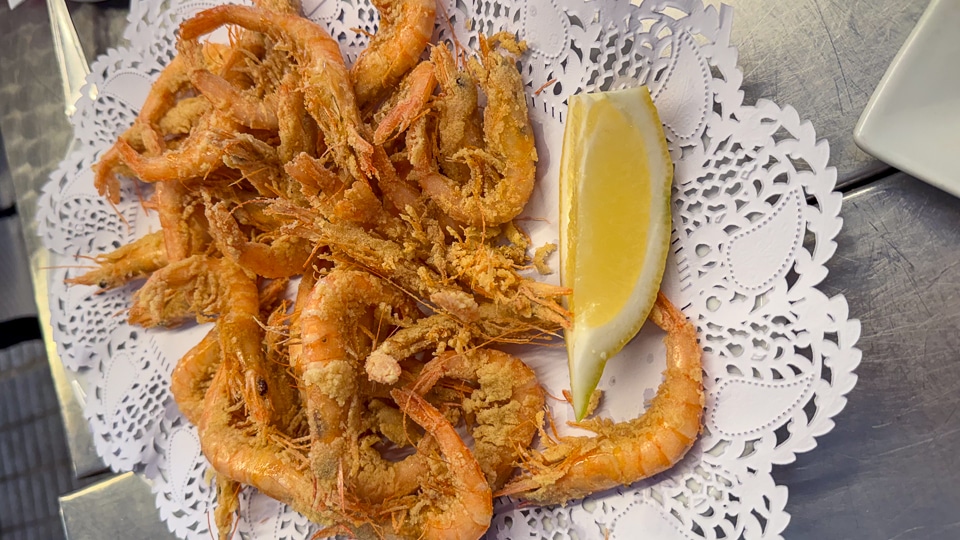
Fish is king — especially tuna — and fried fish is considered an art form. Don’t miss the tortillitas de camarónes, an exquisite thin fritter of tiny shrimp dusted with garbanzo flour or the local delicacy cazón (dogfish) seasoned with adobo.
Potatoes appear in every form, including the quintessential Jerezana style patatas aliñadas, potatoes marinated with olive oil and bright sherry vinegar. Of course the fresh, quality local potatoes shine no matter the preparation. Fried, mashed, patatas bravas, ensaladilla Rusa, and tortilla Española are as popular in Cádiz as across the country.
In Jerez, there are infinite varieties of berza jerezana, a stew usually based on garbanzo or white beans with cabbage or seasonal greens and, naturally, the best of the fresh vegetables on hand: onion, celery, peppers, what-have-you. All this starts with Spain’s classic sofrito, and culminates in a rich dish sometimes thick enough to eat with a fork.
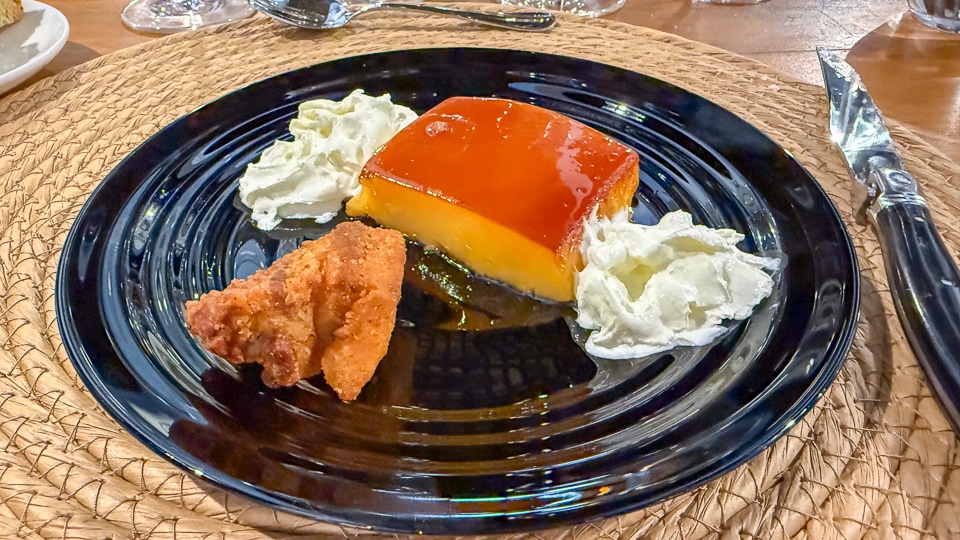
Save room for tocino de cielo, the local egg-yolk dessert dubbed ‘bacon from heaven’. It is heavenly, and contains no bacon. Originally, it was created by nuns who received lots of egg yokes from the bodegas who used egg whites in the sherry-making process, to filter the yeast from the barrel. You’ll see from this recipe that tocino de cielo is essentially just egg yolks and sugar!
Places to eat range from tabancos (taverns frequently doubling as flamenco venues), to bars, to restaurants, which range from traditional freierias selling fried fish, to ventas (roadside restaurants), to contemporary, white tablecloth venues.
Here are some recommendations to introduce you to the rich traditions and ground-breaking approaches to food in Jerez.
Romerijo. (in Puerto de Santa María) A renowned freiería (even an Andalusian taxi driver in Madrid knew it) serving a huge range of fried fish, each prepared with distinct seasonings, batters or methods to best complement the fresh catch.
Venta El Albero. A classic roadside venta where traditional Andalucían-syle cooking lives on. The family-run business draws on its own garden and relies on the hospitality and hard work that seem to go hand-in-hand in the province. Say hello to owner Juan Pedro Jiménez.
El Faro de El Puerto de Santa María. An upscale restaurant (again in the town of El Puerto near Jerez), where creative twists on traditional fare make for a memorable meal.
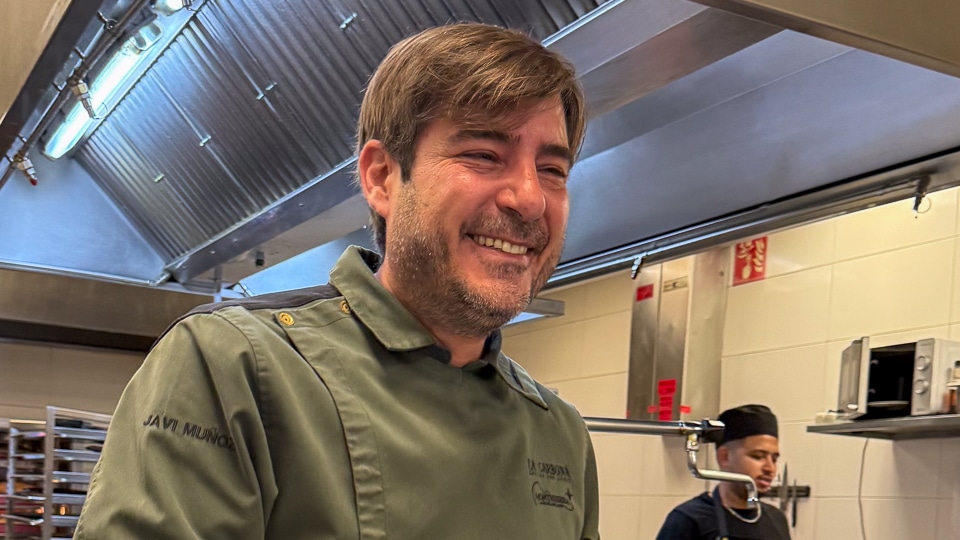
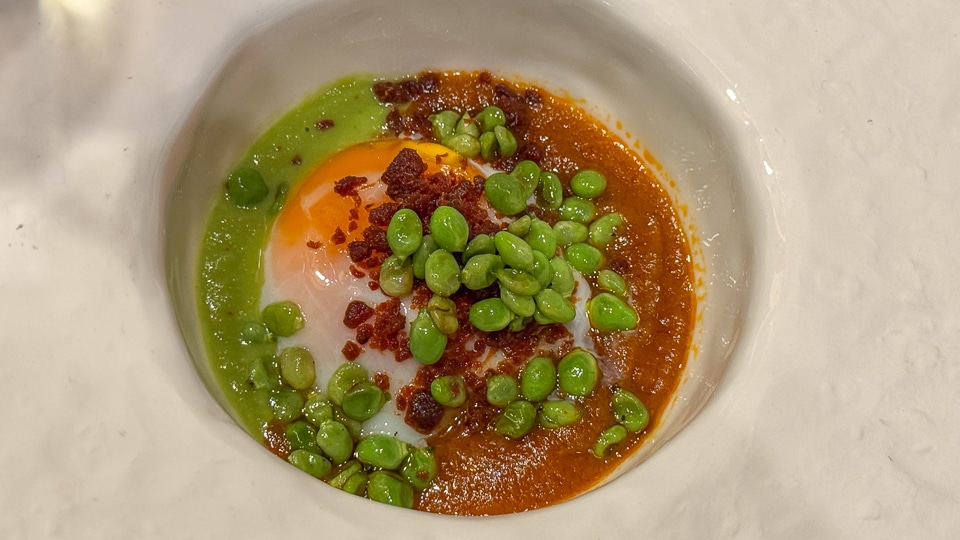
La Carboná. A most memorable culinary experience! By award-winning chef Javier Muñoz, the exquisite, multi-course tasting menu at La Carboná is a tour de force honoring Jerez’s gastronomic award. At our seating, the menu incorporated ingenious combinations of local products with appropriate layers of smoke or sherry sauces or dabs of flavor and color. With a sherry flight, the set menu was just €85; ordering a la carte also available, but why? You’ll note La Carboná pours Muñoz’s own selection of sherries, bottled just for him.
Tabanco El Pasaje. While you are probably showing up for the flamenco show, don’t overlook the fact that you can order prime selections of jamón serrano (dried aged ham), pork loin cuts, sausages, cheeses, and, in season, a fine plate of baby artichokes drizzled with vinegar – enjoyed with fino sherry, of course – during the show.
Other favorite stops include:
Bar Restaurante Albores. Creative menu, fresh local ingredients, nice presentation, and pleasant street-side seating. Check out the sister restaurant, A Mar, too, also by Chef Julián Olivares.
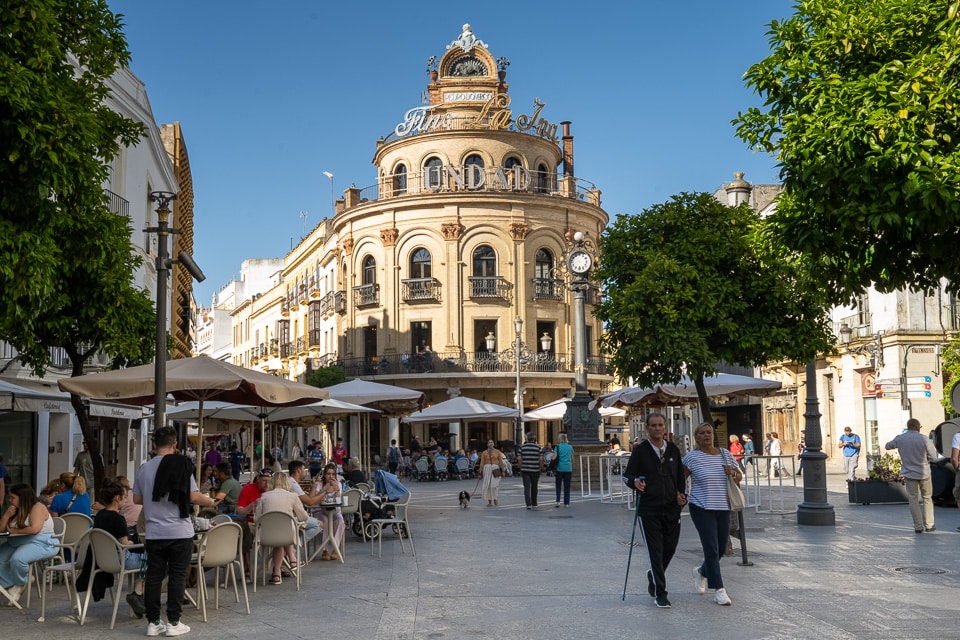
El Gallo Azul. In the iconic building with the big Fundador sign, this landmark is a backdrop to the city and an elegant place to stop for sherry, coffee, or a bite to eat.
Abacería Cruz Vieja. A classic tapas bar in a classic neighborhood. Now that you’ve learned something about sherry, sample away accompanied by a vast tapas menu. Check out the well visible under glass beside one end of the bar. The barkeeps can tell you stories!
Andalucia’s Carthusian Horses
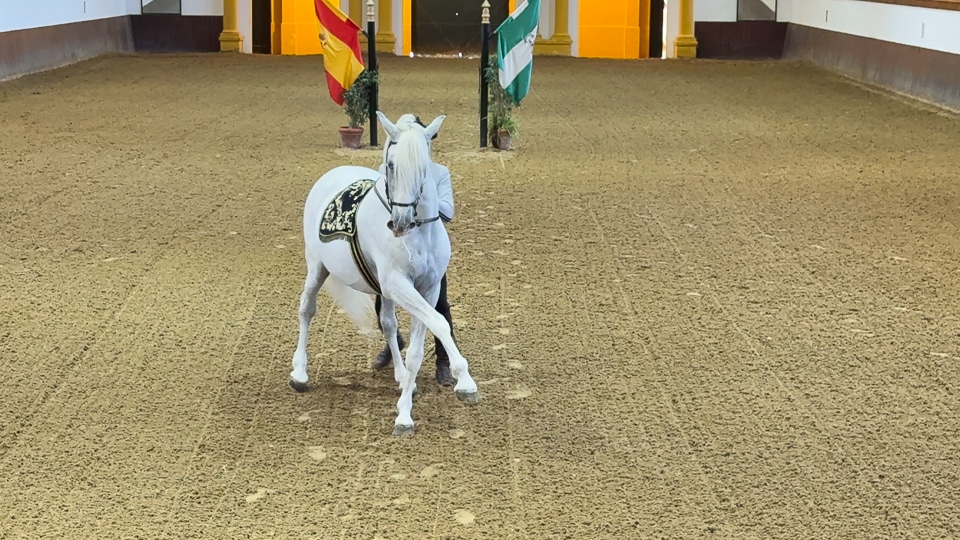
In Jerez, horses have been a big deal for centuries. The Royal Andalusian School of Equestrian Art is one of the world’s premiere riding schools and includes a carriage museum.
Jerez is known for the Carthusian sub-strain of Andalusian horses, named for their protectors, the Carthusian monks, who refused to breed the Andalusians with Napoleonic horses back in the day.
The Royal School shows off these beauties daily in performance at the school’s arena. Both riders and horses are trained here in facilities that honor the traditions of horsemanship, carriages, custom saddles and harnesses, and teamwork. The show is a veritable ballroom dance, and it’s apparent the care taken with each stallion over the seven years needed to prepare for this stage. Optional ticket upgrades include a tour of the stalls, tack room, and carriage collection.
Yeguada de La Cartuja Hierro del Bocado. The Hierro del Bocado (“iron bit”, referring to the brand) Carthusian horse breeding center in Cádiz remains a fairly unknown attraction for visitors to Andalucia, but not to be missed for horse-lovers. Here’s where the horses are bred, raised for 3 years, then sold. A select few are accepted at the Equestrian Training Center where they are trained for another four years before entering the exclusive dressage shows by the academy in Jerez. The breeding center offers shows each Saturday or by arrangement.
The Yeguada Cartuja also variously sells horses or services to Spain’s military and police and private parties. It remains the only source of the pure Carthusian bloodline, not combined with the broader Andalusian or Arabian horse breeds.
Flamenco
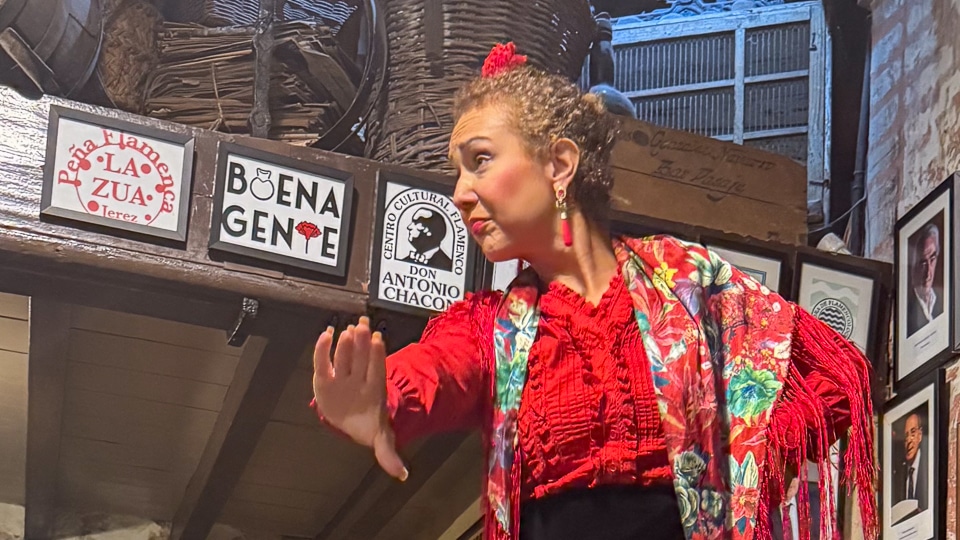
A handful of tablaos, places where flamenco is performed, offer multiple flamenco shows every night. You may be able to walk right into some venues without reservations. But better to book a table and enjoy the full experience. You may find yourselves, as we did, just a couple feet from the stage and served a set menu of tapas – jamón, cheese, artichokes with balsamic vinegar – and a bottle of fino sherry.
At Flamenco Tabanco El Pasaje, the essence of Spain is rolled into one performance, an hour and a half of flamenco’s plaintive song, driving rhythm, and emotional dance. You won’t get any closer to the Andalucían culture than this. El Pasaje (‘the passage’, so named because the tavern connects two street fronts) is in the very center of Jerez. Many other tabancos have performances. Check out a few!
Tabanco, by the way, is a word specific to the Jerez area, likely combining the words for shop and tobacco. Tabanco El Pasaje has been selling sherry since 1925. The flamenco shows came later.
Around town, take note of statues and pop-up memorials to Flamenco legends, like Lola Flores.
Jerez Old Town and Historic Monuments
Allow time to wander. Jerez is a beautiful city to walk. In the center, narrow streets connect neighborhood churches, tiny plazas spotted with orange trees, myriad palaces and mansions with beautiful gardens decked with bougainvillea, shady corridors winding between bright white buildings.
As you start to feel comfortable, you’ll notice the city scenes are both idyllic and populated, historic and modern, and supported by small independent merchants as well as large multi-national companies. Find the landmark clock tower (Reloj Domecq) at the base of the Calle Larga shopping street, and in front of the curved-front Domecq building. It’s a great place to stop for a glass of sherry and some people watching.
Nearby is the Mercado Central de Abastos, a thriving market and showcase of local meat, fish, produce, and artisan goods. Fortunately, there’s a Churrería just outside the door so you can get your pastry and sugar rush before you enter.
Throughout the heart of the old town, in every direction from the big Plaza del Arenal, shops and tapa bars propel pedestrians from one street to another.
Of course you can find top Spanish brands along popular shopping streets like Calle Larga. For souvenirs, if you want to carry back something other than bottles of sherry, look for other agricultural treats: exceptional olive oils, olive-based soaps, paprika, saffron, and more sherry.
History of Jerez de la Frontera
What we love about all of Andalucía is evident in within the city of Jerez de la Frontera. The melding of cultures based on various historic populations makes Jerez worth visiting. Prehistoric and ancient populations in the region eventually gave way to a Roman city called Asta Regia. But toward the Middle Ages, after the fall of the Roman Empire, this part of Spain was ruled by Visigoths until the early 8th Century. Then Moorish-ruled and independent states shifted and merged with nearby seats in Arcos de la Frontera, Seville, and as far away as Granada.
By the 13th Century, following the Battle of Jerez and later sieges and rebellions, Christian rule under Alfonso VII of Castile and León survived. The Muslim population remained, at least for a couple hundred years until the expulsions accomplished in 1492, and Moorish architectural influences also survived. By the way, ‘de la Frontera’, meaning ‘on the border’, is thought to reference the boundary between Moorish and Christian regions in the 13th Century.
Jerez thrived throughout the Middle Ages due to its agriculture, and prospered through the 15th and 16th Centuries – during the explorations of the Americas – due to its proximity to the ports of Cadiz and Seville.
Jerez Historic Attractions
The Jerez Cathedral. Guided and self-guided audio tours of the cathedral include the sacristies, main chapel, and a climb up the tower if you are up for it. You can even take a VR drone tour including dizzying aerial views. Do take the time to visit the whole cathedral, as the church’s prized possessions – like the Zurbarán painting of a dreamy ‘Virgin Nińa’ – are tucked into the sacristy, chapels and interior courtyard.
The outside view framed by flying buttresses will tell you this 17th Century Catholic church is a mix of Gothic, Baroque and Neoclassic styles.
Alcázar of Jerez de la Frontera. The remains of the former Moorish castle cover a sizeable area of Jerez, near the Cathedral. The alcázar (castle) contains not only original walls, doors, and details of interest, but the only remaining mosque in Jerez, complete with minaret and courtyard.
Archeology Museum. To wander back to Roman times, visit the archeology museum housed in an 18th Century building, of interest in its own right.
Clock Museum. The Museo-Palacio del Tiempo, or Museos de la Atalaya, are known for their collection of nearly 300 clocks from the 17th to 19th Century. Located an easy walk from city centre, the museum provides beautiful works of decorative art and – because most still function – and hourly serenade of chimes and bells.
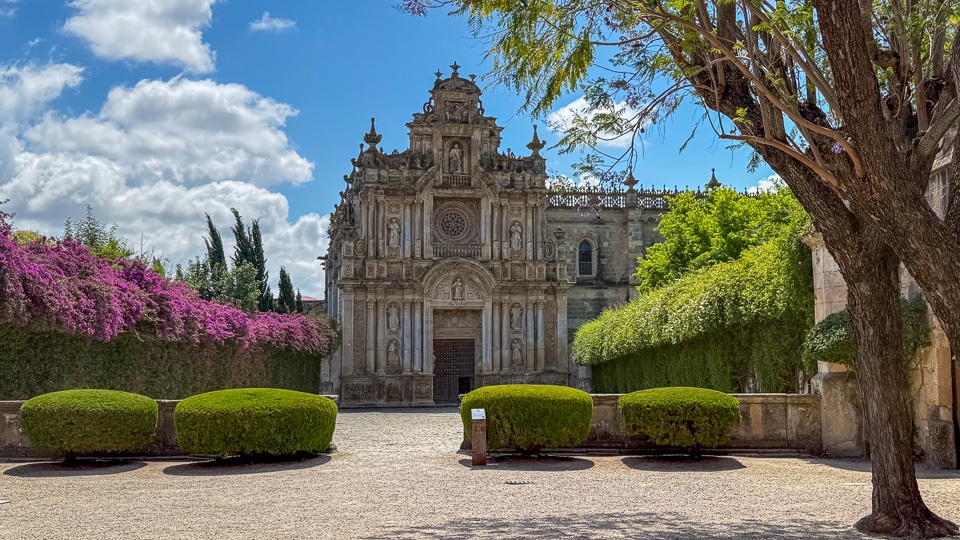
Carthusian Monastery. The Carthusian Monastery of Our Lady of the Defense (Nuestra Señora de la Defensión), sometimes known as the Charterhouse, dates to the defense of the city after Alfonso X of Castille conquered it over the Muslims in the 13th Century. Alfonso, without heirs, funded the Carthusian monks who, about 100 years later attributed another victory to the intercession of the Virgin Mary. At any rate, the church and monastery were built in the late 1500s and renovated in baroque style in the 17th Century.
Besides the spacious chapel, the monastery is known for its immense Gothic cloister, the Greco-Roman portico, and numerous courtyards. It’s one of Cádiz’s main architectural attractions, and notable for its connection to the protection of the pure-bred horses – the Carthusian line that is still honored and presented at the Royal Academy of Equestrian Arts in Jerez. A self-guided tour allows visitors to see one of the ‘cells’ inhabited by the monks; they include workshops and garden space as well as bedrooms and studies.
(Hint: plan your visit to the Charterhouse when you can also lunch at the nearby Venta El Albero. See our food section above.)
For our essential travel advice, see our Travel Skills for Travelers Over 50 guide — covering the gear, packing systems, and practical tools we rely on most.
FAQs
For up-to-date listings of festivals, events, and itinerary ideas, visit the Cádiz tourism site or the exceptional Spain.info Jerez tourism page.
Is Jerez de la Frontera worth visiting?
Absolutely, and it is one of the most underrated cities in Andalucía. Jerez offers a rare combination of world-class wine culture, authentic flamenco, extraordinary equestrian traditions, excellent food, and a beautiful historic old town — all without the overwhelming crowds of Seville or Granada. As Spain’s designated Gastronomic Capital for 2026, it is having a well-deserved moment. Travelers who enjoy depth over checklists will find Jerez deeply rewarding.
How many days do you need in Jerez de la Frontera?
We recommend a minimum of three days and ideally four to five. One day barely scratches the surface. With three to five days you can visit two or three bodegas, attend a flamenco show, experience the Royal School of Equestrian Art, explore the old town and cathedral, make a day trip to El Puerto de Santa María or Sanlúcar de Barrameda, and eat your way through the region’s exceptional food culture without feeling rushed.
What is Jerez de la Frontera famous for?
Jerez is famous for three things above all: sherry wine, flamenco, and Carthusian horses. It is the world capital of sherry production — the word “sherry” itself derives from “Jerez” — and home to the Royal Andalusian School of Equestrian Art, one of the world’s premier riding academies. Flamenco has deep roots here, and Jerez’s tabancos offer some of the most authentic flamenco experiences in Spain. In 2026, Jerez was also named Spain’s Gastronomic Capital, recognizing its exceptional food culture.
What is the best time of year to visit Jerez?
Spring (March–May) and autumn (October–November) are the best times to visit. Temperatures are pleasant, the city is lively but not overwhelmed by tourists, and key festivals fall in these windows — including Semana Santa, the Spanish Motorcycle Gran Prix event in April, and the famous Feria del Caballo horse fair in May. Summer is very hot, regularly exceeding 40°C (104°F), though evenings cool down and the city stays lively. Winter is mild and quiet, a good choice for budget travelers who don’t mind a slower pace.
What is the Feria del Caballo in Jerez?
The Feria del Caballo (Horse Fair) is one of the great festivals of Andalucía, held in Jerez each May. It combines equestrian competitions and parades, flamenco performances, sherry tasting, and traditional Andalucían dress in a week-long celebration unlike anything else in Spain. Horses and riders dressed in traditional costume parade through the grounds, and the casetas (private and public tents) stay open until the early hours. It is one of the best reasons to time your visit to Jerez in late April or early May.
Can you do a day trip to Jerez from Seville?
Yes — trains between Seville and Jerez run frequently and take about an hour, making a day trip very feasible. However, we strongly recommend staying at least three nights if you can. A day trip gives you time to visit one bodega and walk the old town, but it doesn’t leave room for flamenco in the evening, the equestrian school, the Carthusian Monastery, or the wider Sherry Triangle. If your schedule only allows a day, take the earliest train and the latest one back.
What sherry should I try first?
Start with a fino — it is the lightest, driest, and most food-friendly style, and it is what locals drink with almost everything. Served well chilled alongside almonds or jamón, a good fino is one of the great pleasures of Andalucía. From there, try an amontillado for more complexity, and if you can find a palo cortado, do not pass it up. Save the sweet Pedro Ximénez for dessert — poured over vanilla ice cream, it is extraordinary.
Is Jerez good for travelers over 50?
Jerez is an excellent destination for travelers over 50. The pace is slower and more relaxed than larger Andalucían cities, the food and wine culture rewards sitting still and paying attention, and the city’s walkable historic center is well suited to leisurely exploration. The equestrian culture and the depth of history here appeal strongly to travelers with a genuine curiosity about place. The main thing to be aware of is the summer heat — visit in spring or autumn if you are sensitive to high temperatures.
How to Get to Jerez de la Frontera?
Jerez airport is close by and also serves Cádiz. Flights connect through Madrid, Barcelona and other parts of Spain, supplemented by seasonal direct flights from many European cities. Bus and train service from Seville is frequent and reliable, easy enough to make a day trip to Jerez from Sevilla. (However, we recommend at least three to five days in Jerez.)
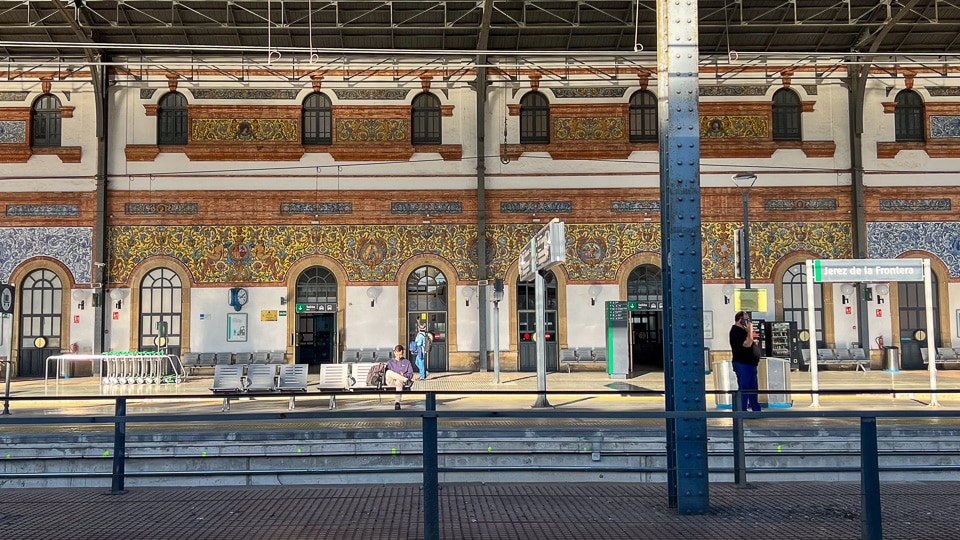
In one case, we arrived by bus from Algeciras and departed by train to Mérida. The bus and train stations are adjacent. Though they are walkable to Jerez’s city center, with luggage we opted for taxis to and from our hotel.
How do I Get Around Jerez?
The central city of Jerez is very walkable, with many pedestrian-only streets. Taxis are plentiful, but be aware they may need to drop you at a nearby intersection since many streets are closed to vehicles. To take in the entire Sherry Triangle, consider renting a car or hiring a driver who can be flexible and informative and really enhance your visit.
See other ideas and resources for driving in Spain in our Travel Past 50 Road Trips in Spain: Best Regional Routes.

Where Should We Stay?
In El Puerto de Santa Maria:
Hotel Punta Bermeja Beach Hotel. We recommend staying outside Jerez city to maximize your enjoyment of the whole sherry region. This resort hotel offers a great place to relax after your meals and sherry tastings. The pools are lovely and the beach accessible by a path down the embankment. The restaurant is open for three meals a day.
In Jerez city center:
Casa Palacio María Luisa. A great example of a palace conversion and top notch hotel, catering to events and the sherry crowd.
Hotel Bodega Tio Pepe. Wedged between the Cathedral and the Alcazar, this top hotel is known for its great restaurant and historic setting. But opt for a separate, more intimate, sherry bodega visit rather than the Tio Pepe tour.
In Cádiz, provincial capital and just 30 minutes from Jerez:
Parador de Cádiz. Don’t miss a chance to stay in one of Spain’s network of exceptional hotel properties, this one stategically positioned overlooking the sea and the famous Castillo de San Sebastian. Every room includes a spacious terrace, and like most of Spain’s paradores, features an outstanding restaurant.
Aurea Casa Palacio Sagasta. In central Cádiz, treat yourself to a stay in this 18th Century baroque palace, complete with central courtyard and lookout tower. It’s a Eurostar hotel, a Spanish group of hotels we favor.