
To us, the primary advantage of achieving a certain age – and retirement – is the time to travel more. And once you get into the swing of it, the logistics of leaving home and managing the details of travel get easier and easier.
We’ve learned most of what’s in this post the hard way — a forgotten document here, a home security oversight there. After 16 years and 85 countries, this is what amounts to a travel safety checklist that lets us leave home without anxiety.
Disclosure: This post may contain affiliate or sponsored links. If you book or buy through them, we may earn a small commission at no extra cost to you. As an Amazon Associate, we earn from qualifying purchases. Some of our travel is hosted, but we accept invitations on the understanding that what we write is our own. Read our full disclosure.
Whether you travel internationally or domestically, whether you take frequent trips or leave home for lengthy seasonal getaways, keeping your home secure and your travel support systems ready-to-go takes much of the stress out of travel.
We hope you find this international travel checklist a great tool for accomplishing all that needs to be done before you go, and tips for enjoying safe and secure travels to the max. The better prepared we are, the more we can jump on travel opportunities.
Do also refer to our post about securing your identity and credit.
Before You Go
This outline of things to do before you travel abroad reflects our personal experience and travel lifestyle of the past decade. Rather than dealing with a flurry of last minute preparations, these important preparations will make it easy to leave your home, pack your bags, tend to your health, and facilitate your travel finances and communications for all your upcoming travel.
Leave Your Home Safe and Sound
One of the best ways to find peace of mind while traveling is to be sure your home is secure. Besides relying on trusted friends to check in or watch for stray mail deliveries, these tips will allow you to manage your home from afar.
- Install a Wi-Fi remote-controlled thermostat.
- Use smart lighting indoors and out with pre-set on and off times. This keeps your home from looking vacant.
- Consider a home security system to alert you of any opened doors or windows.
- Go paperless. If you haven’t already, eliminate all paper mail, especially including bank and credit card statements, doctors’ and insurance bills, and Social Security mailings that may contain critical information for a thief. A good paperless habit now means easier travel preparations to come.
- Hold or forward mail: The US Postal Service will hold mail for up to 30 days. For longer trips, consider USPS Informed Delivery, or (as we did when we were most nomadic) forward your mail to a post office box accessible to a trusted family member or friend.
- Arrange house and/or pet sitters: Relying on friends and family to check in on your house and pets may not be a realistic solution. Look into the array of options, whether boarding your pet, hiring someone to tend to your pet/plants/house regularly, or finding a live-in house sitter. Check out Trusted Housesitters or House Sitters America, for example. See more pet-sitting options in our post, “What to Do with Your Dog While on Vacation.”
- Do let a neighbor know your travel dates and how to reach you. When the odd package shows up on your doorstep, you can be sure your neighbor will save it for you and keep your doorstep neat.
- Sell or park your car: Avoid unnecessary auto expenses by storing your car and removing the insurance (except comprehensive) if it’s not being driven for a longer time.
Review Your Important Travel Documents: Passports, Visas, and More
Passport. Even before you make travel plans to a foreign country (and even if you are just contemplating your first international trip) be sure you have a valid passport. Many countries require you have a few blank pages remaining in your passport, and most require that you have an additional six months of validity after your international travel dates. As of this 2026 writing, it’s a good idea to allow six weeks for a new or renewed passport, although when we renewed our passports online in early 2025, we got the new ones back in about 10 days. Don’t count on that, though, especially if you’re getting your first passport or if your current one has expired. Note: you cannot use your old passport while in the renewal process. As soon as you submit a renewal request, your old passport immediately is invalidated. If you need a new passport immediately, you can get expedited service in person at a passport office if you can show you have a travel booking departing within 14 days.
Keep copies of your passport in one of your bags plus a digital copy on your phone. We keep photocopies of our passports in a separate bag from the originals, and email scans to ourselves so they’re accessible from any device.
Visa and entry requirements. To check on visa requirements and any other entry policies, start by visiting the U.S. State Department travel page. See below about researching your destination country for more details.
TSA PreCheck and Global Entry. TSA PreCheck, like other services such as CLEAR, will expedite your security process at U.S. airports. Global Entry is an advance security process that hastens your return through the United States’ passport control areas, and includes TSA PreCheck. Learn more about these options in our post, How to Get Global Entry — And Why Every Frequent Traveler Should.
Frequent Flyer Loyalty Programs. Even before you book your international flight, sign up for frequent flyer programs with any airlines you might be using. This may provide you with notifications of good deals, and once you are in the booking process your loyalty status will be automatically applied to your booking. That means miles you fly will be promptly credited to your account. Once you are ticketed, double check that your loyalty number appears on your reservation. (If not, see a gate agent before your flight to facilitate getting the correct air mile credits.) Be sure you register your TSA PreCheck status in the airline app or website. Then your TSA PreCheck status will appear on your boarding pass, and allow you into the quicker TSA PreCheck line.
Airport Lounges. If you have an airport lounge program, you can take a look at airport maps or airline lounge lists to know in advance if you can partake. Take a moment before you travel to be sure you have the appropriate ID or card handy, or on your smart phone.
International Driving Permit. We haven’t found the need for an international driving permit on top of our valid state drivers licenses. Some countries require it, some don’t. If you’re unsure, an International Driving Permit is easy to get at your local AAA office. If you are purchasing and insuring a car in a foreign country, this may be required.

Tend to Your Travel Health and Wellness
No matter where you travel, it’s important to start out with a clean bill of health. It’s equally important to know how to stay safe and healthy while you travel.
- Prescription Medications. Plan ahead to be sure you have an adequate supply. Keep a printed or digital record of your prescriptions with you in case you need to replace or refill your meds. We are in the habit of filling the maximum 90 or more days of each prescription medicine and refilling promptly so that we have an adequate supply on hand continually.
- Travel clinics: Visit your doctor or a travel clinic with your specific destination in mind. This is invaluable if immunizations are required for visas or entry, and a huge help for understanding potential diseases and dangers in certain regions of the world. Travel clinics may also help supply first aid items and medicines, such as antidiarrheal or antibiotic pills or medicine to prevent altitude sickness or seasickness.
- Pandemic and other global health updates: Do research the current conditions in your intended destination(s).
- In general, keep up with your annual physicals and wellness appointments, including eye and dental care. Let your doctors know you are traveling. Request physical therapy sessions if you think you may need to build strength, balance, and mobility before you go.
- It can be helpful to understand your current fitness level before your trip and maybe even use the trip as an excuse to start a new healthy eating and increased exercise program. (We naturally walk a lot more when we’re traveling.) Using tools like a weight loss calculator can give you a clearer picture of your health goals and help you maintain a balanced routine while traveling.
- Pack appropriately. Plan for the climate and your activities: e.g. sunscreen, insect repellent, water bottle. The main packing tip we can give you is pack light. Aside from not having to check bags, it will allow you to move around much easier, for example on trains, in and out of taxis, and even up the stairs at some “quaint” hotels.
Purchase Travel Insurance
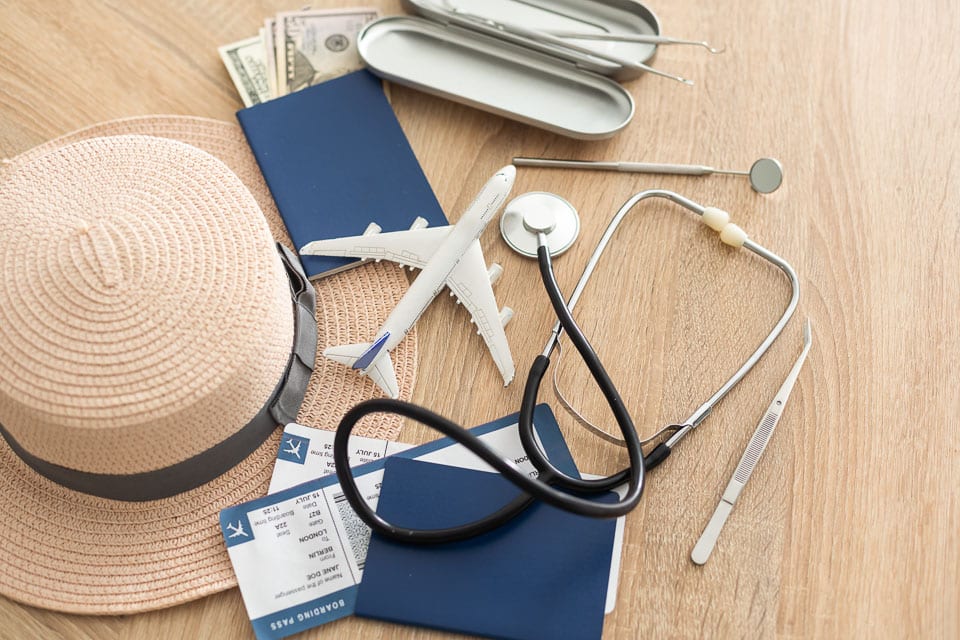
One of the most important travel tips we can give is to purchase travel insurance. Yes, travel insurance protects your investments in flights, hotels and tours. But the real peace of mind comes from knowing you are covered in case of medical emergency or need for evacuation. Most tour companies require you to carry a travel insurance policy.
A good travel insurance program for seniors will (a) allow the traveler to find an emergency room or medical care provider quickly; (b) provide for emergency evacuation as the medical condition or situation dictates; and (c) offer appropriate coverage with minimal prior approval requirements.
Here are the basics:
- Annual travel insurance plan. If you travel three or more times a year, including domestic trips, the annual plan is cost effective and always in place, ready to go. This even covers car trips of more than 100 miles from home.
- Single Trip Coverage. Conveniently, this sort of policy might even be offered as you make your flight or hotel reservations, automatically calculating your premium based on destination and duration of travel.
- Cancel For Any Reason (CFAR). As a result of increased travel anxiety post-pandemic, new CFAR policy upgrades are now available. CFAR can reimburse 75 percent of your lost non-refundable trip costs if you cancel your trip for almost any unforeseen reason not already covered. As in, you change your mind. Or that destination wedding was called off. Given all the angst these days over travel decisions, this is a welcome and well-timed response to current travel concerns. Reimbursement amounts and policies for CFAR can vary by company. Be sure you check the specifics of your own policy.
- Most travel insurance providers offer an app — Squaremouth, Faye, and others all have apps that keep your policy information at hand and provide user-friendly information on local hospitals, clinics, and embassies. Find local police, ambulance, and fire services, too (it’s not 911 everywhere, friends.)
- Hint: purchase your travel insurance at the time of your booking for maximum coverage. It’s generally easy to purchase online. But don’t hesitate to call and discuss your needs by phone for clarification.
- Do read the fine print. Always. If you should need to file a claim, it’s reassuring to understand your coverage in advance. Ask about any “free look” period, too, during which you can change or cancel your purchase.

Prepare Your Online Banking and Travel Credit Cards
If you haven’t already switched to online banking, now is the time to free yourself for travel.
- Find a travel credit card that doesn’t charge foreign transaction fees.
- Know your credit card benefits. Know in advance, for example, which credit card you want to use to book a rental car so that you will realize built-in insurance benefits.
- Advise credit card companies of your travel. Otherwise, when they see unusual activity in, say, Bolivia, they may freeze your account.
- ATMs use debit cards, not credit cards, so carry one debit card and know your PIN. Some services also require debit card transactions (versus credit). This is common in rail and metro systems.
- Check out PayPal and Venmo for settling up with friends, family, and small businesses instantly, from your phone.
- Leave unnecessary credit cards and jewelry at home.
- Carry and exchange minimal cash. Again, the State Department Travel site provides basic info on your destination country’s currency regulations.
- Consider opening a Wise account if you’re visiting multiple countries — it lets you hold and spend in local currencies at the real exchange rate with minimal fees.
- Related to all this, you might want to review our notes on protecting yourself from identity theft.
Mind Your Digital Records and Mobile Communications
Eliminate headaches and having to put out fires back home by organizing your essential documents in digital format in advance. The idea is to be able to access your passwords, scans or photos of documents, itinerary details, and essential logins without tearing your luggage apart or your hair out. Consider your back-up plan in case your phone or paper documents disappear.
- Scan or photograph your passport and credit cards and know where to access these on your phone or computer (preferably both). A good idea is to email the photos of your documents to yourself, so you can access them if you lose your phone.
- Update any travel-related apps, including those you might want in an emergency (banking, travel insurance, maps, and travel planners like TripIt or AAA).
- Protect your various login usernames and passwords in a secure online place like 1Password.
- Set up your international phone plan according to your destination, time away, and need for connectivity. Options include everything from using Wi-Fi only as available (turning roaming off), getting an eSIM virtual card specifically for your destination country (recommended for long stays or when you need a local phone number), or using your US phone plan. We’ve appreciated the ease of T-Mobile’s unlimited data plan, which is good in over 140 countries, but it has its data limitations. An eSIM is a better alternative than buying extra fast data from T-Mobile.
- When you are connecting to public Wi-Fi, such as at the airport, in your hotel, or at the local café, always use a VPN. Your bank and email are at risk on public networks. See our guide to Why You Should use a VPN When Traveling here. One of the VPNs that we recommend, NordVPN, has a comprehensive list of online safety tips that goes into more detail on some of the recommendations we make here.
- When you’re charging your phone or computer on a public data port, such as at an airport or in your hotel, use a data blocker attachment on your cable. See our list of travel accessories here.

Research Your Destination and Itinerary
Specific to your international destination, a great place to start your research is the U.S. Department of State travel site. This is an extremely useful resource for traveling internationally.
Learn About Your Destination. Navigate to the International Travel page and then “learn about Your Destination.” At a glance, you’ll see timely travel alerts as well as passport info, visa requirements, local currency, and vaccination information. Beyond that is a handy guide to your destination country: description, embassy locations, safety notes, health issues, travel and internal transportation details, local laws and customs, and even historic context.
We suggest also visiting the country’s own government consular or travel page which you can find simply by googling that country’s visa requirements.
Smart Traveler Enrollment Program (STEP). While you’re on the U.S. State Department travel website, enroll in the Smart Traveler Enrollment Program (STEP). It’s a free service to allow U.S. citizens and nationals traveling and living abroad to enroll their trip with the nearest U.S. Embassy or Consulate. This allows you to receive updates related to any unusual civil unrest, natural disasters or other potential emergency situations. You and your family can be accounted for and find safety more readily. We recommend you sign up to stay in touch with the local U.S. embassy; an informed traveler is a happier and safer traveler.
Travel Guides. It’s both fun and helpful to research your destination based on your specific interests and travel dates. Browse travel guides and blogs to get more of a sense of local customs. Know what weather to expect. Find out if there are any festivals happening while you are there. And do read up on the country’s background and history to give yourself a more informed view of the present-day interests and concerns of the local people.
Don’t forget to check out related literature and recent newspaper stories about current events to enrich your travel experience.
Pack Smart
Now that you have the logistics for travel and the security of your home well tended to, think about your specific itinerary to consider your packing list. Plus, this is a great way to get excited about your trip!
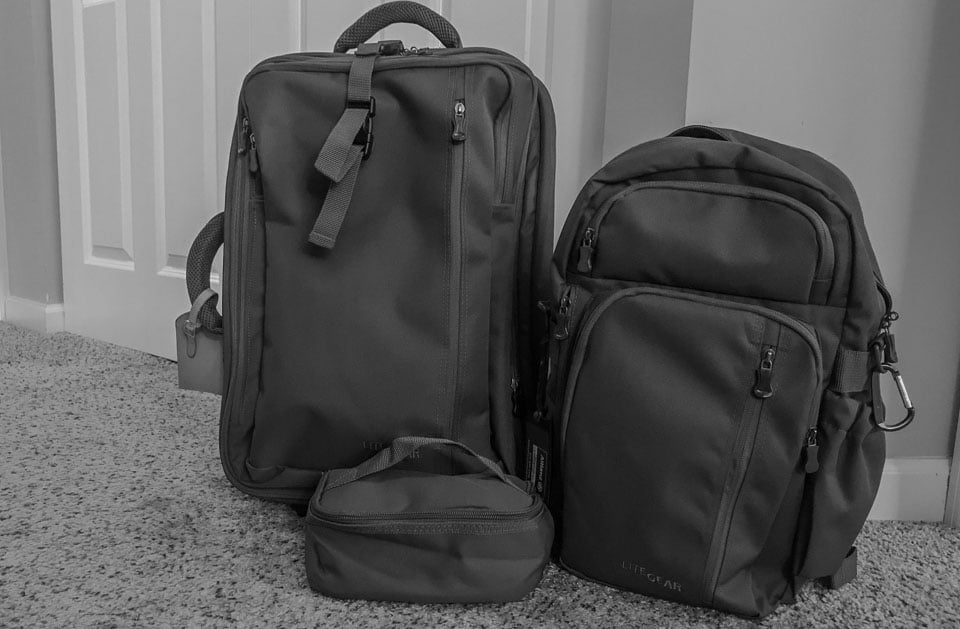
- Know the size and weight restrictions for your luggage based on your itinerary. Not all international airlines have the same requirements.
- Consider how much you are moving around while on the trip, and what you are willing to carry. Your public transportation may include trains, buses, small airlines, etc., and you’ll want to know what you can stow and what you want to access throughout your travels.
- Pack light! For all kinds of reasons, you’ll be more comfortable and leave a lighter footprint. Read about our
The Ultimate Carry-On Packing List for Travelers Over 50, our ultralight packing list for men, and for women to help you pare down your stuff, lighten your burden, and still be prepared for the weather and activities you’ll encounter. - Consider your own comfort while you are in transit, too. We’ve come to love our travel days when we are all cozy in our airline seats, cocooning with our favorite tunes or podcast and a good book.
While You Are Traveling
Protecting Your Valuables While Traveling
- Keep valuables including passport and cash and a back-up credit card in the hotel safe.
- Be especially attentive in overly crowded spaces and transit centers as well as deserted streets.
- Carry cash in a front pocket, more difficult to access.
- Separate cash and credit cards to secure in different places on your person or in secure zipped bags.
- Carry packs in front when in busy areas.
- Secure your phone as if it were a wad of cash in a zipped pocket or bag.
Staying Safe in Unfamiliar Places
- Plan your walking route in advance and walk with a purpose. If you look perpetually confused, you mark yourself as a target.
- Be especially vigilant in crowds and on public transport where you may be packed in closer than you’d like. Tourist hot spots and local trains and buses are prime hunting grounds for pickpockets.
- If you need to check your phone or a map for directions or information, step to the side — don’t stand in the middle of the pavement.
- And be especially wary if someone offers to take your picture with your phone. Before you hand your phone to someone you don’t know, you should probably ask yourself if you can outrun them if they take off.
What to Do If Your Passport Is Lost or Stolen Abroad
Losing your passport abroad feels catastrophic in the moment, but it’s a manageable situation if you know the steps. First, report the loss or theft to local police as soon as possible and get a written police report — you’ll need this both for your travel insurance claim and for the Emergency Passport process. Then contact the nearest US Embassy or Consulate. You can find contact information for every US Embassy worldwide at the US Embassy locator (usembassy.gov), and if you enrolled in the STEP program before your trip, the Embassy already knows you’re in the country. The Embassy can issue an Emergency Passport — a limited-validity document sufficient to get you home — typically within one to two business days. Bring your police report, proof of your upcoming travel (a flight booking is ideal), and any identification you still have. The fee is the same as a standard passport.
This is exactly why we recommend emailing yourself a scan of your passport photo page before every trip. If your phone still works, your passport information is a few taps away, which significantly speeds up the Embassy’s verification process. It’s also worth saving the Embassy’s address and emergency phone number in your phone contacts before you leave home — not something you want to be Googling in a stressful moment in a foreign city. If you enrolled in STEP, the Embassy’s contact information will have been in your original enrollment confirmation email.
More Information and Resources
Are you hungry for more top travel safety tips for happy and secure international travel?
- Review the Travelers Checklist on the State Department website.
- Read our summary of best practices for more responsible travel.
- Browse through our 50 Favorite Travel Tips, all tried and true.
This post is part of our Travel Skills for Travelers Over 50 guide — including everything we’ve learned about staying safe, healthy, and protected on the road.
Frequently Asked Questions: International Travel Safety Tips
What are the most important things to do before traveling internationally?
The eight most important pre-trip tasks are: (1) ensure your passport is valid with at least six months beyond your travel dates and has blank pages remaining; (2) check visa requirements for your destination via the US State Department travel page; (3) purchase travel insurance, ideally on the same day you make your first booking; (4) visit your doctor or a travel clinic for any required vaccinations or destination-specific health advice; (5) notify your bank and credit card companies of your travel dates; (6) enroll in the State Department’s STEP program so the nearest US Embassy knows you’re abroad; (7) set up your international phone plan; and (8) make digital copies of your passport and credit cards accessible from your phone.
Is it safe to travel internationally over 50?
Absolutely — and for many travelers, the best international travel happens after 50, when you have more time, more resources, and more perspective to appreciate what you’re seeing. The key is preparation rather than avoidance. Knowing your destination’s health requirements, having solid travel insurance with medical evacuation coverage, enrolling in STEP so the US Embassy knows you’re there, and keeping copies of your documents are the practical steps that make international travel safe and stress-free at any age.
What travel documents do I need for international travel?
At minimum, a valid passport with at least six months of validity remaining beyond your return date and enough blank pages for entry stamps. Many countries also require a visa — check the US State Department country information pages before you book. Additional documents worth having: a digital copy of your passport and credit cards (emailed to yourself for access anywhere), your travel insurance policy number and 24/7 assistance line, your Global Entry or TSA PreCheck number if applicable, and an International Driving Permit if you plan to rent a car in countries that require one.
Do I need travel insurance for international trips over 50?
Yes — and it’s arguably the single most important item on this checklist. Standard US health insurance and Medicare do not cover medical care abroad. A serious medical event, hospitalization, or evacuation overseas can cost $50,000–$250,000 or more out of pocket without insurance. For travelers over 50, look for a policy with at least $100,000 in emergency medical coverage, $500,000 in medical evacuation, and a pre-existing condition waiver — available if you purchase within 14–21 days of your first trip payment. Purchase your policy on the same day you make your first booking.
How do I secure my home before a long international trip?
The most important steps are: hold or forward your mail (USPS will hold mail for up to 30 days; for longer trips, consider USPS Informed Delivery or forwarding to a trusted contact), install smart lighting on timers so your home doesn’t look vacant, let a neighbor know your travel dates and how to reach you, consider a home security system with remote monitoring, arrange pet and house care through trusted friends or a service like Trusted Housesitters, and if your car won’t be driven, consider pausing your auto insurance (except comprehensive) to avoid unnecessary expense.
What is the STEP program and should I enroll before traveling?
STEP stands for Smart Traveler Enrollment Program, a free service run by the US State Department. When you enroll, you register your trip with the nearest US Embassy or Consulate at your destination. This means the Embassy can reach you in the event of a natural disaster, civil unrest, or other emergency — and your family can contact the Embassy if something happens to you and they can’t reach you directly. Enrollment takes about five minutes at step.state.gov and we consider it a non-negotiable part of pre-trip preparation for any international trip.
What should I do if my passport is stolen while traveling abroad?
Report it immediately to local police and get a police report — you’ll need this for insurance claims and for the Emergency Passport process. Then contact the nearest US Embassy or Consulate — they can issue an Emergency Passport, typically within one to two business days, that will allow you to travel home. Having enrolled in STEP before your trip means the Embassy already knows you’re in the country, which can speed this process. This is why keeping digital copies of your passport photo page (emailed to yourself or stored in a secure app) is so important — you’ll need it to prove your identity when applying for the emergency document.
How should I protect my digital security while traveling internationally?
Four essential steps: (1) use a VPN whenever connecting to hotel, café, or airport Wi-Fi — public networks are a common source of data theft; (2) use a USB data blocker when charging your phone at public USB ports — this prevents a practice called “juice jacking” where compromised ports access your device data; (3) keep your travel insurance, banking, and mapping apps updated and logged in before you leave home; (4) protect your passwords in a secure app like 1Password rather than on a notes app or paper list. The Wise app and your travel insurance company’s app should also be set up and tested before departure.