
Nobody becomes an experienced traveler without, well, experience. And we’ve got that: more than 50 years of foreign travel and more than 85 different countries visited.
Travel is a constant learning process, as we have mostly found out the hard way. Over the years, we’ve figured out a few things on our own. And, we’ve gotten a lot of advice from fellow travelers, and adopted a lot of their good suggestions. Here’s hoping some of our suggestions help you in your travels.
Here’s our list of our 50 best travel tips.
This post is part of our Travel Skills for Travelers Over 50 guide — your starting point for the practical side of travel.
Packing tips
1. Use a small suitcase or backpack
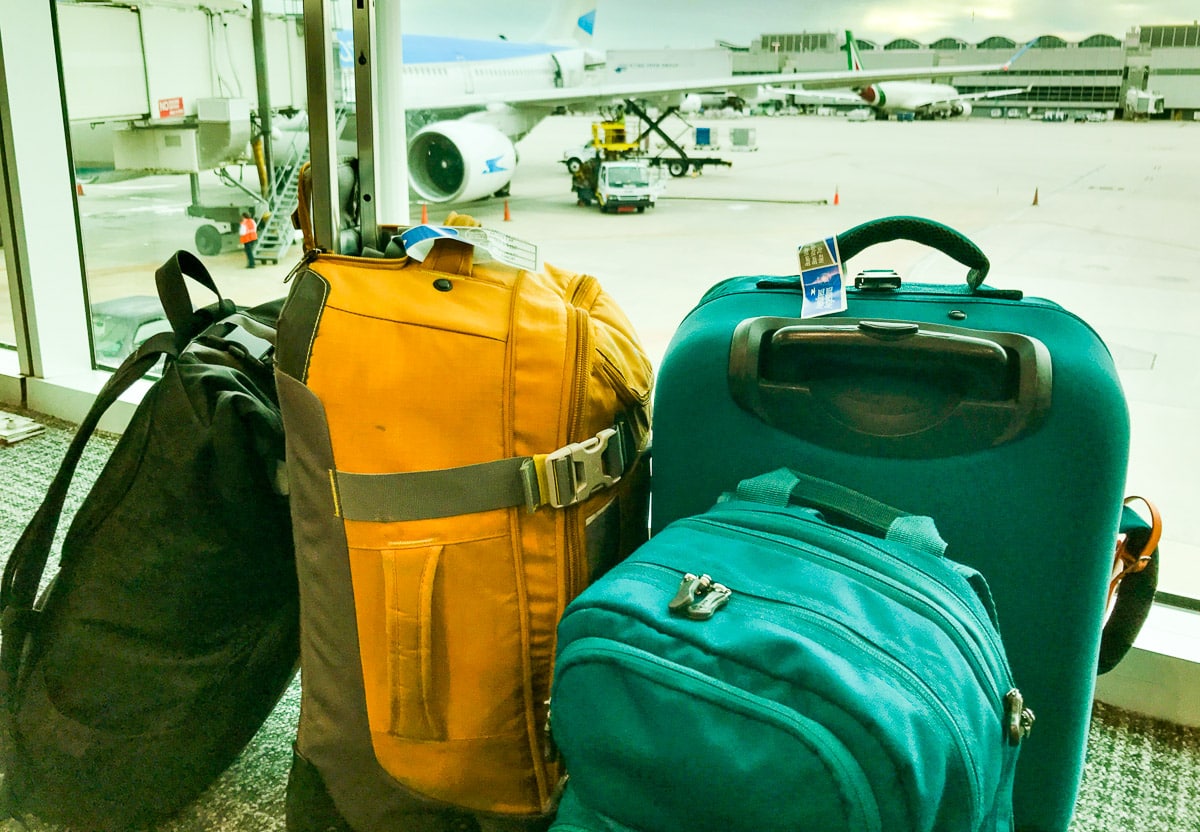
There’s no better suggestion we can offer you. Buy a roller bag or backpack that is no bigger than 35-40 liters. We have traveled for more than nine months at a time with nothing more than a roller bag and a briefcase. You can do it, too. I’m currently using this Cotopaxi 35 liter backpack and a Timbuk2 messenger bag for my computer and other stuff I need at hand on the plane. Carrying nothing but small bags makes you pack light and allows you to carry on everything on the plane. And that’s the goal. And, I’ve also come to the conclusion that carrying a backpack through airports and cities is a lot easier than rolling a bag.
2. Pack light
See above. Make a list of what you think are essentials, cut that in half, then pack that. It’s just fine to wear the same clothes for a few days in a row. Especially if one of your basic items is Unbound Merino wool shirts. Merino wool garments can be worn for days without getting smelly. They pack small. They’re light. And very durable. Since we discovered Unbound Merino, packing light has gotten much easier.
3. Carry a towel
A microfiber towel doesn’t add much size or space to your carry-on bag, and of course always will come in handy. I carry one in my hiking day pack, too.
4. Take enough socks
Nothing wears you out faster than tired feet when you’re on them all day. We have tried lots of sock brands and have landed on Point6 as our favorite. And unlike shirts, I don’t wear socks on multiple days. Get good merino wool socks. (Read more about socks and foot care here.) Wash them out in your hotel sink when you need to.
5. Carry a bag for dirty laundry
You do want to keep the dirty separate from the clean, no? Also, carry a rubber sink stopper in case your sink doesn’t have one. Use the hotel shampoo to wash your clothes. An alternative is this Waschii laundry bag. Stuff your clothes in it along with some hotel shampoo. Agitate, rinse, hang. You’re good to go.
6. Pack a headlamp
Sounds silly, and we don’t always use ours. But when we do, we’re glad we have it. A good headlamp is especially useful for finding your way to the bathroom in a Japanese ryokan or an albergue on the Camino de Santiago.
7. Carry a homemade first aid kit
You can make up a travel first aid kit cheaper than you can buy one. Be prepared, even if you aren’t a Boy Scout.
8. Carry a light rain jacket
Even if it doesn’t look like rain, I always have my light Patagonia rain jacket in my day pack. I love this Patagonia brand jacket. It’s light, but rugged. And it rolls up relatively pretty small.
9. Carry a spare set of glasses
That way, when you tip over your motorbike and your glasses go flying and smash on the pavement (like happened to me in Bali) you won’t be blind for the rest of your trip. (Same goes for a second pair of sunglasses.)
10. Carry a rechargeable power bank
When you’re out an about, and relying on Google Maps to find your way around all day, and realize at 5 p.m. that you have no idea how to walk back to your hotel and your phone has 3 percent battery life, you’ll thank me for telling you to buy this portable charging bank.
11. Carry a plug adapter
Most countries have different plug configurations than we’re used to in the US. So, get one of these adapters. We like this kind that has several built in USB ports and delivers 65 watts of power, so we can charge multiple devices quickly when necessary.
12. Carry a refillable water bottle
Even in a place where the tap water is not drinkable, you can buy 2 or 3 liter jugs of water and refill from those. A lot cheaper and more environmentally sensitive than buying a half liter plastic water bottle over and over. This is especially true in airports. Carry an empty bottle through security and fill it on the other side. A small bottle of water bought in an airport shop will cost almost as much as your flight.
Check out our 10 Steps to More Responsible Travel to see other ways you can reduce your environmental impact.
13. Wear comfortable shoes
Yes, you can pack one pair of dress shoes for that one night (or lunch) out at the nice restaurant, but for the most part, your day as a traveler will be spent on your feet. Don’t forget to break in your shoes, and be sure you really like them, before you drag them half way across the world. Here’s a specific post on Kris’s favorite travel shoes for women.
Lately, we’ve both been very partial to Xero Shoes. Super light weight and comfortable. Another brand we’ve recently fallen for is Kizik, which has an additional advantage of being easy to slip on and off. They are also super comfortable.
14. Wear sunscreen, and a hat
Probably the best thing you can do for your long term health, other than exercising and eating right, is protecting yourself from the sun with sunscreen and a good hat. Take it from someone who has had to have some nasty bits removed from my face, sun protection is a given.
15. Carry earplugs
I carry two varieties, the real noise blockers for sleeping, and the Eargasm earplugs with diaphragms that reduce sound pressure for use at concerts and loud movies.
Lodging tips
16. Check competitive hotel prices
We always check Booking.com, Hotels.com, and Agoda.com for hotel prices before we book. And, if the hotel has its own site, we check that, too. Prices do vary sometimes by who is doing the booking.
Also, depending on the country, check staying at peoples homes such as ryokans in Japan, or converted monasteries or convents like we’ve done in Austria, Italy, and Spain.
17. Always ask for hotel upgrades
It doesn’t hurt to ask for a nicer room. If you belong to the hotel’s loyalty program, and especially if you’re carrying their credit card, you just might end up in a better room or with free breakfast. The worst they can do is say no.
Flying tips
18. To save money, consider not flying direct
When you check flights on Skyscanner, Google Flights, or the airline’s own site, you’ll usually find that non-direct flights (sometimes with a longer layover) are cheaper. (We once saved more than $1000 on a flight to Nairobi by laying over in Boston for 8 hours.) If you’re not in a huge hurry, and don’t mind a little inconvenience, save the money.
19. Subscribe to Thrifty Traveler Premium
The Thrifty Traveler Premium Plus plan gives you a daily email with lots of options for really cheap flights. We’ve more than made back the cost of the subscription with only one booking we were made aware of by Thrifty Traveler. They also have a free plan, but that only covers domestic flights and coach fares. The Premium plans cover international flights, all fare classes, and points deals. P.S. If you use our link to subscribe, you’ll save $20 off your first year’s membership.
20. Schedule your travel when it’s cheapest
This is maybe the number one tip for saving money. Flights and hotels vary a lot by time of year, day of the week, and what have you. Check multiple scheduling options and book then. A side benefit is you’ll also perhaps miss the crush of tourists at popular locations. For example, we usually only go to Europe in the winter. Both flights and hotels are much cheaper and the main attractions are comparatively empty.
But, don’t work yourself up about getting the very cheapest flight you can. Flight prices change all the time. There’s no beating the airline’s algorithms. Keep in mind though, for most airlines, you can cancel flights for credit. So if a flight’s price drops, you can cancel and rebook the flight at the lower rate, and have a credit in your account for the difference.
21. When you’re checking in for a flight, get behind business travelers
These are the people who fly a lot and know how to get through security quickly. Chances are their phones, keys and change are in their carry-on before they get to the line. Getting in the security line behind families with three kids and two strollers will make you miss your plane.
22. If your flight is delayed or cancelled, you could be compensated
This is especially true in Europe and on European carriers such as KLM, Air France, and Lufthansa, where the European Union requires that you be compensated if your flight is cancelled or significantly delayed by things that were the airline’s fault. (No, weather is not the airline’s fault.) We had a Delta flight out of Paris cancelled once, and they not only put us in a hotel and gave us a meal voucher, but we also each got €600 credits. Look here for the EU regulations that could save you a bunch.
See our tips on Making Flying More Comfortable.
Money saving tips
23. Get reward credit cards with no foreign exchange fees
Travel is expensive enough. There is no reason to give your bank an extra 3 percent on everything you spend when you are out of the country. Be sure your card has no foreign exchange fees. We use Chase Sapphire Preferred Card for that reason, and because it also has the best reward points program in the business and because related benefits make up for the annual fee. We use Schwab Bank for our debit card because it also has no foreign exchange fees and because Schwab reimburses you for any ATM fees you incur.
Like I said, we use the Chase Sapphire, and because we live in a Delta Airlines hub, also the Delta SkyMiles Reserve American Express Card card. Both are worth their annual fees in benefits, such as miles used for upgrades and hotel rooms, reimbursement of Global Entry and Clear fees, airport lounge access, and more.
24. When paying by credit card, pay in the local currency
The latest scam in the banking world is when you’re offered the choice on the credit card machine of paying with the local currency or the US Dollar, the USD rate they’re quoting you is way worse than the rate you’ll get from your no-foreign-transaction-fee credit card. Always pay in the local currency. You’ll save 7-10 percent by doing so. Same rule goes for withdrawing cash from an ATM. Always withdraw the local currency directly. Don’t let them convert to dollars for you.
Getting the local flavor tips
25. Visit the local tourist office
When you go to the local tourist center, you’ll get good recommendations of the attractions you must see. And, you’ll also get a free map. And maybe, you’ll get some discount coupons. Also, many tourist offices will help you book entry to attractions with no booking charge. But the best thing offered by most tourist offices is a free walking tour of the city you’re in. That’s a great introduction to any city. (Be sure to tip the tour guide, though.) Another source of free tours in many cities is GuruWalk. Again, if you book one of those, be sure to tip the guide.
26. Take walking tours
As mentioned above, a lot of tourist offices offer free walking tours. But often you’ll get a much more in-depth tour from a professional guide. We like Take Walks and Get Your Guide for those sorts of tours. For food tours in Europe, Devour Tours is unsurpassed. Finally, if you want a graduate school seminar level tour of artistic attractions, try Context Travel.

27. Look into city attractions cards
They are usually on sale at the tourist office and can often save you a bunch of money (and sometimes let you skip the lines) on places you were going to visit anyway. We’ve done this in several cities, including Stockholm, Paris, Berlin, and Madrid.
28. Ask the hotel staff where they eat
Not the concierge. I like to ask the check-in clerk, “Where do you like to eat around here?” That way you will get the restaurants the locals like, instead of the pricey tourist places likely to be recommended by the concierge.
29. Don’t eat near crowded tourist attractions
See the tip above. If you’re eating near the Colosseum in Rome, you’re going to be paying twice as much for the dish of pasta you could have got a few streets over where the locals eat. Always look at who is in a restaurant. If it’s crowded with locals, eat there. If it’s full of tourists and the menu is in English, keep walking.
Safety Tips
30. Watch out for pickpockets
We’ve learned this from several bad experiences. They’re everywhere. There’s no need to obsess about it, just be aware of your surroundings at all times, In particular, don’t let strangers approach you to give you some little trinket. Their accomplice is at your back pocket right now. When you’re on public transport, be sure your wallet is in your front pocket or your purse is slung in front of you. Don’t carry anything you care about in a backpack when you’re in a city. Consider getting pickpocket resistant trousers, which is what I wear in cities.
Also, be aware that getting pickpocketed might only be the beginning of your troubles. Read this on how to avoid identity theft while you’re traveling.
31. When you’re out, carry only what you need
Speaking of pickpockets, when you’re out in a area where pickpockets practice, even if you are a victim, but sure it doesn’t hurt you so much. When we’re out in a city, my wallet has only one credit card and a minimum amount of cash in it. Other credit cards, my debit card, and my passport are in the hotel room safe. If you are pickpocketed, then you’re not broke and without credit until you get your replacements.
Also, carry some emergency cash in a pocket separate from your wallet. And have some emergency cash back in the hotel room. We like to keep about $200 worth, just in case.
Oh, and another tip. Put one of your shoes on top of or in the safe, so you don’t forget to take what’s in there when you check out.
32. Copy your passport and credit cards
Take a photo with your phone of the identity page of your passport. Do the same with all your credit cards, both front and back. Then email the photos to yourself. These will come in very handy when you need the phone number for your lost credit card. And the consulate will be much happier if they have a copy of your old passport should you need a replacement.
Also take a photo of your luggage and contents. It will make things much easier to make a claim if the airline loses your bag, or if it’s stolen.
33. Beware of public WiFi and charging stations
When you’re on public WiFi, including the WiFi at your hotel, you should use a VPN (Virtual Private Network) to prevent electronic eavesdropping. This is especially true in certain countries that keep a close electronic eye on their own citizens and tourists. (You know who they are.) Moreover, your data can be tapped when you’re charging in public places like airports. When you do that, use a data blocker on your charging cable.
34. Before You Go, Visit your local travel clinic
Even though Covid has abated, there are plenty of other nasty diseases out there waiting for you. Have you had your polio booster? (Yes, you should get one.) Is your tetanus shot up to date? Also, depending where you’re going, you might need Yellow Fever, rabies, and more. Most cities in the United States have a travel clinic. Schedule a visit. They’ll know what to recommend depending on where you’re going.
35. Get travel insurance
Yes, missed or cancelled flights and lost luggage happen. But that’s not the worst. Be sure you buy travel insurance that includes medical coverage, because chances are, your US medical insurance plan is no good in Vietnam. Be sure, too, that your travel insurance includes emergency evacuation back home should something serious happen. A friend of ours slipped and broke his back in the Amazon rain forest. His travel insurance flew him out of the jungle, and then all the way home in an air ambulance. That trip could have cost $100,000.
Make an Effort to Know Your Destination
36. Learn basic phrases in the language of the country you’re visiting
Aside from being a common courtesy, I guarantee that your interactions with people will be much more pleasant if you are able to start off with “Bonjour” rather than having the first words out of your mouth be, “Do you speak English?”
“Please,” “Thank you,” and “Where is the bathroom?” are the bare minimum phrases you should learn. (BTW, Babbel is a good place to quickly pick up some basic phrases.)
I once saw an American tourist walk up to a well-dressed Parisian woman and just flat out ask, in English, “Can you tell me where the Louvre is?” The woman answered, in barely accented English, “I can. But I won’t,” and walked away. One of my favorite all-time travel moments.
Consider taking a language class for a week or two at your destination. We’ve done it. Language Classes Abroad for Adults Over 50: A Slow Traveler’s Guide. It’s a great idea on several levels.
37. Read up on your destination
Looking at a guidebook (or a blog like Travel Past 50) is a no-brainer. But one thing we always do is try to find a literary travelogue or even a novel set in the place we’re visiting. If you know some background, it will make your visit so much more rewarding.
38. Talk to the locals
Yes, we go to special places to see the art, eat the food, climb the mountain. But the best memories we have of all our travels is the conversations we’ve had with the locals and fellow travelers. Don’t be afraid to strike up a conversation. A good way to do this is by asking the people at the table next to you something along the lines of, “What is the very best thing to do here?” That will often get you a much better answer in Paris, for example, than “See the Eiffel Tower.”
39. Book entries to attractions in advance
Especially in these days of teeming crowds in touristy spots, it’s imperative you plan ahead enough and book your attraction entries online with plenty of advance notice. I can’t imagine anything worse than going to Barcelona to see the Sagrada Familia and finding out all the entries are sold out for the only day you’re in town. Consider using Viator or Get Your Guide or Context Travel (the best) to book a skip the line ticket with a guide. It’s often worth the small extra cost.
40. Sometimes it’s okay to visit a Starbucks
Let me first say, if you go to a Starbucks for coffee in Italy, France, or Spain – where the standard coffee you get in a café or bar is great and much cheaper – you’re nuts. What you can go to Starbucks for is the WiFi. Same for McDonald’s. Both places usually have free WiFi…and, often, bathrooms. So, when all else fails…
41. Lunchtime is the best time to visit popular tourist sites
You can get through the Vatican Museums in the time it takes the tour bus group to have their scheduled three-course lunch.
42. If you want to eat in an expensive restaurant, do it at lunch
We all like to treat ourselves to that Michelin-starred restaurant we’ve read about. And we should indulge ourselves at least once per trip. But if you want to save some money, do it at lunch. Often the same dishes will be available at a lower price.
43. Try local food
That includes eating from food carts along the sidewalk or in local markets. One caution on the food carts, though, is don’t think you’re being smart by going to the cart with the shortest (or no) line. Go to the one with the longest line. I tried the former once in Thailand. Can you say “food poisoning?”
44. Learn to haggle
In many countries, everything is negotiable, and haggling is expected. Keep a couple of things in mind, though: don’t haggle over something that costs less than a couple of dollars; do haggle over the expensive stuff. We once had a painting that we loved offered to us for the equivalent of $5000. We walked out with it for the equivalent of about $400.
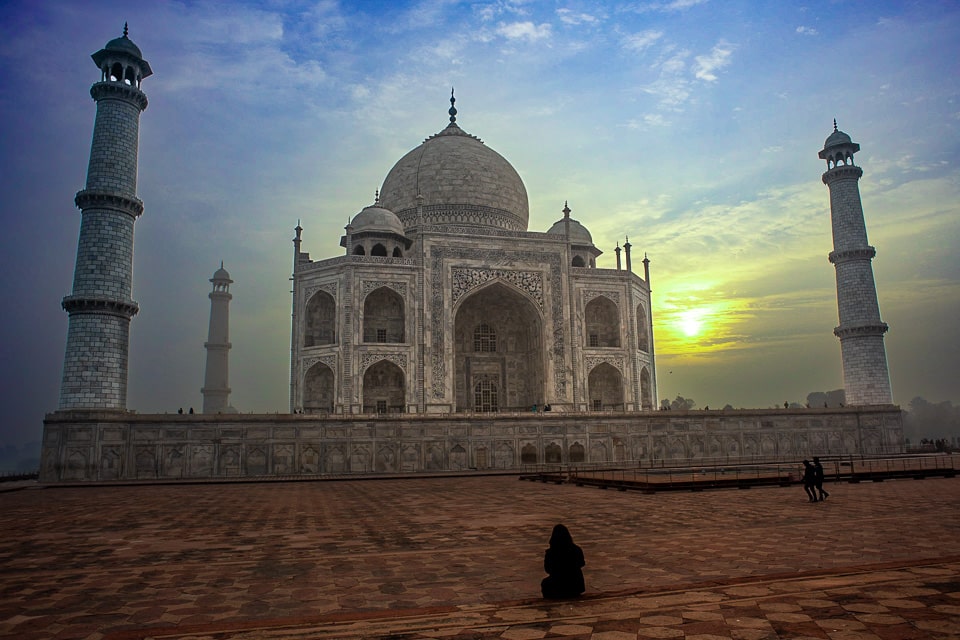
Photo tips
45. Take photos with people in them
While you often go on a trip for the attractions and scenery, it’s the people that make any place special. Take photos with your new friends. Another note, if you are taking those scenery pictures, putting a person in the shot will often give a sense of scale you won’t otherwise get.
46. Learn to use your camera
Chances are your phone has a pretty good camera in it, but sometimes a phone isn’t enough. If you’re at all serious about getting good photos, you probably want to invest in something a little more robust. You don’t have to spend a fortune, but there are a lot of very nice cameras out there that you can get for about the price of an international flight. Then, look at photos taken by pros and try to figure out what makes their photos good. (Hint: it’s not necessarily their equipment.) Imitate them. Start with the rule of thirds.
Enjoy yourself tips
47. Travel by yourself sometimes
While we usually travel together, we also take at least one, sometimes two, trips alone every year. It’s a break, which we need. But it’s also an opportunity to do whatever you want without worrying about someone else’s preference for a salad when you want pizza or a beach when you want a museum. It’s invigorating, too, to be completely self reliant.
48. Be patient
One of the real lessons of travel is that the world doesn’t always move at the speed you’d like. Embrace it. It’s part of the reason you’re traveling in the first place. Do slow down and smell the coffee, drink the wine, and let some things just pass you by. See, you’re calmer already.
49. Don’t over plan
The whole point of travel is relaxing. Schedule a couple of things to do each day. But then walk around. Have a glass of wine. Reflect on what you’ve seen. Maybe write in your journal about what you learned today.
50. Keep a journal
If you’re like us, you’ll be very glad you did. There are plenty of travel journals available that have prompts or questions you can answer about your day. Or, just buy this generic journal, which is what I use for everything. It’s cheaper.
This post is part of our Travel Skills for Travelers Over 50 guide — your starting point for the practical side of travel.
Frequently Asked Questions About Travel Tips
What is the single most important travel tip?
Pack light — and then pack lighter. Using a carry-on-sized bag (35–40 liters) transforms your entire trip. You’ll move faster through airports, skip baggage claim, avoid checked-bag fees, and always have your belongings with you. Every other tip on this page gets easier when you’re not wrestling a large suitcase.
How do I avoid unnecessary fees when spending money abroad?
Two rules cover most situations. First, use a credit card with no foreign transaction fees — we use the Chase Sapphire Preferred — and always pay in the local currency when the terminal gives you a choice. The “pay in dollars” rate is typically 7–10% worse. Second, use a debit card that reimburses ATM fees (Schwab Bank is our pick) and always withdraw local currency directly rather than letting the ATM convert for you.
What’s the best way to save money on flights?
Travel in the off-season — that’s the single biggest lever. Beyond that, compare fares on Skyscanner, Google Flights, and the airline’s own site. Non-direct flights with longer layovers can save hundreds of dollars. And a flight-deals service like Thrifty Traveler Premium sends daily alerts for steeply discounted fares, including international business class on points.
How do I protect myself from pickpockets?
Carry only what you can afford to lose. When we go out in a city, our wallets hold one credit card and a small amount of cash — everything else stays in the hotel safe. Keep your wallet in a front pocket and your bag in front of you on public transit. Before you leave home, photograph your passport and all credit cards (front and back) and email the photos to yourself so you have account numbers handy if something is taken.
Do I really need travel insurance?
Yes — especially for medical emergencies and evacuation. Your US health insurance is almost certainly not valid overseas, and a medical evacuation can cost well over $100,000. A friend of ours broke his back in the Amazon rainforest; his travel insurance flew him out by air ambulance. Make sure your policy includes emergency medical coverage and evacuation home. See our guide to choosing travel insurance.
How do I find good local restaurants when traveling?
Ask the hotel’s check-in clerk — not the concierge — where they personally like to eat. Walk away from the main tourist attractions before you sit down; prices drop and quality rises within a few streets. Look for restaurants full of locals, and if the menu is only in English, keep walking.
Is it safe to use public WiFi when traveling?
Public WiFi carries real risks — your data can be intercepted on unsecured networks, particularly in airports, hotels, and cafés. Always connect through a VPN. Also use a data blocker when charging from public USB ports, which can also be exploited to steal data from your device.
How far in advance should I book popular tourist attractions?
For major sights — the Sagrada Família in Barcelona, the Vatican Museums in Rome, the Anne Frank House in Amsterdam — book as early as possible, sometimes months ahead. Many now sell out completely with timed-entry tickets. Services like Get Your Guide, Viator, and Context Travel often include skip-the-line access and a guide.
What health preparations should I make before international travel?
Visit a travel clinic 4–6 weeks before departure. Depending on your destination you may need vaccinations for Yellow Fever, typhoid, hepatitis A/B, or rabies, and you should confirm routine vaccines like tetanus and polio are current. A travel clinic will advise you specifically based on your itinerary — don’t assume what was sufficient for a previous trip covers a new destination.
What are the most important travel tips for travelers over 50?
Buy travel insurance with strong medical and evacuation coverage; visit a travel clinic before every international trip; invest in comfortable, already-broken-in walking shoes; and don’t over-schedule your days — leave room to rest, reflect, and wander. The best experiences rarely happen on a packed itinerary. See our full Travel Skills for Travelers Over 50 guide for more.
Wow — this is so comprehensive that I’m having a hard time thinking of other tips I can add, but there’s one that comes to mind. Be sure to have researched the various transportation options at airports and train stations. For instance, where are the official, licensed taxis located? How much should the fare be from A to B, etc. — know before you get in the taxi. Is Uber available and a better option. Is public transportation better? The answers vary place to place.
That’s a good one, Catherine. Thanks.
Hi and Thanks for this! What day pack do you use? I think I might feel more secure with one that has an anti-slash strap, etc.
If I’m doing much hiking, I have a 20 liter Osprey backpack. Here’s how I outfit that: https://travelpast50.com/day-hiking-essentials-what-pack-day-pack/. When I’m walking around a city, I have a little REI backpack that folds into its own pocket. For going around a city, it can carry a water bottle, rain jacket, a sandwich and a camera. I’ve never had a slash proof backpack, but sometimes they’d probably be a good idea.
Tom and Kris — thank you for this list. We travel a lot and do many – can’t say all 50 – of these excellent tips and great reminders. Particularly the travel light! You can always get by with less than you think.
Only add I can think of is always have a book with you (in any form you like.) If printed — leave it for someone else to read and pick up another. Great for those down times between flights and weather delays!
We are always reading. Books are essential. Most likely on our Kindles or iPad while traveling.
Thank you for this. What a comprehensive list! We are also longterm, active travellers and we practice many of these suggestions but you’ve really added great context and a few new ideas and resources for us to think about!
With respect to walking tours, which we love, we’ve had many positive experiences with the free program “Guru Walks”. We’ve found that selecting the very top-rated guides is most helpful.
Cheers!
We’ve done a couple Guru Walks. Great tip.
This is just fantastic. A really comprehensive list. The travel insurance bit can be so important.
I’ve been a full-time traveler for the past 10 years and I’ve got something to say about your travel tips. First thing: Where and when you travel makes a big difference in what you take along; winter or summer, tropics or colder countries. If in the tropics, I don’t carry a rain jacket as you end up getting wet from the inside. I always carry an umbrella instead. Also in the tropics, I always just wear sandals, rarely shoes with socks.
Then there’s dealing with the crowds of tourists; As a male, solo, and retired traveler, I always choose to go to out-of-the-way places/countries that most vacationers/tourists don’t travel to.
As for the internet, I am always on a VPN. I also use T-moble as they have contracts with the local carriers in over 140 countries around the world so
I never have to buy a local sim card or buy data. Also, use whatsapp for phone calls from anywhere in the world for free.
I’m a traveler, not a tourist. Retirement is way underrated.
Going to lesser-visited spots is always a good idea. And yes, as we note in our specific packing list tips posts (https://travelpast50.com/ultimate-ultra-light-packing-list/ and https://travelpast50.com/ultralight-packing-list-women/, make alterations based on where and when and the weather where you’re going.) And, we use T-Mobile as well; the Magenta 55+ plan is great for us who are over 55. We’ve also written about using a VPN: https://travelpast50.com/why-you-need-vpn-for-travel/. (We use Mozilla’s VPN.) And, as for the umbrella instead of rain jacket, that’s certainly a good idea for the hot and humid tropics, especially if it’s not windy. Thanks for your suggestions.
You Should also Mention Flight Delay compenstion in the tips. I dont think everyone knows about EU regulation and the compensation airlines provide.
My air craft was delayed, thouht it was some issue with the delay but no they had no answer for that.
I have been using Claimflights compensation checker for the delays that happend during my flight to Zurich.
Yes, on many flights from the EU, you are entitled to compensation if your flight arrives more than three hours late. We were on a flight from Paris to Minneapolis that was cancelled and we received €600 each in compensation simply by writing to Delta using their feedback form on their website. If you do that, no need to pay a commission to a service such as Claimflights. Since you get the compensation direct from the airline, communicating with them is probably the best place to start. Here is the info on flight delay compensation direct from the European Union: https://europa.eu/youreurope/citizens/travel/passenger-rights/air/index_en.htm.