


We’ve been to Lisbon three times over 14 years, and it keeps surprising us. A city that was essentially rebuilt after a catastrophic 1755 earthquake, it wears its layers — Moorish, maritime, dictatorship, contemporary democracy — with a particular grace. Here’s what to do with a few days there.
Day One: The Belém District
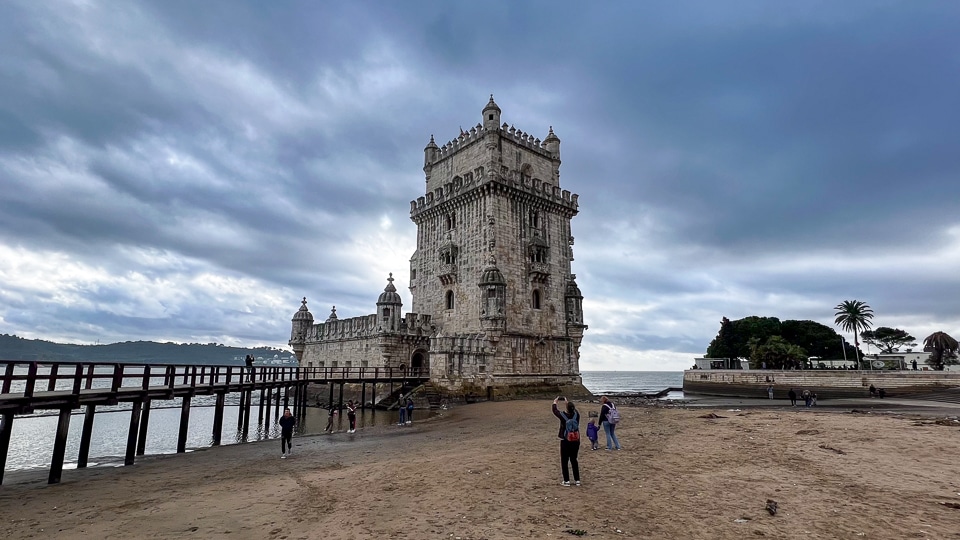
Torre de Belém (skip the interior — here’s why)
Among the best places to start your cultural tour of Lisbon is in the Belém district along the Tagus River. Take a tram or metro train to the Jerónimos Monastery, and from there, within walking distance if you don’t mind a bit of a hike, are the two UNESCO World Heritage sites of the Torre de Belém and the Jerónimos Monastery.
The Belem Tower (Torre de Belém) is a 16th-century fortification near the mouth of the Tagus River that served as a point of embarkation and disembarkation for Portuguese explorers of that time. It was built during the height of the Portuguese Renaissance, and, like the nearby monastery, is an example of the Portuguese Manueline –or Portuguese late Gothic – architectural style. The structure was built from limestone and is composed of a bastion and a four-story tower. You can pay an entry fee to walk across a short bridge and enter the tower, but honestly there is not much to see in the spare interior of the tower. While the exterior was designed as a showpiece, the interior is pretty much distinguished by bare functionality, with a few cannons thrown in for effect.
If you want to go inside, it’s best to buy tickets in advance. Prices range from €15.92 for adults to €7.92 for seniors and students from 13-24 years old. If you have the Lisboa Card (see below,) you can use it to get your tickets.
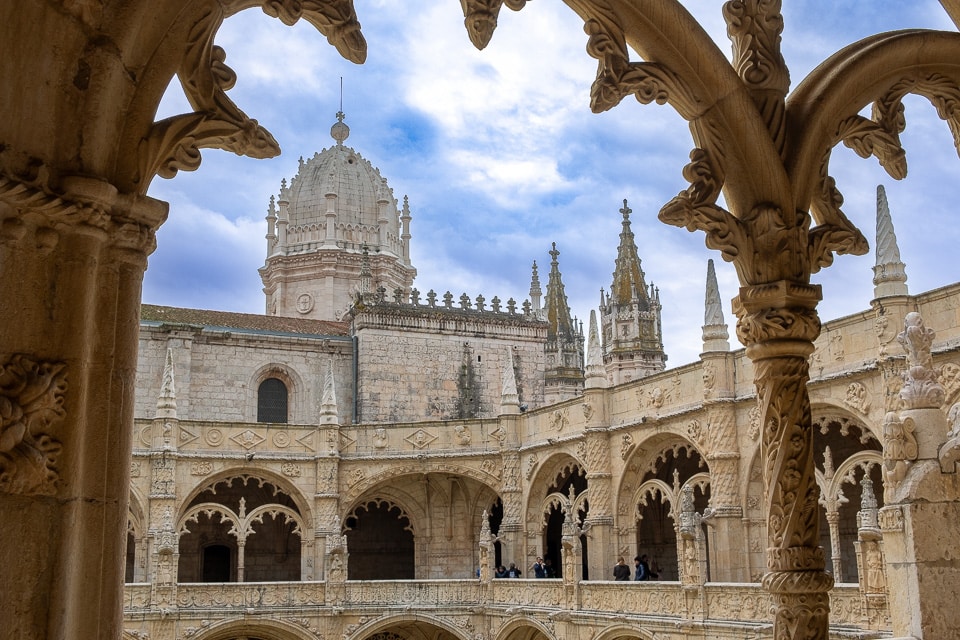
Jerónimos Monastery
The Jerónimos Monastery across the road from the Belem Tower is contemporary to the tower and is also an example of the Manueline style in Lisbon. The Monastery was built in the early 1500s near the launch point of the explorer Vasco da Gama’s first journey, and its construction was funded by a tax on the profits of the spice trade established by da Gama’s establishment of the sea route around Africa to India. It’s worth the visit, mostly to admire the intricate sculptural decoration and the tile work in the refectory.
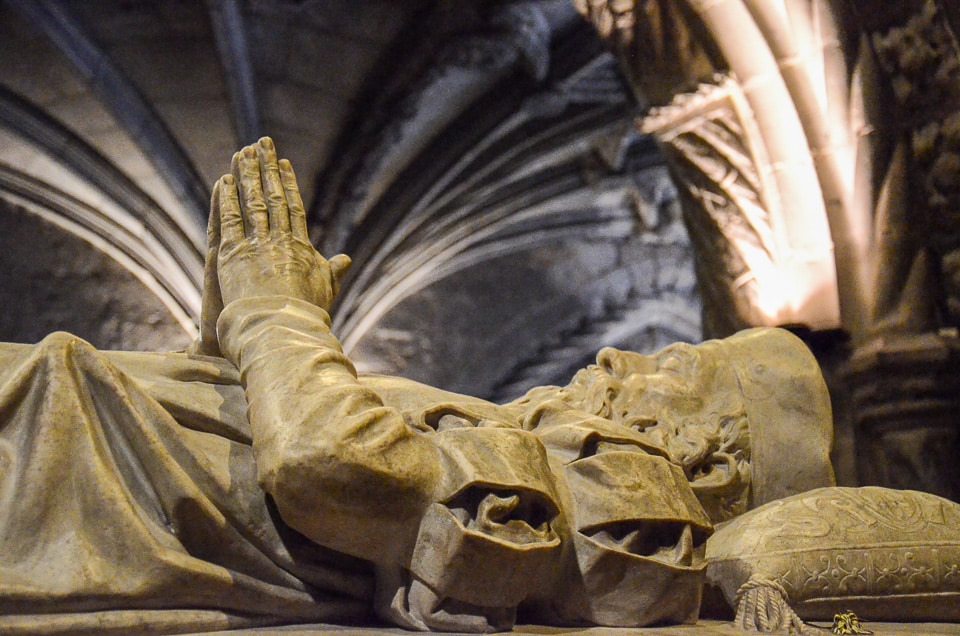
Also, the Monastery is a monument to the Portuguese explorers of the 16th Century, as the tomb of da Gama occupies a prominent place in the nave of the church.
During the busy months, the Monastery uses timed entries, so it’s best to buy your entries in advance. Adult tickets are €19.11, including service fees. Seniors and students 13-24 years old are €9.55. Again, if you have the Lisboa Card you can use it to get your tickets.
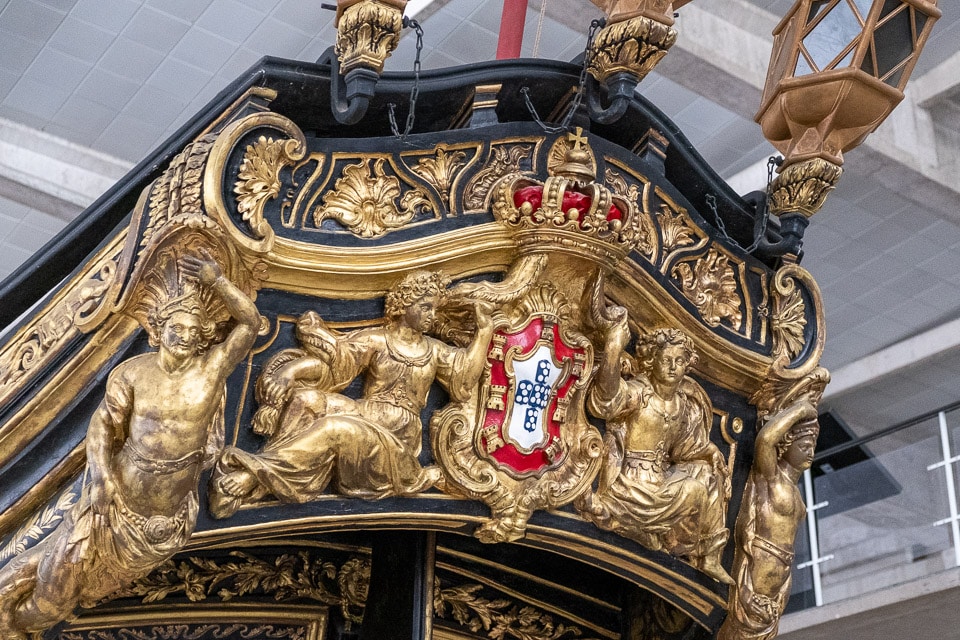
The Navy Museum
The Navy Museum (Museu de Marinha) occupies a part of the western wing of the Jerónimos Monastery with the National Museum of Archaeology, as well as a modern annex built to the north of the monastery.
The exhibits include historical paintings, archaeological items and many intricate scale models of ships used in Portugal since the 15th century. There’s also a extensive display of navigational instruments from the past and present. There are plenty of maps, too. In the annex you’ll see a collection of royal barges, and the Portuguese Navy’s first aircraft.

Monument of the Discoveries
Finally, as you make your way back to the city, take time to admire the Padrão dos Descobrimentos (Monument of the Discoveries) on the riverbank just east of the Torre de Belém.
Pastéis de Belém
While you’re in the neighborhood of the Monastery and the other Belém attractions, be sure to take a short walk to the east of the Monastery to the famous Pasteis de Belém Confeiteria where you can stand in line for a seat to enjoy your pastel with a cup of coffee, or you can simply walk up to the counter and grab a pastel for takeaway. Warning, the custard wrapped in flaky pastry is a bit messy, so consider doing as many Lisboners do, and shove it all into your mouth at once. Either way, you’ll be licking your fingers for a while afterwards.
Day Two: Castles, Museums, and Tiles
The São Jorge Castle
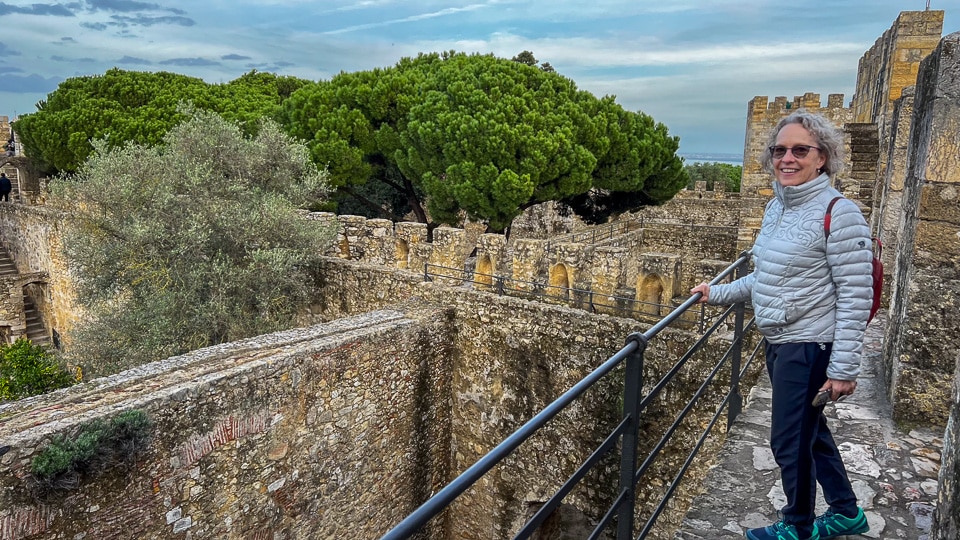
The Castelo de São Jorge is a historic castle located on a hill overlooking the current city of Lisbon. The castle hill has been occupied since at least the 8th century BC, while the oldest fortifications on the site date from the 2nd century BC. The hill on which Saint George’s Castle stands has been the location of fortifications occupied successively by Phoenicians, Carthaginians, Romans, and Moors, before its conquest by the Portuguese in the 12th Century. Since the 12th Century, the castle has variously served as a royal palace, a military barracks, home of the National Archive, and now as a national monument and museum. You are welcome to clamber over the walls and battlements, and enjoy a nice view over Lisbon to the river and Atlantic Ocean while you’re at it.
Tickets can be purchased in advance and are €17 for adults, €14 for seniors, and €8.50 for 13-25-year-olds.

The Calouste Gulbenkian Museum
Our favorite surprise of our visit to Lisbon was the discovery of the Calouste Gulbenkian Museum, the collection of a wealthy Lisboner with eclectic and impeccable tastes. The collection, housed in a museum built next to his former home, includes everything from ancient Roman, Greek, and Egyptian sculptures, to Islamic, Japanese and Chinese ceramics, to Old Masters paintings by Rubens, Van Dyck, and Van der Weyden, to 19th century paintings of such masters as Mary Cassatt, Corot, Degas, Manet, Monet, and Turner. There are a couple of Rembrandts and an entire room dedicated to the French sculptural glass of René Lalique.
In all, a tour through the winding halls of the museum never ceases to surprise and amaze.
Note: the museum has been closed for renovations, but is reopening July 18, 2026. Check their website after that date for pricing and opening hours.

The National Tile Museum
The National Museum of Tiles, housed in the Madre de Deus Convent, includes work from 15th Century Moorish Spain and through changing techniques and styles right up to the present. It’s easy to follow the chronological development from the earliest geometric patterns arranged in mosaic styles, to elaborate Christian scenes lining the walls of the chapel. Later, more whimsical patterns emerged to decorate everything from hunting lodges to kitchens. Some hands-on activities are available.
(Note: as of July 2026, the National Tile Museum is closed for renovations.)

Evening: Fado in the Alfama Neighborhood
The Portuguese equivalent of Flamenco (minus the dancing) is Fado, the plaintive singing style evocative of the feeling of saudade, or longing. You have your choice for Fado between local taverns (tascas), which feature more informal spontaneous performances, and Fado “shows” that feature professional singers and a set dinner menu. We’ve checked out a couple of the former variety. Highly recommended are A Baiuca, Tasca do Jaime, and Tasca do Chico. All of them serve delicious food, such as grilled sardines, which you can savor while waiting for the show to start, usually around 9 p.m. You will want to arrive though much earlier to ensure you get a table.
Where to Eat and Drink in Lisbon
The Campo de Ourique Food Walk
For your self-guided tasting pleasure, we recommend a walking food tour starting at Mercado Campo de Ourique. This full-on local market shopped by locals, in a less touristed area, sits on what was formerly fields, then a cemetery after the plague, then 18th Century army barracks, and eventually the seat of the Republic.
Stroll through this pleasant neighborhood (filling in with many international residents of late) to reach Teimar Cerveceria. This popular casual spot specializes in fish. We can recommend croquettes, mackerel, shrimp, and the Tiborna charcuterie plates. A small beer, called an imperial in Lisbon, is a perfect accompaniment.
Next you can cut through the Parque de Parada (or, Parade Garden) and see one of the largest Jacaranda trees ever, as well as families and young people relaxing in the shade. Your next stop might Cortesa (same group at Teimar) for some olives, bread, and delicious goat or sheep’s cheese. Then it’s on to A Tentadora, a classic crowded joint for your final pastel de nata of the day, perhaps.
Interested readers might like to take a detour near here to visit the home of Fernando Pessoa, 20th Century poet and mystic.

And of course you will have already checked out the Pasteis de Belém Confeiteria mentioned above. It’s only fair to sample as many Pasteles de Nata as you can to be sure you like them.
The Time Out Market
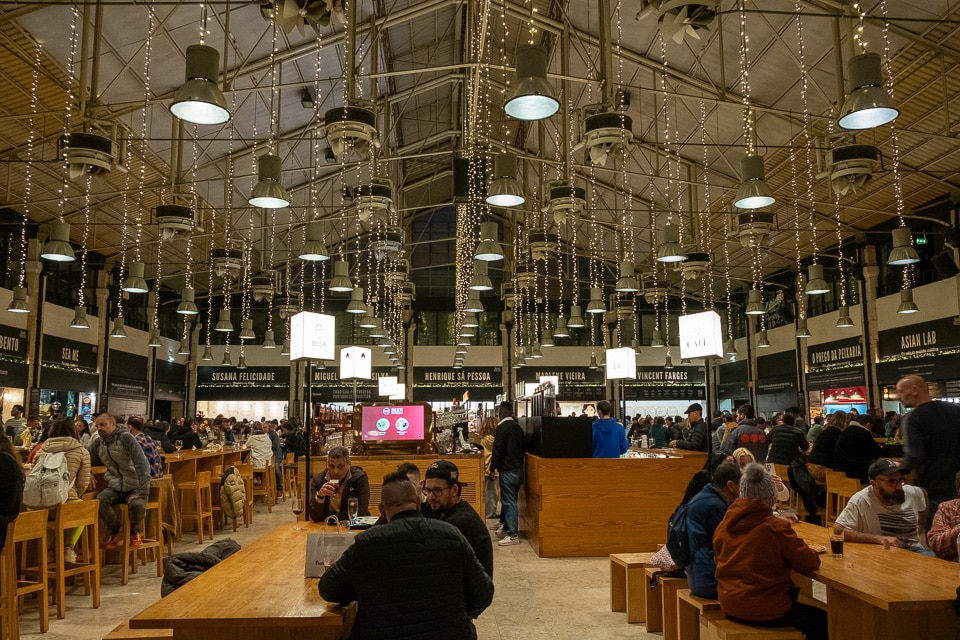
Honestly, we loved the Time Out Market, which was recommended by our hotel concierge. There are more than 30 restaurants and kiosks in the loud and lively hall selling regional specialities, such as sheep’s cheese and ham, custard tarts, shellfish and grilled fish, wines, beers, and chocolates. Several top Portuguese chefs have branches of their best restaurants here. The original fish, fruit and vegetable market stalls occupy the other half of the landmark building. We made more than a meal by visiting several kiosks for beers, a juicy hamburger, some grilled shrimp, and a delicious salad. The choices are close to infinite. Mix and match to your own taste.
Ginjinha
Tradition demands you try a ginjinha, especially ordered from a tiny old open front Ginjinha bar. This cherry liqueur is often enjoyed with chocolate, but we prefer the straight stuff. Young and old will have a shot and carry on with their day, so we did likewise. A good place to try a ginjinha is the famous A Ginjinha bar at Largo de São Domingos, which has been open since 1840.
Where to Stay in Lisbon
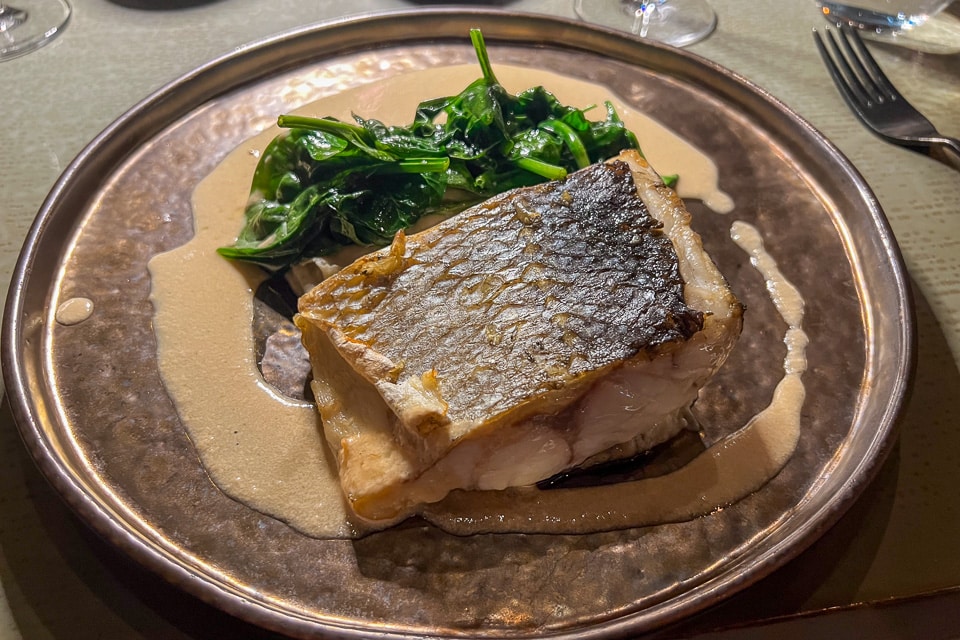
We stayed at the Corinthia Lisbon and were impressed by both the comfort and quality of the boutique hotel, especially its restaurants. The Erva Restaurant featured contemporary takes on traditional Portuguese cuisine – especially fresh seafood and gigantic steaks. The Soul Garden, with its Latin American and Asian fusion offerings, offered a wonderful small plates contrast to the more hearty fare of the Erva. Both were excellent.
For those who love to follow literary paths, check out the Pessoa Hotel, named for the famed Portuguese poet Fernando Pessoa. It’s centrally located and complete with a library.
With More Time: Day Trips from Lisbon
We know Lisbon needs more than a couple days. Allow more time to visit Sintra, an easy day trip or a very fine overnight.
If you’d rather not deal with the train and crowds, private day tours to Sintra, Cascais and beyond are a comfortable alternative.
In Lisbon, other highlights we’d hasten to visit are the Carmo Convent Ruins and Museum and the Museum of Lisbon. The latter is actually in five parts spread across town, including the Roman Ruins (open only occasionally) under the streets of Lisbon.
The Alfama neighborhood itself is worth a morning of aimless wandering — the narrow streets, the tiled facades, and the miradouros (viewpoints) are among the most atmospheric in the city.
Finally, across Lisbon are parks and public art, not to mention interesting streets to wander on your own. Art is everywhere.
The Best Time to Visit Lisbon
Lisbon gets very hot and crowded in July and August — temperatures regularly exceed 35°C (95°F) and the most popular sites have significant queues. Spring (April–May) and autumn (September–October) are the ideal times to visit: warm, less crowded, and the light is beautiful. October in particular is excellent — the city is quieter, the jacaranda leaves are gone but the air is clear, and the pastéis de nata taste exactly the same. November through March is mild by northern European standards but can be rainy.
How to Get Around in Lisbon
We’re great walkers, and apart from getting to the Belém neighborhood from central Lisbon by tram, we covered the city almost entirely on foot. But keep in mind, Lisbon is hilly and the cobblestones are uneven. Comfortable, grippy-soled shoes are essential. The tuk-tuks are a genuinely useful option for getting between elevated sites if hills are a concern.
The Metro is clean and fast, but doesn’t go everywhere. It’s best used for longer trips between neighborhoods. The classic yellow trams are, these days, more tourist conveyance than actual efficient transportation and are extremely crowded during peak tourist season. So use them more for the experience than the utility. Uber is available and works to get you from point to point.
If you want to use public transport, consider getting the Lisboa Card, which gives you free rides on the Metro, buses, trams and elevators up some of the steep hills. You can buy the card with validity for 1-3 days, and in addition to transport, it will also get you admission to several of the attractions above, such as Jerónimos, the Torre de Belém, Castelo de São Jorge, and more. It’s also good for train transport to Sintra. As of 2026, it costs €31 for 24 hours, €51 for 48 hours, and €62 for 72 hours. The time starts running with your first use.
How to Get to Lisbon
Probably most people will fly directly into the Lisbon airport, but many also add Portugal on to a trip to Spain. If that’s what you’re doing, there are several options.
You can fly from Madrid to Lisbon in about an hour, and it’s usually quite inexpensive.
But, if you prefer ground transportation, you can take a very comfortable coach (bus) which will take about eight hours. Since the pandemic, the direct train from Madrid to Lisbon was suspended and currently there’s no direct transborder train service between the two countries.
Another alternative, if you happen to be visiting Andalucia or Extremadura, is to take the bus from Sevilla (seven hours), Mérida, or Cáceres (both about four hours.)
For a broader overview of where to go, what to eat, and how to plan your route through Spain, start with our Spain travel guide.
This itinerary was mostly based on our visit to Lisbon in 2024 as a precursor to our cruise with Viking River Cruises River of Gold Cruise of the Douro River. Viking’s Douro River Gold itinerary runs annually — check their site for current sailings.
Frequently Asked Questions: Things to Do in Lisbon, Portugal
Is two days enough time to see Lisbon, Portugal?
Two days is enough to cover Lisbon’s main highlights — the Belém district (Torre de Belém, Jerónimos Monastery, and the Monument of the Discoveries), one or two outstanding museums (we particularly recommend the Gulbenkian and the National Tile Museum), and the São Jorge Castle. But Lisbon rewards more time — three or four days lets you slow down, explore the Alfama neighborhood and its fado bars, take a day trip to Sintra, and properly do justice to the food scene. Most visitors find themselves wishing they had booked an extra day.
What are the must-see sights in Lisbon in two days?
The essential Lisbon highlights for a two-day visit are: the Belém district (Torre de Belém exterior and Jerónimos Monastery — both UNESCO World Heritage Sites), the São Jorge Castle for its history and views over the city, the Calouste Gulbenkian Museum (one of Europe’s most underrated art collections, covering everything from ancient Egyptian artifacts to Impressionist paintings), and the National Tile Museum, housed in a convent and tracing the evolution of Portugal’s distinctive azulejo tile tradition from the 15th century to the present. The National Tile Museum is currently closed for renovations as of mid-2026; check before visiting.
What is the best way to get around Lisbon?
Lisbon’s Metro is clean, affordable, and efficient — the best way to cover longer distances between neighborhoods. The iconic yellow trams are charming but slow and extremely crowded in tourist season; tuk-tuks are a genuinely useful alternative for getting between Lisbon’s famous seven hills without walking steep cobblestoned streets. Be aware that Lisbon is hilly and the traditional calçada portuguesa cobblestones are beautiful but uneven — comfortable, grippy-soled shoes are essential. Uber is widely available and inexpensive for point-to-point trips.
How do I get to Lisbon from Spain?
The most practical ground transport from Madrid to Lisbon is by coach (bus) — ALSA and Rede Expressos both run comfortable direct services taking approximately 7–8 hours. Flying from Madrid takes about an hour and is frequently very cheap, often under €50. From Sevilla, the bus journey is around 7 hours, making a Lisbon extension to an Andalucía trip very practical. Note: the historic Lusitânia night train between Madrid and Lisbon was suspended in 2020 and has not resumed service; there is no direct rail connection between the two capitals as of 2026. Lisbon’s airport (Humberto Delgado) is unusually central — just a 20-minute Metro ride from downtown.
What is pastel de nata and where should I try it in Lisbon?
Pastel de nata (plural: pastéis de nata) is Portugal’s most famous pastry — a small, flaky-pastry tart filled with creamy custard, baked in a very hot oven to create characteristic burnt caramel spots on top. They’re served warm, typically dusted with cinnamon and powdered sugar. The original and most famous version is the Pastel de Belém, made to a secret recipe since 1837 at the Pastéis de Belém confeiteria in the Belém district. Expect a line, but it moves quickly — order a tray at the counter, stand outside, and eat it immediately. A religious experience.
What is the Gulbenkian Museum in Lisbon?
The Calouste Gulbenkian Museum is one of the great hidden-gem art museums of Europe — the personal collection of Calouste Gulbenkian, an Armenian-born oil magnate and art collector who lived in Lisbon from 1942 until his death in 1955. The collection is strikingly eclectic: ancient Egyptian artifacts, Greek and Roman sculptures, Islamic manuscripts, Japanese prints, Chinese porcelain, Flemish Old Masters (including Rubens, Van Dyck, and Rembrandt), Impressionist paintings by Monet, Degas, Manet, and Turner, and an entire room of Art Nouveau glass by René Lalique. It’s our favorite surprise in Lisbon, and a museum that rewards genuine slowness. The museum recently reopened after a period of renovation — check their website for current hours and admission prices.
What is the best neighborhood to stay in Lisbon?
For first-time visitors, the Chiado and Baixa neighborhoods offer the best combination of central location, walkability, and access to restaurants and cultural sites. The Belém district is quieter and closer to the river monuments but farther from the city center. The Alfama neighborhood — Lisbon’s oldest, known for its fado bars and Moorish character — is atmospheric but very hilly. For travelers prioritizing comfort and easy access to multiple neighborhoods, the Avenidas Novas area (where the Gulbenkian Museum is located) is also excellent and has good Metro connections.
Can I combine Lisbon with a Portugal river cruise?
Yes — and it’s one of the most natural trip combinations in the Iberian Peninsula. Douro River cruises typically depart from Porto (a short flight or 3-hour train from Lisbon) and sail through Portugal’s wine country to the Spanish border, calling at quintas (wine estates), hilltop villages, and historic towns like Lamego and Régua. Viking, AmaWaterways, and Scenic all run excellent Douro itineraries. Most operators offer pre- or post-cruise extensions in Lisbon, making a combined Lisbon city break plus Douro River cruise a very satisfying 10–14 day Portugal trip.

Love to visit Lisbon! Thank you for the tips
It’s got a lot to recommend it.