
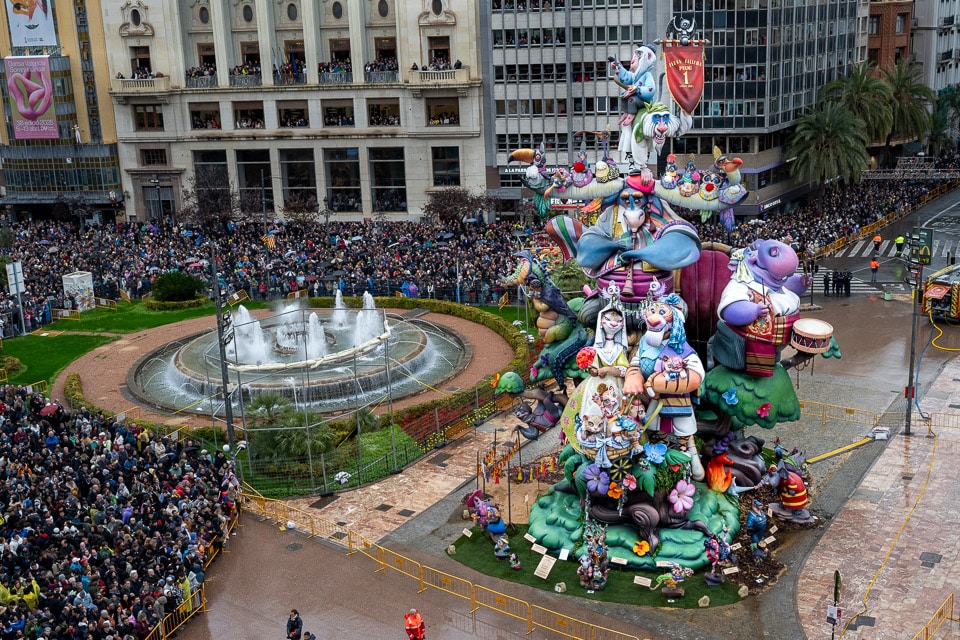
Every spring, the city of Valencia, Spain, literally explodes into a five-day spectacle of colorful sculpture, sound, and light known as Las Fallas. Officially celebrated from March 15 to 19 every year, the Fallas (Falles in the Valencian language) are anticipated throughout the year by all Valencianos. The Fallas Festival is one of Spain’s most dramatic cultural events.
For a broader overview of where to go, what to eat, and how to plan your route through Spain, start with our Spain travel guide.
After attending the Fallas in 2025 and spending the five days of the celebration soaking in the almost 800 wonderfully detailed sculptures spread throughout the city’s streets, the religious processions of the Ofrenda (flower offerings to the Virgin patroness saint of Valencia), and the smell of gunpowder from the constant pyrotechnic shows – both official and from random teenagers on every street – we can attest that this festival is certainly the most intense we’ve encountered in Spain, on many levels.
For travelers over 50 who have experienced festivals around the world, Las Fallas occupies a category of its own — there is nothing quite like it anywhere.
Planning a broader trip to Valencia? Our Valencia Spain Travel Guide covers everything you need — museums, restaurants, paella, where to stay, and how to get there.
The Origin of Las Fallas
Las Fallas trace back to the Middle Ages, when Valencia’s carpenters marked the arrival of spring and the feast day of Saint Joseph, the patron saint of carpenters, by burning wooden structures known as parots. These wooden devices, used to hold candles during the winter months, were not needed as the days grew longer. To dispose of them, the carpenters would gather the parots in the streets and set them ablaze in a symbolic act of renewal.
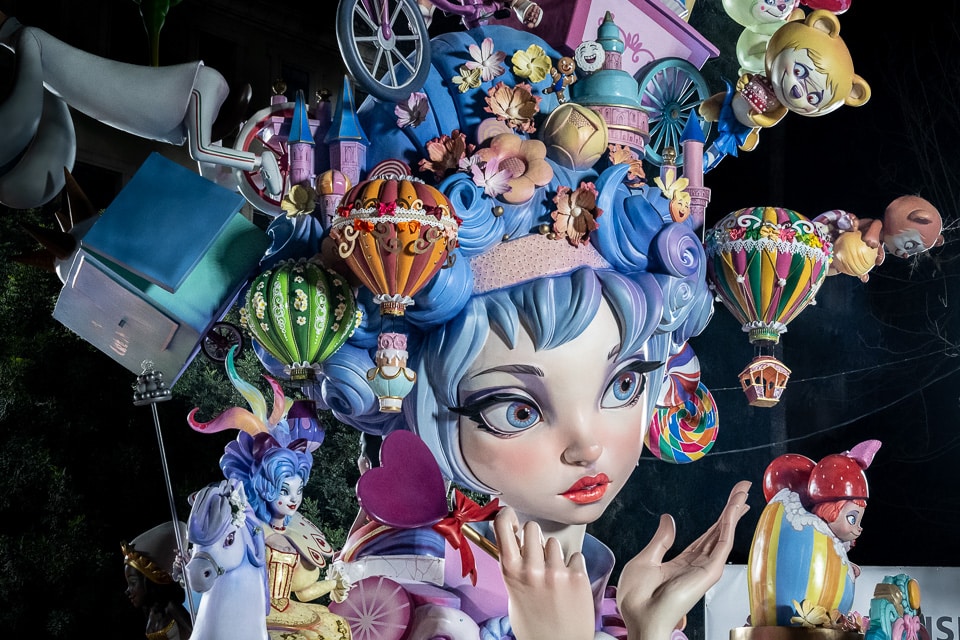
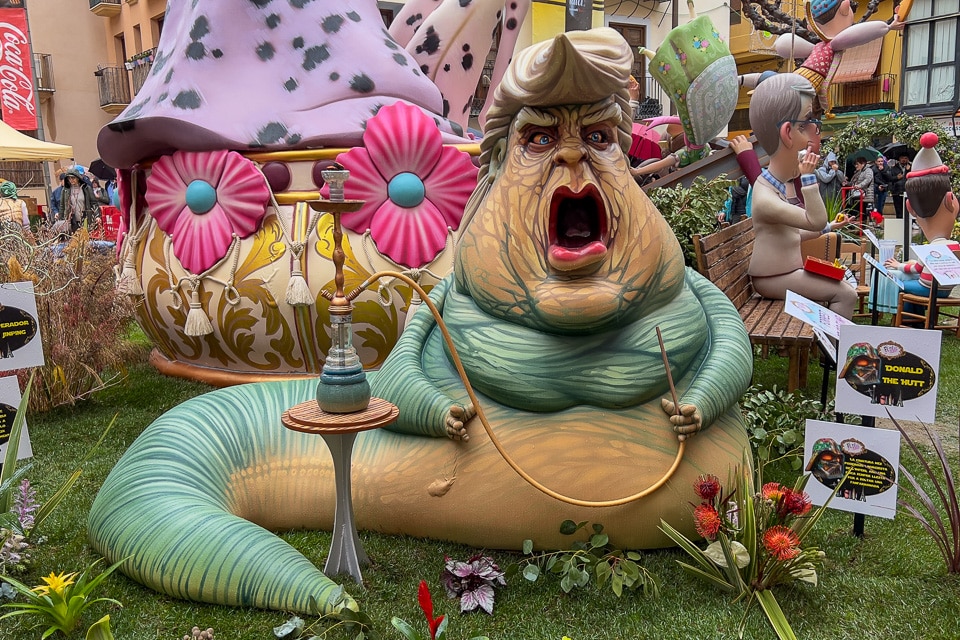
Over time, the fires grew more elaborate as people began to decorate the parots with old rags, clothing, and household items, eventually fashioning them into human-like figures. These figures evolved into colorful ninots (Valencian for “puppets” or “dolls”), first made of wood, then cardboard and papier mâché, and eventually with polystyrene and artistic painted finishes. The ninots are combined into huge structures and often crafted to satirize prominent citizens and politicians. What began as a springtime cleanup became a vehicle for social commentary, a community art project, and a public celebration rolled into one.

By the 18th and 19th centuries, the tradition had become deeply embedded in Valencian culture, and the ninots began to appear as monumental fallas, full-scale sculptural displays grouped around a central theme. These humorous, ironic, and frequently biting portrayals have become a hallmark of the festival.
The Modern Fallas Festival
Today, the Fallas Festival is a UNESCO Intangible Cultural Heritage celebration, and draws hundreds of thousands of visitors from around Spain and the world. The festival represents an entire year of preparation but, perhaps ironically, culminates in an intense week filled with ritual burnings that destroy all the painstaking effort of the previous year.
Though not seen by the public during the festival, the loose federations that work on the monuments are rich and constant communities who work and socialize together, raise funds, plan their artistic statements and ultimately party together during the festival. These might be neighborhood groups, trade groups, business associations, or other organizations united in the efforts.
Around town, the fallas federations might set up a party tent for their own use during he festival, or work vendor carts to sell food and drinks to help recoup their falla expenses. Some neighborhoods host, for example, paella cooking competitions; others dance into the night, with babies and teens and elders – and everyone in between – sharing in the fun.
The Fallas Sculptures
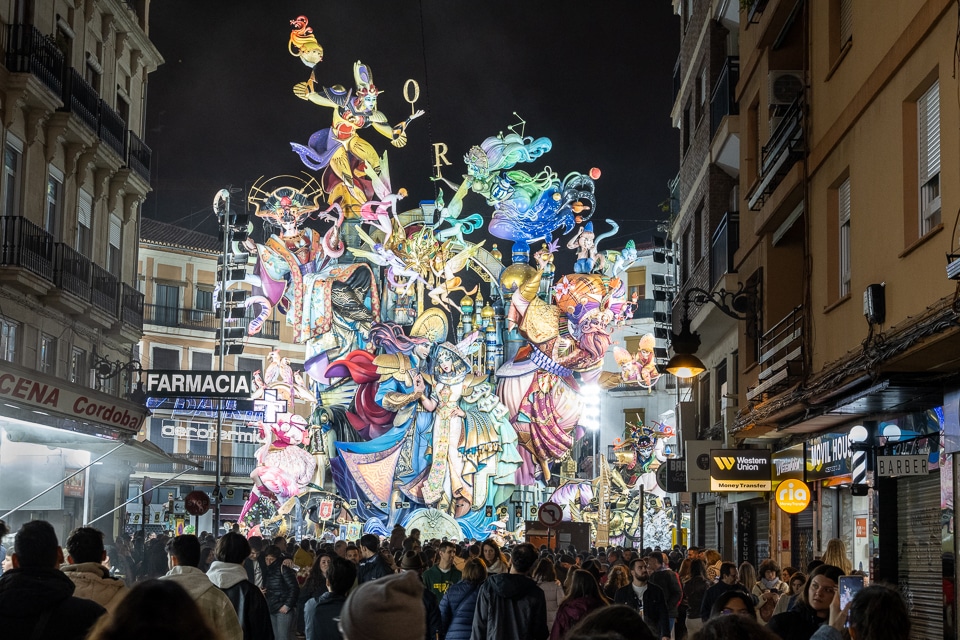
At the heart of the celebration are the fallas themselves—elaborate, often multi-story sculptures made from wood, cardboard, papier-mâché, and polystyrene. These constructions are assembled by local neighborhood associations called casales falleros, who spend the entire year designing and fundraising for their creations. Some of the most elaborate fallas cost up to €250,000, which is the maximum expenditure allowed. Others, the effort of a smaller neighborhood casal faller may cost only a few hundred euros.
Each neighborhood competes for prizes in different categories. The most elaborate and expensive fallas may reach heights of 20 meters (65 feet) or more. Most fallas are composed of dozens of ninots arranged in fantastic and satirical scenes, poking fun at politicians, celebrities, cultural trends, or social issues.
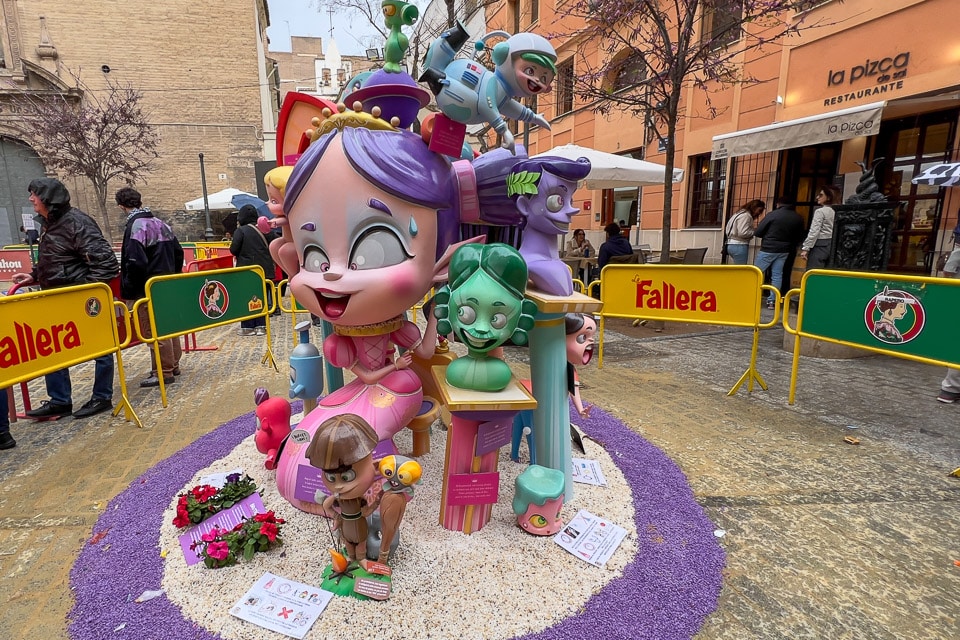
Each casal creates two types of fallas: a Falla Mayor – the large, central monument; and the Falla Infantil – a smaller, child-friendly version, usually more whimsical in theme.
In total, almost 800 fallas were installed throughout the city for the 2025 festival.
Key Events of the Fallas Festival
La Crida – The Opening Ceremony (End of February)
The Fallas Festival officially begins with La Crida, meaning “the call.” Held at the medieval Serranos Towers, this ceremony marks the city’s formal invitation to celebrate Fallas. The Fallera Mayor, a woman chosen each year to represent the festival, delivers a passionate speech to the city before a finale of fireworks and lights. As a cultural ambassador who represents the spirit of Fallas, she attends hundreds of events and is often seen in full traditional regalia. Portraits of each year’s Fallera Mayor can be seen at the Museo Fallera.
The Mascletà – The Daily Fireworks Display (March 1 to 19)
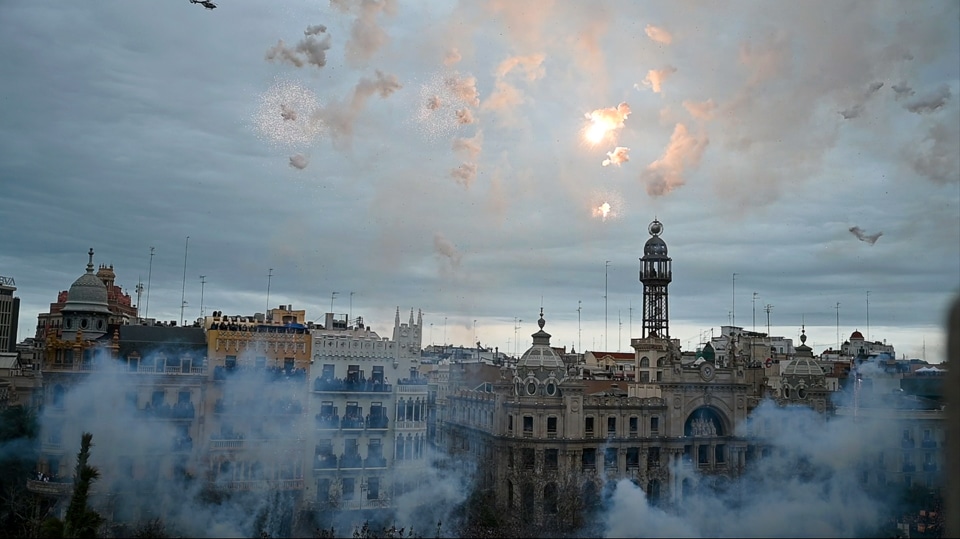
Every day at 2 p.m. thousands gather for the Mascletà in the Plaza del Ayuntamiento (City Hall Square.) At precisely 2, there’s a thunderous daytime fireworks show. Rather than a visual display, the mascletà is an orchestrated crescendo of rockets and gunpowder that rattles windows and shakes the ground. The display usually lasts only two to five minutes. Each day is hosted by a different pyrotechnic company, and spectators come to judge the rhythm, intensity, and impact of each display. You can expect kids in various neighborhoods will use this hour to set off pockets-full of their own incendiaries.
La Plantà – The Sculptures are Erected (March 15)
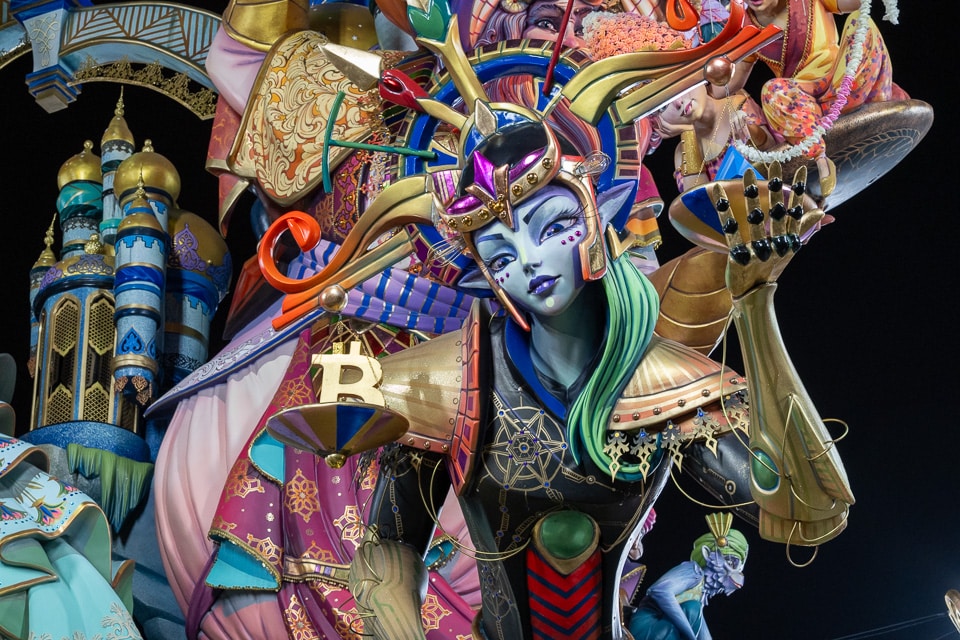
By the night of March 15, all fallas must be in place. This event, known as La Plantà, marks the installation of the fallas monuments throughout the city.
Judging of the fallas begins the next morning, and the best creations are awarded prizes by category.
The Ninot Exhibition and La Indultà del Ninot
In the weeks leading up to Fallas, each casal fallero submits its best ninot to an official exhibition. Visitors vote on their favorites, and the winner of the popular vote is spared from the flames during La Cremà (the burning) and placed in the Fallas Museum—a rare honor known as the Ninot Indultat (the Pardoned Puppet.) Touring the Museo Fallero, we noticed the pardoned ninots were more likely to be realistic than fantastic, and more sentimental than satirical. They might display, for example, family or household scenes, grandparents with grandchildren, or long-suffering workers or mothers tending to their jobs.
This tradition allows the public to preserve one piece of Fallas artistry each year and creates a lasting archive of some of the most remarkable works.
Despite all the wild party aspects of the Fallas, this sentiment is perhaps the essence of the celebration. Fallas is not just an excuse to blow stuff up. It is, above all, a celebration of the Valencian community. Satiric shots at Spanish and American politicians and fantastic depictions of imaginary realms are welcome, but are also fleeting by their nature. The real sentiment of community and continuity is what is worth preservation.
La Ofrenda de Flores – The Flower Offering (March 17–18)
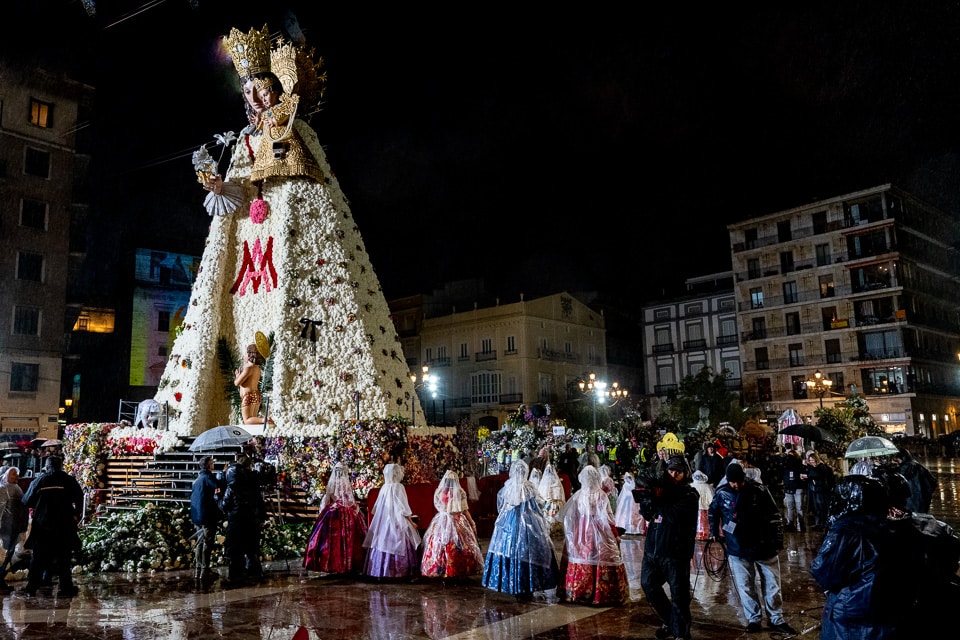
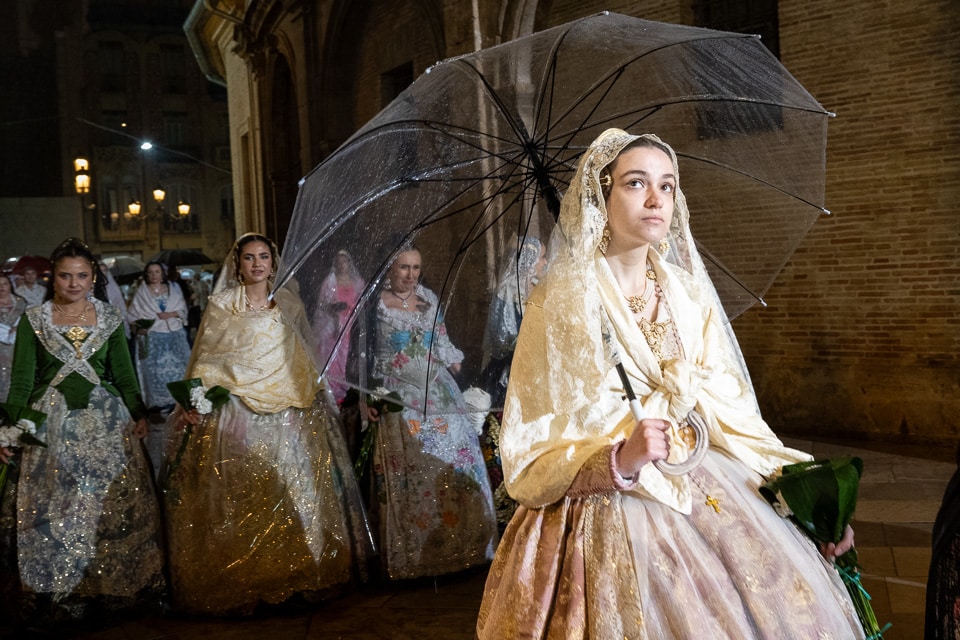
Over two days, tens of thousands of falleras and falleros — men and women in stunning traditional Valencian dress — march through the streets to offer bouquets of flowers to the Virgen de los Desamparados – the Virgin Mary of the Forsaken, the patroness saint of Valencia. The flowers are arranged into an enormous tapestry on a towering wooden framework in Plaza de la Virgen and form the Virgin’s mantle.
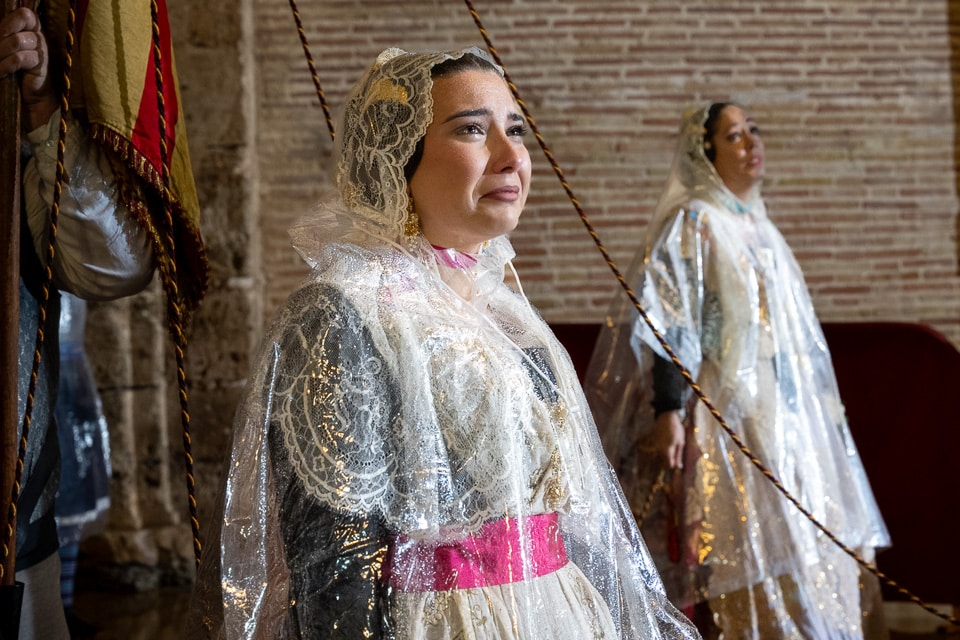
The offering is both a religious and cultural highlight of the festival, blending deep devotion with collective beauty. The atmosphere is quite emotional for many of the participants and it’s not uncommon for some to break into tears as they enter the plaza in procession and get their first vision of the enormous flower covered image of the Virgin.
Nit del Foc – The Night of Fire (March 18)
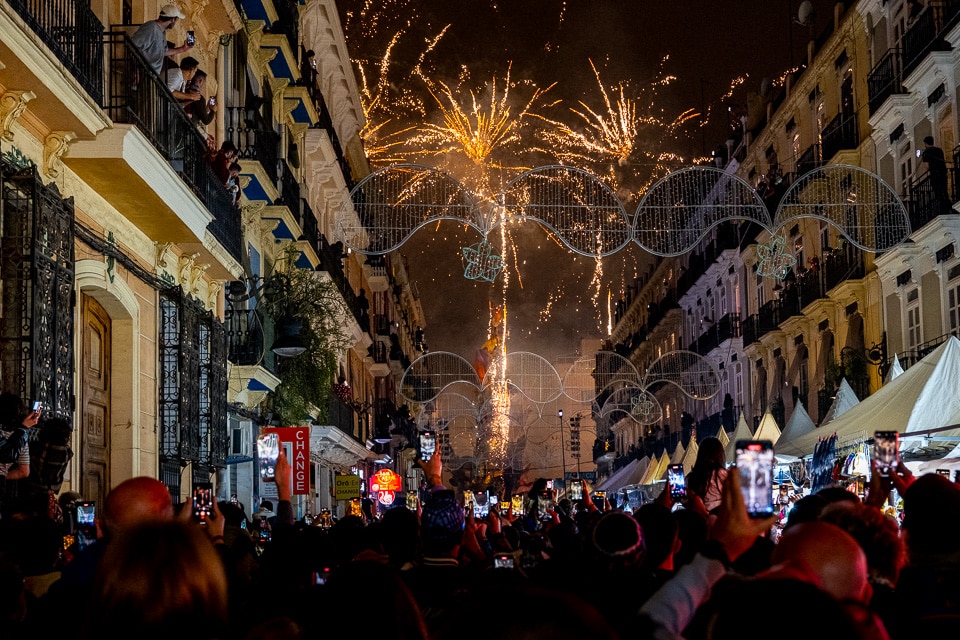
On the eve of La Cremà is biggest fireworks show of the festival — the Nit del Foc or Night of Fire. In the early hours of March 19, the show draws huge crowds to the old riverbed park, now the Turia Gardens.
Firework displays are a constant throughout Fallas week, but the Nit del Foc is the ultimate spectacle and lasts up to 30 minutes with dramatic bursts that grow in intensity over the time.
La Cremà – The Burning (March 19)
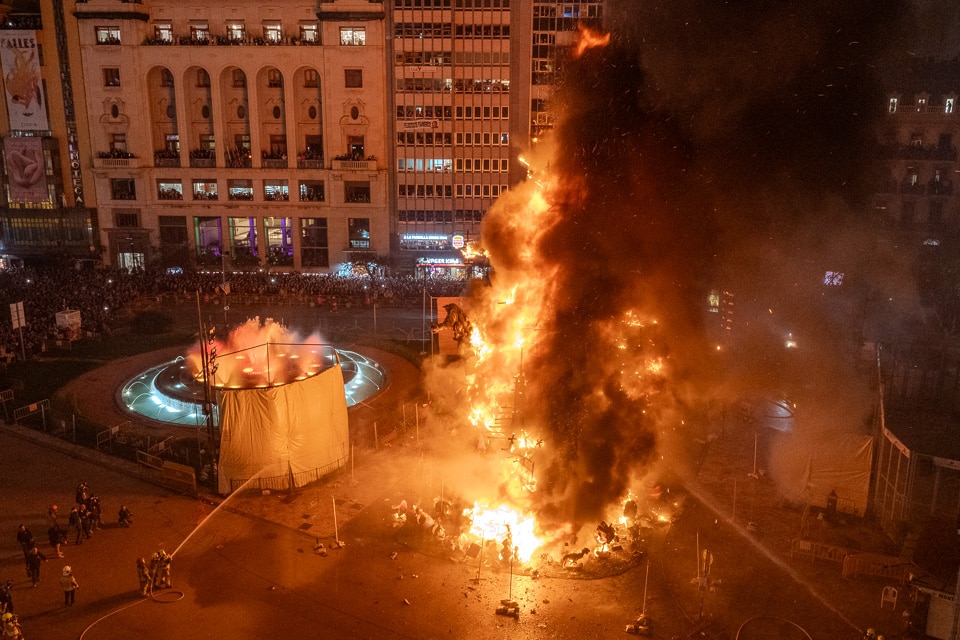
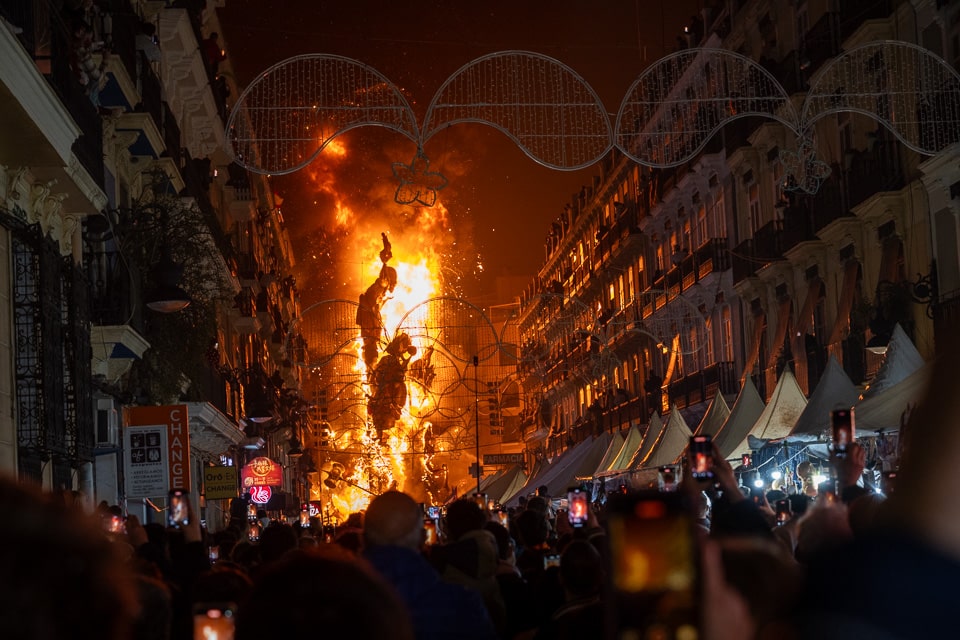
The festival ends in flames with La Cremà, the burning of all the fallas on the festival’s last day. The children’s fallas were burnt at 8 p.m. followed by the larger fallas at 10 p.m., the first place winner at 10:30. The last falla to burn is the city’s grand falla in Plaza del Ayuntamiento at 11:30. And every one of these burnings starts off with its own blast of rockets and fireworks, even within the narrow streets where many of the neighborhood fallas are located.
Food of the Fallas Festival
Naturally, food is a top priority during the festival. With so many people roaming the streets day and night, restaurants usually devise a fixed menu for the duration, and reservations for midday meals are a great idea. This is when Valencia shares its love of their original paella rice dish, traditionally made with chicken, rabbit, flat green beans, large white beans, artichokes, and a few snails thrown in for flavor, with saffron as one of the magic ingredients.
Pastry shops are busy day and night, with customers lined up to enjoy the special buñuelos de calabaza, or pumpkin fritters dusted with sugar or dipped in chocolate. Churros are popular, too, served with chocolate. These sweets might be downed with cafe con leche, but are best with the very special local horchata, made from tiger nuts that are native to the area. This delicious, milk-colored drink is served cold and offers a nod to the huerta, the rich agricultural area around Valencia.
What the Fallas mean
It’s difficult to understand why so much effort is expended to create so many wonderful works of art just so they can be ritually destroyed every year. As the designer of the 2025 winning Falla said, “So much trouble only to burn it down.”
The best explanation I got is that the Fallas Festival, in its entirety, is deeply symbolic. The Fallas Festival embodies its spring equinox timing: renewal, letting go of the old, and starting fresh. The ritual can be profoundly cathartic and oddly mesmerizing as the spectacular monuments are consumed. The crowds sometimes cheer, but there are also plenty of spectators who appear stunned or even tearful.
My own emotions were similarly mixed. As we wandered through Valencia in the week before the incendiary culmination of the Fallas, I was constantly awestruck at the artistic vision, the technical sculptural and painting expertise, and, often, the cultural and satirical commentary embodied in the Fallas figures. Why do all this only to burn it down, indeed?
The only plausible explanation I can muster is to concentrate not just on the figures, but on the incredible sense of community in Valencia they engender. Every neighborhood or business association or workers guild sponsors or even constructs their own Fallas. In fact, each group is usually behind two Fallas: one large, and one smaller specifically for children. That’s the thing. It’s a strong sense of the unique Valencian community that is consciously passed along through the generations. It’s not just a wild party. Along with the Ofrenda processions’ clear religious basis, it boils down the essence of Valencia and demonstrates what makes this city special, even among the regions of a country that specializes in individuality.
It is a unique experience, to be sure.
How to Experience Las Fallas
- When to arrive: The Mascletà starts March 1 but the main festival is March 15-19. Arriving March 16-17 gives plenty of time to see the sculptures, the Ofrenda, and the burning.
- Where to watch the Mascletà: The Plaza del Ayuntamiento fills extremely early for the daily pyrotechnics. Arrive at least 45 minutes before 2 p.m. for a good position. If you’re very close, you might consider eye and ear protection. This is a major, albeit short, fireworks show in the middle of the city in the middle of the afternoon. The emphasis is on loud, not bright.
- Where to watch La Cremà: The neighborhoods start their burnings on March 19 pretty much as soon as it gets dark. Pick your spot. Again, get there early if you want to watch a particular burning. The Grand Falla at the Ayuntamiento is the last to burn, and the time will be well publicized in advance. If you attend any of the neighborhood burnings, you’re going to be somewhere in the back for the big show at the City Hall Plaza.
- Book accommodation months in advance: If you’re planning on coming to Valencia during Fallas, book your lodgings as far in advance as possible. It is almost impossible to find last-minute rooms and prices will triple. They’ll be high in the first place for those dates.
- Ear protection: We mentioned ear protection above, but deserves special mention. The noise levels are genuinely extreme – not only for the formal displays, but because it seems every teenager in the city has an inexhaustible supply of very large firecrackers which they’re lighting and tossing very near wherever you happen to be walking. Serious and constant protection is strongly recommended for anyone sensitive to sound.
- Getting around: Many streets are closed during the festival. After all, the Fallas sculptures take up about 800 intersections and plazas everywhere in the city. Walking is the only option in the historic center.
Frequently Asked Questions About Las Fallas Festival
When is Las Fallas festival in Valencia?
Las Fallas is officially celebrated from March 15 to 19 each year, culminating in La Cremà — the burning of all the sculptures — on the night of March 19. However the broader festival season begins much earlier: the Mascletà daily fireworks displays run from March 1 through March 19, and La Crida opening ceremony takes place at the end of February. If you want to experience the full intensity of the festival, arrive by March 16 at the latest.
How do I get tickets for Las Fallas?
Most of the Las Fallas events are free and open to the public — the Mascletà, La Plantà, La Ofrenda, and La Cremà all take place on public streets and squares. The Ninot Exhibition, held in the weeks before the festival, requires a ticket and can be purchased at the venue. The Fallas Museum (Museo Fallero) also charges a small entry fee. No tickets are required to walk the streets and view the fallas sculptures. Book accommodation months in advance — Valencia hotels fill up completely during festival week and prices increase dramatically.
Where is the best place to watch La Cremà burning?
The most dramatic burning is the grand falla in the Plaza del Ayuntamiento (City Hall Square) at 11:30pm on March 19, but the neighborhood burnings throughout the city are in many ways more intimate and memorable. Each neighborhood falla burns earlier in the evening — children’s fallas at 8pm, larger fallas at 10pm — and you can walk from one burning to the next. The streets become very crowded and often extremely smoky. Wear clothes you don’t mind smelling of smoke and be prepared for intense heat as the sculptures ignite.
Where is the best place to watch the Mascletà?
The Mascletà takes place every day at exactly 2pm in the Plaza del Ayuntamiento from March 1 through March 19. The square fills up very early — arrive at least 45 minutes before 2pm to get a good position. Bring ear protection or at minimum cover your ears: the noise levels are genuinely extreme and can be uncomfortable or harmful without protection. The display only lasts two to five minutes but the build-up and crowd atmosphere make it an unmissable experience.
Is Las Fallas suitable for travelers over 50?
Absolutely — with a few practical considerations. The noise levels during the Mascletà and the street fireworks are very high; ear protection is strongly recommended for anyone sensitive to sound. The streets during festival week are extremely crowded, making walking the only practical way to get around the historic center. Accommodation books up fast and costs significantly more than normal — plan and book many months in advance. That said, the Ofrenda flower procession, the sculpture viewing, the food, and the extraordinary spectacle of La Cremà are experiences that reward any age and that most travelers describe as once-in-a-lifetime.
How crowded is Las Fallas?
Extremely crowded. Las Fallas draws hundreds of thousands of visitors from around Spain and the world, and the population of Valencia effectively doubles during the festival week. The Plaza del Ayuntamiento during the Mascletà is packed shoulder to shoulder. The streets during La Ofrenda procession are lined with spectators. La Cremà draws enormous crowds to every neighborhood. If you are sensitive to crowds, consider visiting for the first few days of the festival (March 15-17) when the sculptures are up and the atmosphere is festive but before the peak intensity of the final nights.
What should I eat during Las Fallas?
Las Fallas is one of the best times to eat in Valencia. Paella Valenciana — made traditionally with chicken, rabbit, flat beans, artichokes, and saffron — is everywhere during the festival. The special festival pastry is buñuelos de calabaza, pumpkin fritters dusted with sugar or dipped in chocolate, best washed down with horchata, the cold tiger nut drink native to Valencia. Many neighborhoods set up paella cooking competitions and street food stalls. Restaurant reservations for midday meals are essential during festival week — book ahead.