
Padua is one of the most overlooked cities in Italy — and one of the most rewarding. It has more UNESCO World Heritage Sites than most Italian cities twice its size, one of the oldest universities in the world, and Giotto’s Scrovegni Chapel, which may be the single greatest cycle of frescoes in existence. Most visitors to the Veneto region stop at Venice and Verona and never make it here. That is their loss.
Of all the times we’ve been to Italy – and it’s at least seven or eight – we’ve visited Verona and Venice in the Veneto region of northern Italy at least three of those times. We’ve gotten close to the city of Padua (Padova) but never seen it. Thankfully, we’ve remedied that oversight now.
This post is part of our Italy Travel Guide for Travelers Over 50 — including our favorite smaller Italian cities that most visitors never get to.
The Scrovegni Chapel
We decided on a visit to Padua mostly because I’d been looking for a little more info on one of my favorite Renaissance artists, Giotto, who is generally thought to be the father of Renaissance painting. As I was looking at his iconic Madonna and child at the Uffizi in Florence recently, and fondly recalling his contributions to the Basilica of San Francis in Assisi, I am embarrassed to admit I only last week first stumbled upon an account of his frescoes in the Scrovegni Chapel (Cappella degli Scrovegni) in Padua – the lesson on which I probably slept through in my college Art History survey course 50 odd years ago.
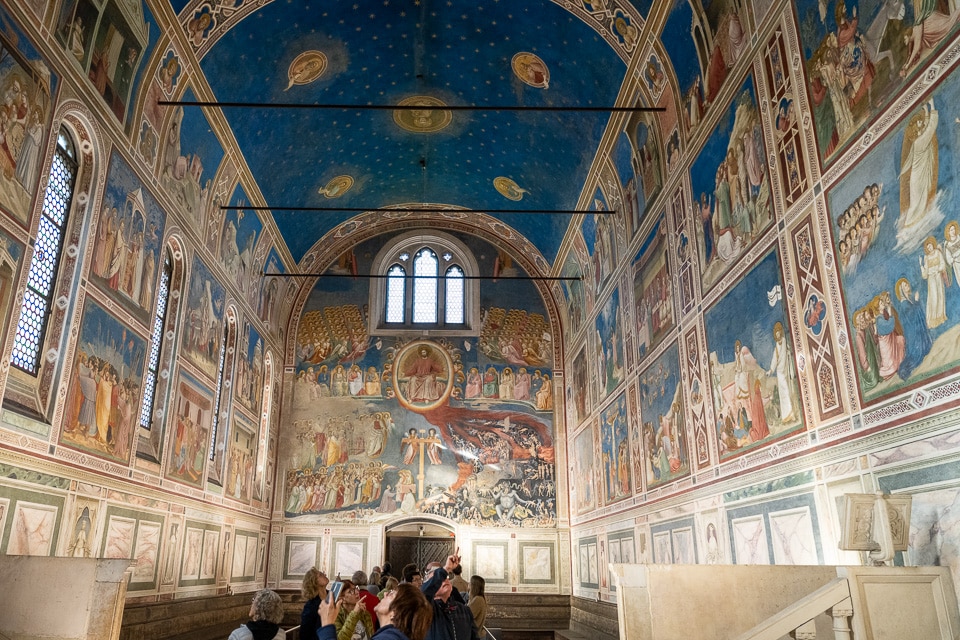
I think now, after having seen it, that the Scrovegni Chapel is the logical forerunner and inspiration to Michelangelo’s Sistine at the Vatican. Since I’ve seen both chapels within the last two weeks, I must say I think I like the Giotto better.
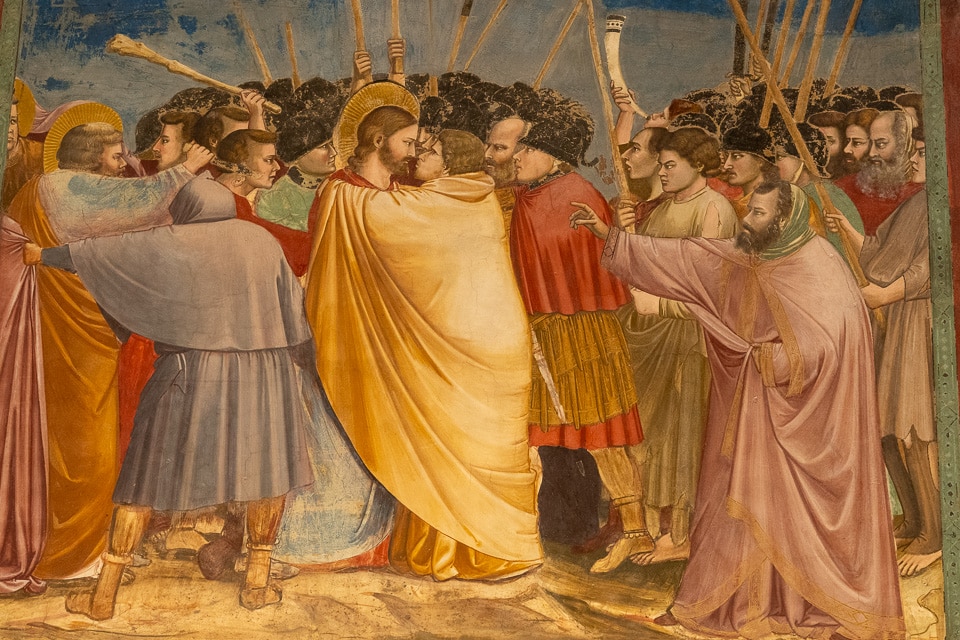
The Scrovegni Chapel, so named because the Scrovegni family paid for it at the beginning of the 14th Century, tells the life of Christ in its frescoes. No space is given to the Old Testament, so no chance here to see how Giotto might have handled the creation of Adam. But the scenes from Christ’s life are just as powerful in their emotional effect.
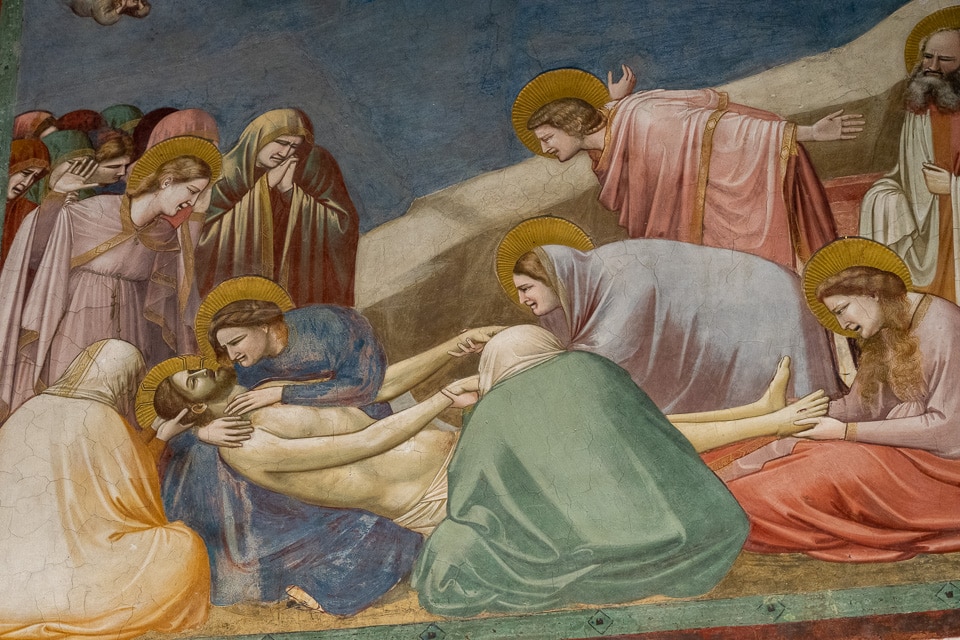
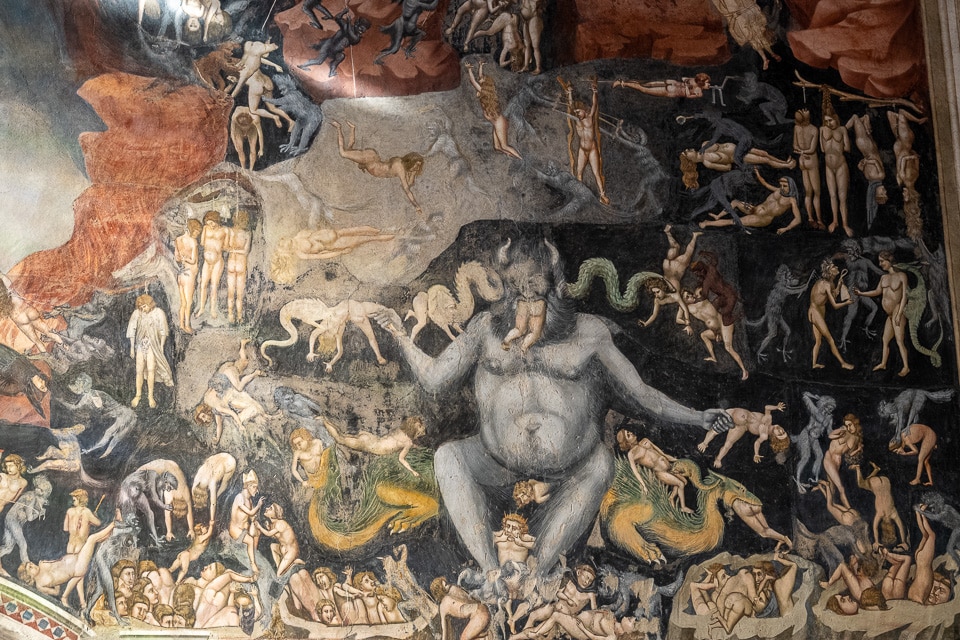
There are, all told, 36 scenes from the life of Christ in the Scrovegni Chapel, starting with the youth of Mary and ending with the Last Judgement. The gruesome depiction of Satan in hell must have been an inspiration for Hieronymus Bosch’s Garden of Earthly Delights in the Prado.
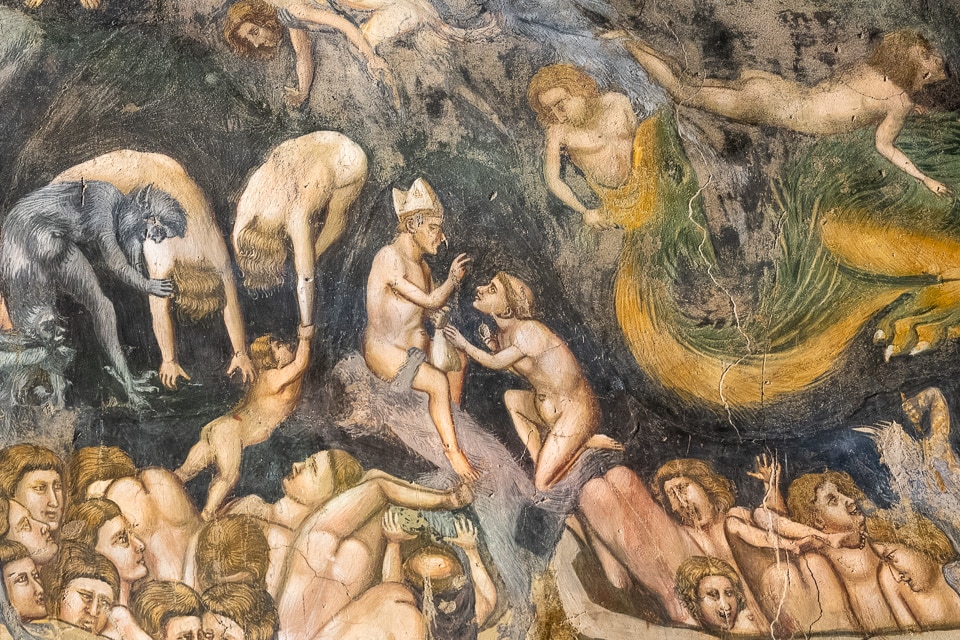
My favorite bit of the Last Judgement scene though is a depiction of an unnamed “Bad Pope,” who is seen accepting a bag of money – in payment for an indulgence, perhaps, which doesn’t seem to have panned out.
The Scrovegni Chapel makes up the main part of Padua’s UNESCO World Heritage site in Italy called Padua’s fourteenth-century fresco cycles.
One important note: admission to the Scrovegni Chapel is severely limited. Only about 20 people are allowed in the chapel at the same time. After watching a 15 minute introductory video, you can only visit the chapel itself for 15 minutes. Obviously tickets are sold in advance, and must be reserved online. We recommend buying the tickets several days before arriving in Padua. Otherwise, you may be disappointed.
The Basilica of Saint Anthony of Padua
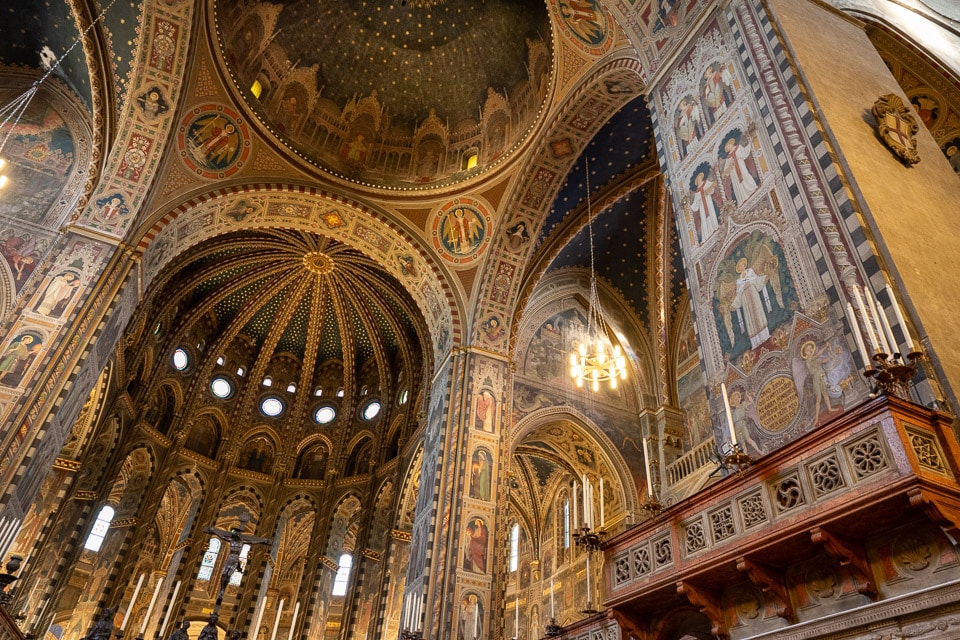
If the Scrovegni Chapel hasn’t exhausted your capacity for religious art, leave plenty of time for gaping at the various chapels and the overall grandeur of the Basilica of Saint Anthony, (Basilica di Sant’Antonio.)
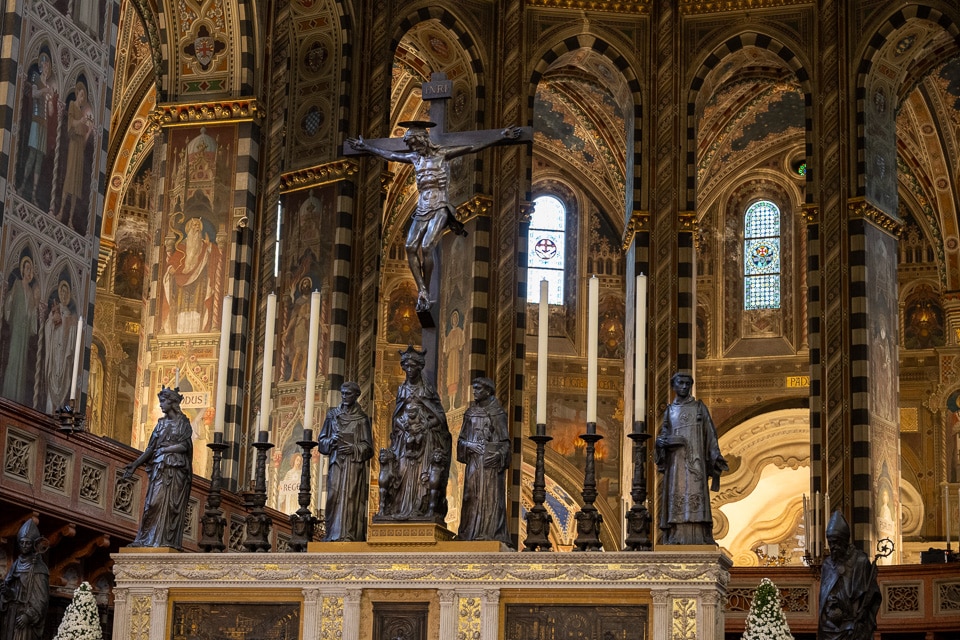
This basilica is one of Italy’s most important pilgrimage sites. The structure itself is a beautiful blend of Romanesque, Gothic, and Byzantine architectural styles, and it houses impressive works of art, including the bronze statues by Donatello on the main altar, which unfortunately must be viewed from a distance.
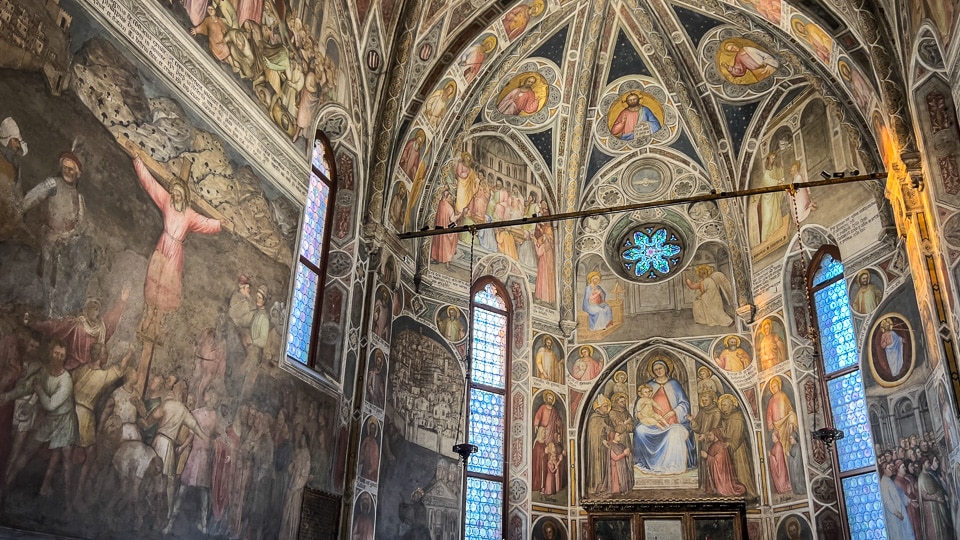
In the Basilica are also several chapels with notable artwork, including the lovely Chapel of the Blessed Luca Belludi, (Cappella del beato Luca Belludi) frescoes by Giusto de’ Menabuoi, said to have been a student of Giotto.
One more must-see in the Basilica is the elaborate baroque reliquary of Saint Anthony. Because Saint Anthony was a renowned preacher, the people in charge of such things were charged with preserving the saint’s vocal cords and tongue. They’re right there in silver vessels at the top of the staircase. You can definitely get close enough to identify the parts.
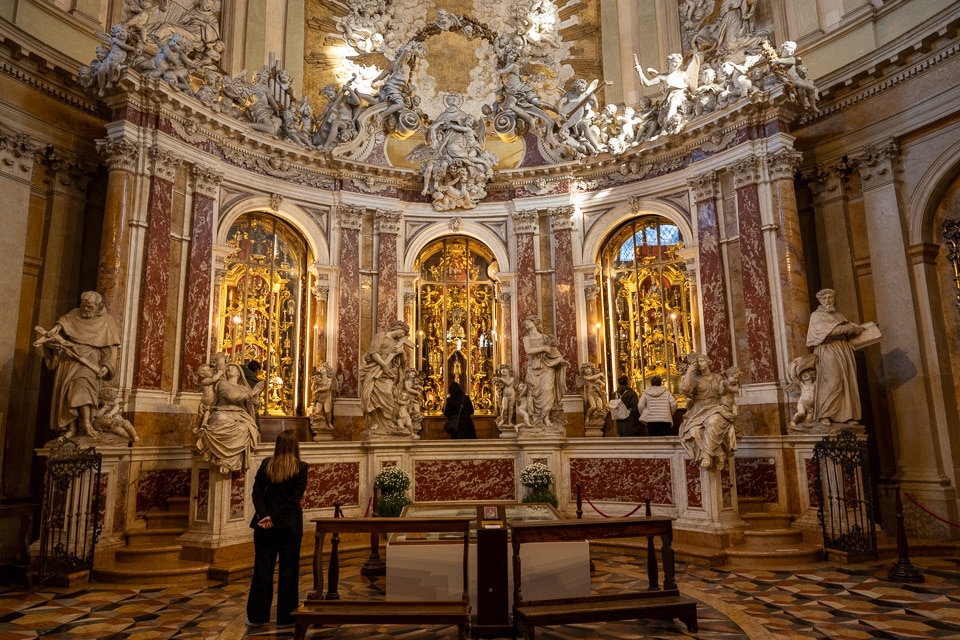
There is also the tomb of Saint Anthony, which has a separate entrance at the front of the church, and has a pretty constant line of pilgrims paying homage and offering petitions to the Saint. But the most striking feature of the reverence of Saint Anthony is the separate reliquary chapel mentioned above, with the preserved tongue of the Saint, according to the very odd Catholic tradition of reverence of saints’ body parts.
Botanical Gardens of Padua
Though we were unable to enter the gardens, closed on a public holiday (?!) we can’t overlook a mention here. Located near the Basilica of Saint Anthony, the Padua Botanical Gardens are in fact aligned with the University. Established in 1545, this is the first European botanic garden, and the oldest university garden in the world. It was inscribed as a UNESCO World Heritage Site in 1997, and is an active research center today. The property is divided into three main areas: the historical garden, the biodiversity garden, and the botanical museum. All told, the gardens display some 6,000 plants representing 3,500 species.
Padua University
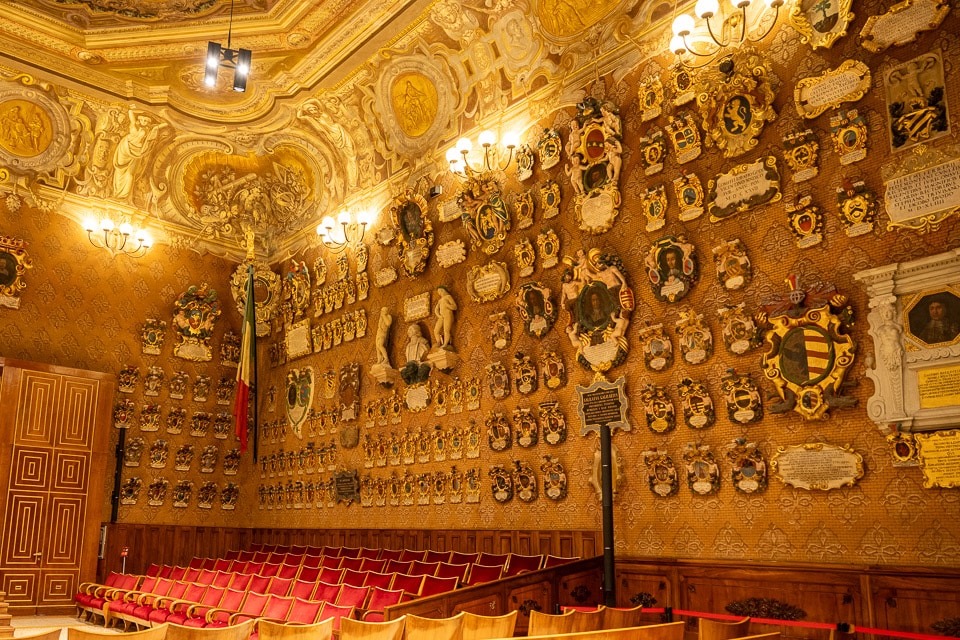
Padua University is among the oldest universities in the world. It was founded in 1222 by students and professors who had left the oldest university in Bologna to found their own school that was not under the auspices of the Pope. To this day, its formal name is the Student University of Padua, harkening back to its history of independence from the church and from a formal governance system of outside administrators. The university’s halls are still lined today with coats of arms of its students who served as governors.
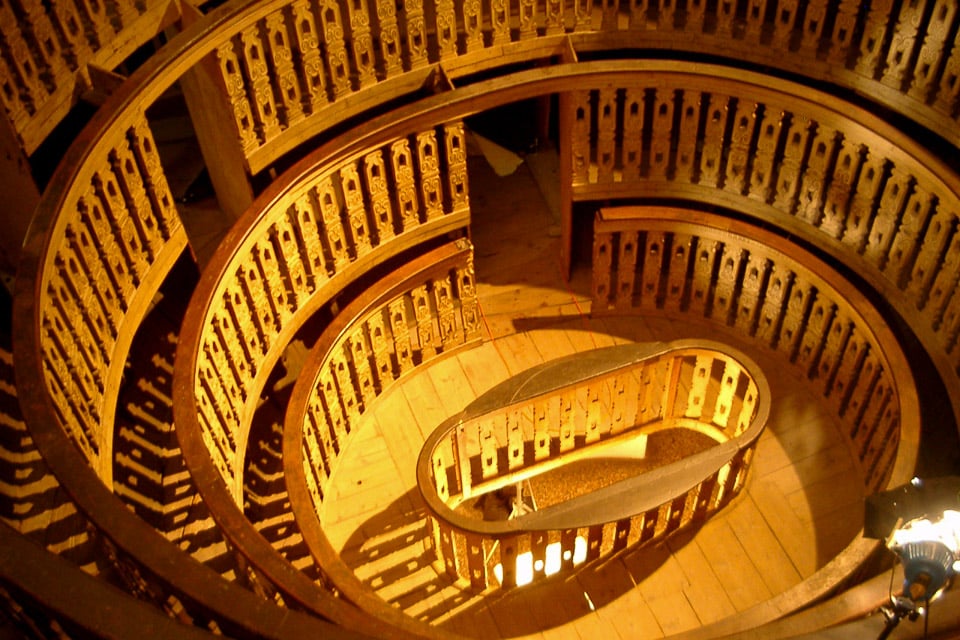
The university began teaching medicine around 1250. It played a leading role in the identification and treatment of diseases and ailments, specializing in autopsies and the inner workings of the body.
Since 1595, Padua’s famous anatomical theater drew artists and scientists studying the human body during public dissections. It is the oldest surviving permanent anatomical theater in Europe.
The University of Padua also was famous for its studies of Astronomy and Physics. Galileo Galilei was a professor at Padua, and Copernicus was a student.
You can take about a 45-minute tour of the Palazzo Bo, the original University building, which is still in use today by the faculties of law and medicine, and which contains the original anatomical theater and the podium from which Galileo taught.
Another notable historical fact about the University of Padua is that it granted the first university degree in history to a woman. Elena Lucrezia Cornaro Piscopia, a Venetian noblewoman and mathematician, became the first woman to be awarded a Doctor of Philosophy degree in 1678.
Another outstanding feature of the University is Padua’s Botanical Garden (Orto Botanico di Padova,) the oldest botanical garden in Europe, where research was done and medicinal plants were cultivated. Today, the Garden is a UNESCO World Heritage Site, and makes for a lovely walk.
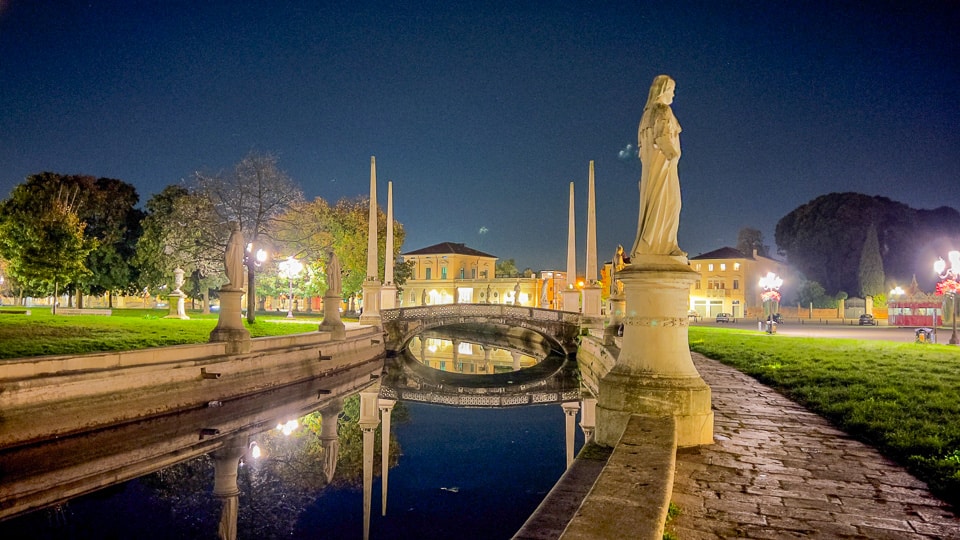
Prato della Valle
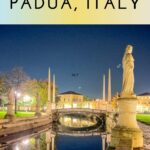
Padua is a very walkable city. Most of its sidewalks are covered by galleries, much like in its sister university city of Bologna. But perhaps the most enjoyable of walks is circling the Prato della Valle. the oval-shaped piazza is really more of a manicured park, with a grass covered central island surrounded by a statue-lined moat with four footbridges. During the day you’ll local students spread out on the lawn or playing frisbee, and tourists (like us) taking photos of the statues of Galileo or Petrarch.
Take your time to check out the 78 statues that surround the island. They tell the history of the city through its most important figures.
Markets
Wander around the city center to find the excellent market at Palazzo de la Ragione. The enormous building from the Middle Ages was home to the city and justice offices of the day. The piazzas on either side of the building are spread with fruit and herb markets outdoors.
Where to Eat in Padua
Restaurante Fresco, a trattoria and pizzeria beside the Hotel Donatello (see below), was so good and unpretentious, we visited twice. Start with an Aperol Spritz, and try the Pizza Capricciosa. It topped the list of pizzas we sampled a long this visit to Italy.
Bistrot C20, like Fresco, is just across the street from the Basilica. The protected outdoor seating and refined menu (we had salmon and pasta dishes along with a nice Carmenere wine) make any visit here a special occasion.
Bar Restaurante Pizzeria Otium Lunch Cafe. Well, they forgot to add panini to the name. One great thing about visiting a university town is the array of affordable and quick places to eat. We grabbed a table in the street extension and enjoyed panini and wraps.
Where to stay in Padua
We stayed at the charming Hotel Donatello, which faces the Piazza del Santo and the Basilica of Saint Anthony. Smaller, economical rooms, a very good breakfast, and a very helpful staff that pointed us to the best deals and sights in the city, along with a printed list of recommended restaurants. An added benefit is a 10 percent discount at the attached pizza restaurant, which honestly had the best pizza we had on this stay in Italy. See Fresco above.
How to get to Padua
Padua is extremely well connected — it is on the main Venice-Bologna-Milan rail line, 30 minutes from Venice by train, and also easy to reach from Verona.
If you are traveling by car, you might like the AC Hotel Padua. It’s in the industrial section, but has free parking and a full restaurant onsite. Don’t stay here if you don’t have a car. A taxi into the center of the city is expensive, and it’s too far to walk.
Frequently Asked Questions About Visiting Padua, Italy
How do you get to Padua from Venice?
Padua is one of the easiest day trips or short stays from Venice. Regional trains run frequently throughout the day and the journey takes approximately 25 to 30 minutes. High-speed trains are slightly faster but the price difference is rarely worth it for such a short journey. The train station in Padua is about a 15-minute walk or a short bus ride from the historic center and the main sights.
Is Padua worth visiting?
Absolutely — and it is one of the most underrated cities in northern Italy. Padua has more UNESCO World Heritage Sites than most Italian cities its size, one of the oldest universities in the world, and Giotto’s Scrovegni Chapel, which rivals the Sistine Chapel as a masterpiece of Western art. It is far less crowded than Venice, considerably cheaper, and rewards exactly the kind of slow, curious traveler who wants depth over checklists.
How far is Padua from Venice?
Padua is about 40 kilometers (25 miles) west of Venice. By train the journey takes 25 to 30 minutes. By car it is about 30 to 40 minutes depending on traffic, though we strongly recommend the train — parking in Padua’s historic center is difficult and expensive.
Can you visit Padua as a day trip from Venice?
Yes, easily — but we recommend staying at least one night if your schedule allows. A day trip gives you time for the Scrovegni Chapel, the Basilica of Saint Anthony, and a walk around the Prato della Valle. Staying overnight lets you also visit the University, the Botanical Garden, explore the markets, and eat dinner at a local trattoria without rushing back to catch the last train.
How do you book tickets for the Scrovegni Chapel?
Tickets must be reserved in advance online at the official booking site. Admission is strictly limited — only about 20 visitors are allowed inside at one time, for a 15-minute visit following a short introductory video. We strongly recommend booking several days before your visit. Same-day tickets are rarely available and you risk missing what is arguably the highlight of Padua entirely.
How many days do you need in Padua?
Two days is ideal and the absolute minimum for doing Padua justice. Day one: Scrovegni Chapel in the morning (book first thing — slots go quickly), Basilica of Saint Anthony and its surroundings in the afternoon, dinner at a local trattoria. Day two: Padua University and the anatomical theater, the Botanical Garden, the market at Palazzo della Ragione, and a leisurely walk around the Prato della Valle.
Is Padua good for travelers over 50?
Padua is an excellent destination for travelers over 50. It is a genuine university city rather than a tourist city, which means the restaurants are better, the prices are lower, and the atmosphere is more authentic than in Venice or Florence. The main sights are all walkable from the center, the streets are mostly flat, and the covered porticoes that line the sidewalks make it comfortable even in rain or summer heat. It is the kind of city that rewards slow travel and genuine curiosity.

Great description and pictures! When I saw the Satan fresco the first thing I thought of was Earthly Delights that we saw on our tour with you guys at the Prado!
Yes, reminded me of the same. Everybody borrows ideas, no?