

Why the Prado Museum of Madrid Stands Apart
A great museum is one that has great works, famous works, ones that stand out. Ones that make up the high points of a university Art History survey course lecture. The memorable ones. That’s Madrid’s Prado.
First time here? Visit our Start Here page → to get oriented and get a link to our 50 best travel tips.
I haven’t been to every art museum in Europe, but I’ve been to many. There are a lot of good ones: The Uffizi in Florence, The Vatican Museum in Rome, The Louvre in Paris, The Rijksmuseum in Amsterdam. They all have at least one work, and usually several, that rank among the best in the world. But my favorite is the Prado in Madrid.
Why is the Prado important, you may ask.
First, a little Museo Nacional del Prado history. A very little. The Prado’s collection is just that: a collection. It was assembled (mostly) over a period of time that coincided with the height of Spanish power, and was a personal project of three of the greatest kings of Spanish history: Carlos I, Felipe II, and Felipe IV.
In particular, Carlos I was a big fan of Titian. Felipe II was a dedicated collector, and Felipe IV gave his court painter, Diego Velázquez, a blank check and sent him all over Europe to purchase the best paintings he could find.
All of this, plus the acquisition of the best paintings by Francisco de Goya later, make the Prado an international collection compiled by people of impeccable taste, rather than, as in the case of the Uffizi and Rijkmuseum, the happy accident of an extremely talented local base. Or, in the case of some other museums, whatever a conquering despot could carry off.
So, the Prado ends up with not only the best works by Spanish artists Velázquez, El Greco, Bartolomé Murillo, José de Ribera, Francisco de Zurbarán, and Goya, but also Titian, Rembrandt, Peter Paul Rubens, Anthony Van Dyck, Durer, Bosch, Raphael, Bruegel, Fra Angelico, and Caravaggio.
For a broader overview of where to go, what to eat, and how to plan your route through Spain, start with our Spain travel guide.
But, as I said above, what makes a museum really special is when it has several paintings in its permanent collection that just stop you in your tracks and make you stare for several minutes. The Prado has more of these stunning works of art than most. Are these the best paintings in The Prado? Perhaps. Are they the most famous paintings in the Prado? Some are, some aren’t. But, they definitely are my favorites.
Here’s a little virtual tour of my highlights of the Prado Museum. For these, and all the rest of the spectacular offerings of the Prado, including Velázquez’s other works, the Goya etchings, El Greco’s collection, and the Flemish masters beyond Bosch and Van der Weyden, you’ll want to allow a minimum of four hours.
Descent from the Cross, by Rogier van der Weyden
This is the painting I go to first whenever I go to the Prado. I first saw it in 1975, and its attraction has never waned. I head right for it when I come into the museum. (It helps that it’s in one of the first rooms right off the main entrance.) And then I stand there and take in this crowning achievement of Flemish art, color by color, face by face, fold of cloth by fold of cloth. Van der Weyden’s technique and composition are impeccable, but what really gets me is the humanity as expressed by the fainting Virgin Mary and the sad concern of the men. The figures in the painting are near life size, and that just adds to the emotion. It was originally painted as an altarpiece, and so it had a prescribed size. The technique of fitting 10 figures into a sculpture-like composition in a confined space just makes this painting all the more amazing. It is one of the few religious works of western art that really move me.
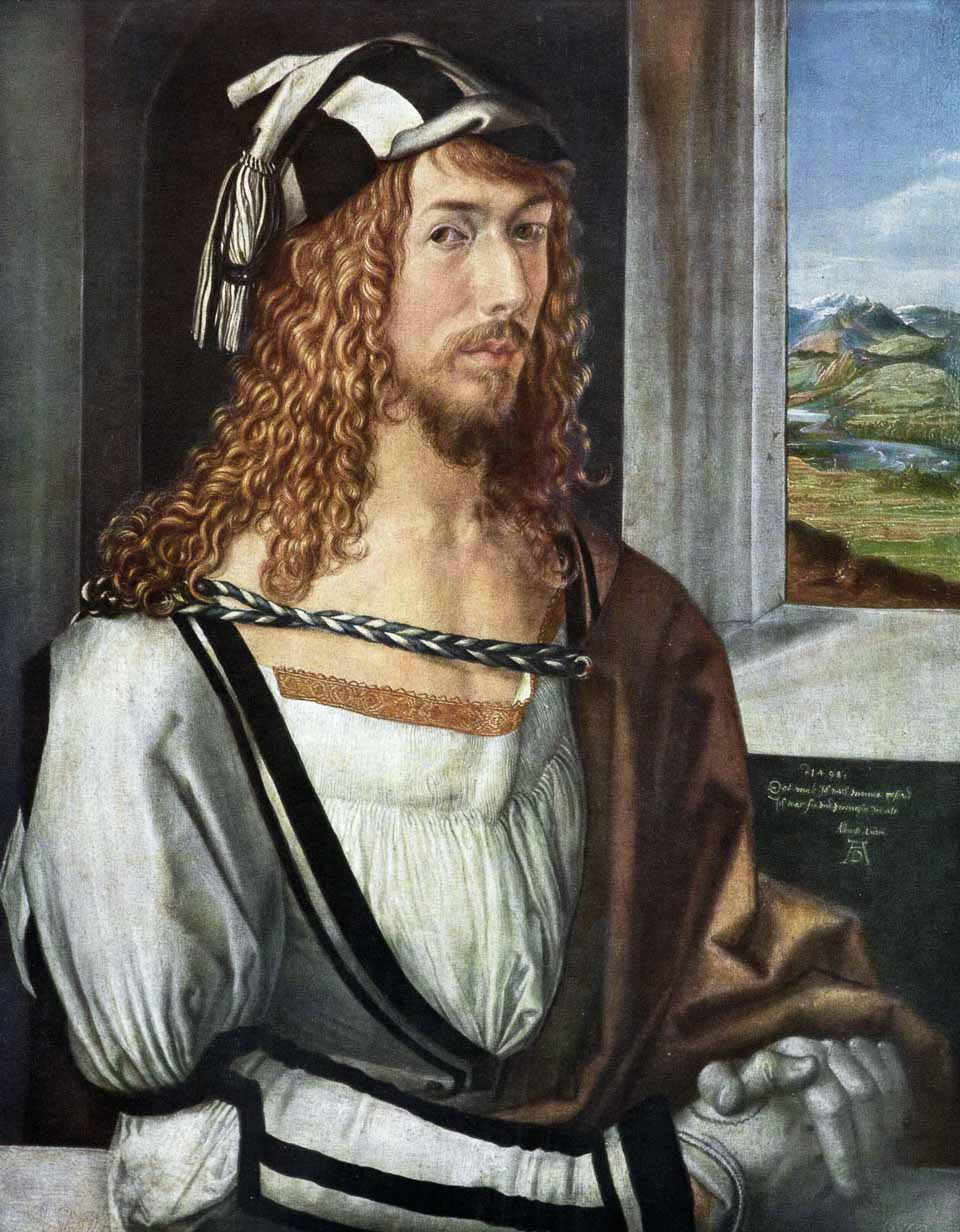
Self Portrait, by Albrecht Dürer
I simply love this painting, mostly because of the look on Dürer’s face of utter confidence, and maybe contempt. Confidence because he’s obviously an amazingly skilled painter. And contempt because he’s only 26 years old at the time he made this, and he’s looking down his nose at us mere mortals who have no idea yet of his genius. Gotta love the attitude. And, if you have any idea of whether Dürer could pull it off, you only have to look just to the right of this self portrait to his large format Adam and Eve that he painted about a decade later. He could back it up.
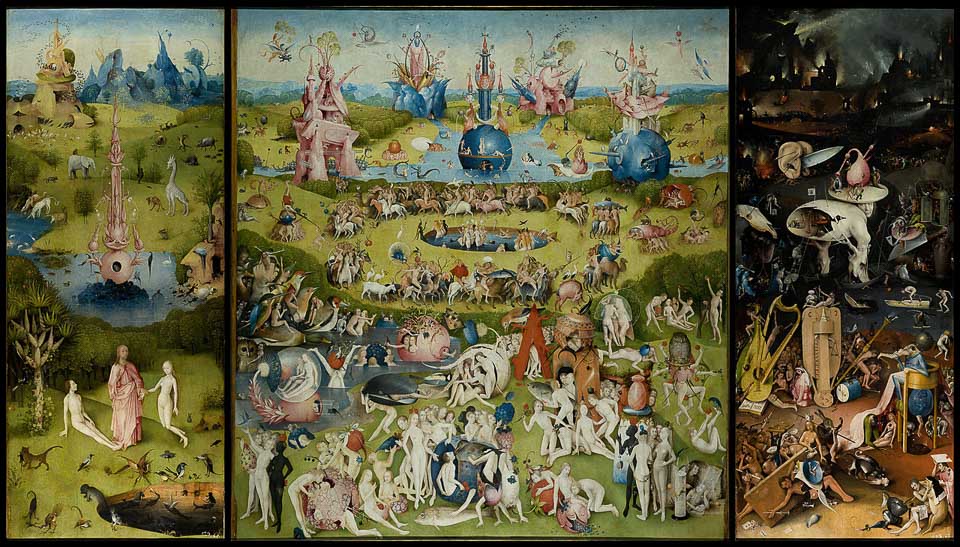
The Garden of Earthly Delights, by Hieronymus Bosch
The triptych allegory of Paradise on the left panel, Hell on the right panel, and the pleasures of life and sin that lead to hell in the center panel. This is one mad painting that rewards a long look at the detail of all three panels. It’s surrealistic 400 years before Dalí. You’ll need at least 20 minutes in front of this to even begin to look at all the contained images, and a lot longer than that to think of them. It will take you at least 10 minutes of waiting in the crowd that’s always in front of it until you can get to the front. Don’t give up your space until you begin to feel really uncomfortable thinking about the mind that created this. As a bonus, you can turn just to your right and see a lovely painting of the Holy Family resting on their way to Egypt, which will provide a serene counterpoint to the violence of the Bosch. Then, another three steps to the right is Pieter Bruegel’s The Triumph of Death, which will scare the hell out of you all over again.
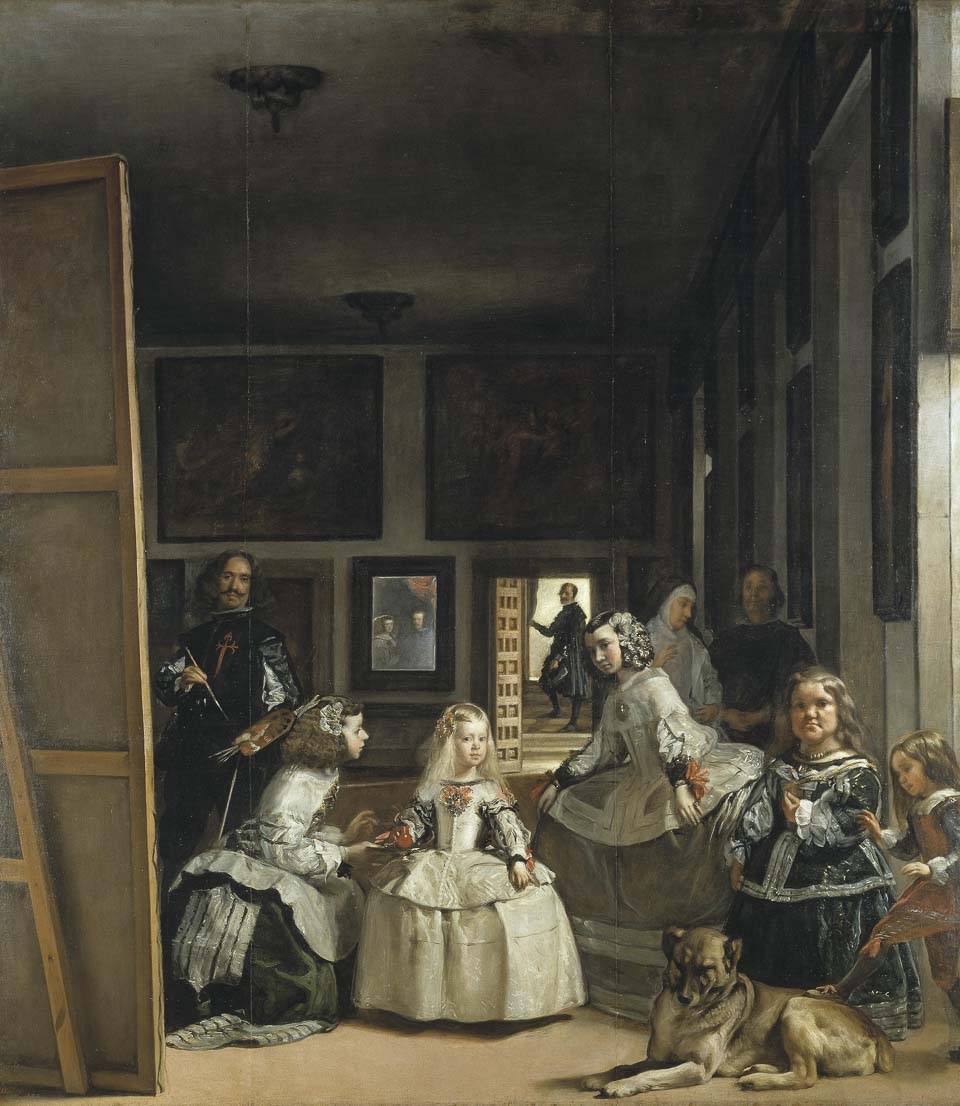
Las Meninas (The Maids of Honor) by Diego Velázquez
There has been so much written about this painting that I can hardly hope to add anything. Las Meninas is widely considered the most famous painting in the Prado, and arguably in all of Spanish art, It’s an extremely large painting, over 3 meters high and almost 3 meters wide (10 feet, 6 inches by 9 feet, 1 inch.) And that volume of space just lets the incomparable Velázquez both show off his position as Felipe IV’s court painter and his utter mastery of the form. The depth of perspective–the dog in the foreground, the triangular composition of the princess in white and her ladies in waiting, the courtiers behind them, Velázquez himself in front of his canvas, another courtier in a doorway, and, finally, the portrait of the royal couple King Felipe IV and his queen reflected in the mirror on the wall. Just look at the way he handles the window light and how it illuminates the complex composition.

Salome by Titian
As mentioned above, the Emperor Carlos I was a big admirer of Titian. And, it would not be an exaggeration to say that so were all Spanish painters from Velázquez to Goya. There are more than 40 works by Titian in the Prado. To me, this one could be the epitome of Titian’s command of color, composition, and emotion. Titian was probably the greatest practitioner of chiaroscuro, or the modeling of his subjects with light, especially how his figures subtly emerge from dark backgrounds. You can certainly see his influence in the Goya Maja Desnuda and the Velázquez Las Meninas cited above. Finally, a personal observation: this is one sexy painting, enhanced by the color technique, of course, but the look of Salome straight out of the plane of the painting at you – just after she’s seduced Herod and had John the Baptist beheaded – has to make you wonder what she has in store for you.
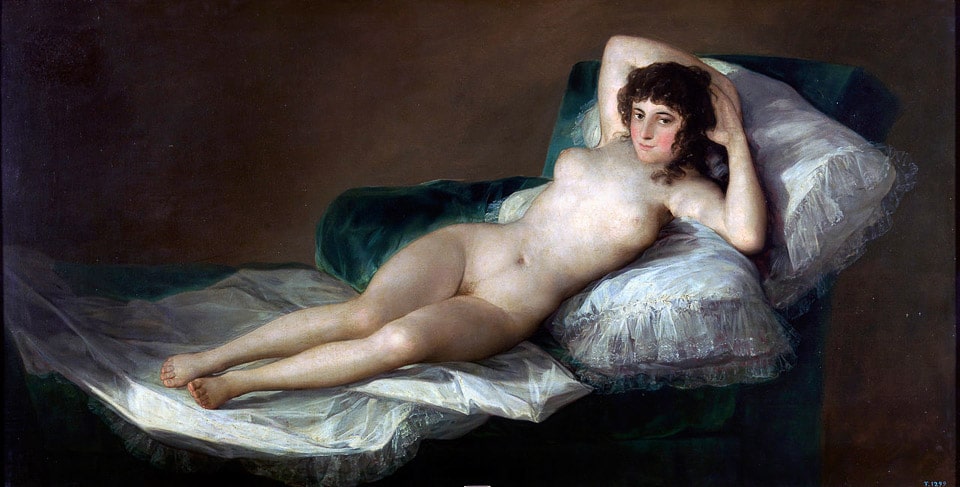
La Maja Desnuda by Francisco de Goya
Long attributed to the Duchess of Alba, current scholarship suggests the model was more likely Pepita Tudó, the mistress of Goya’s patron Manuel Godoy. Either way, the Naked Maja of Goya is one of the most seductive paintings in the history of painting. It’s displayed right next to its companion piece, the Clothed Maja, but the difference is striking. The nude is so much more delicately and lovingly rendered than the clothed version. One could tell that Goya himself was deeply affected by her beauty. As are we. The painting was sequestered for years by the Spanish Inquisition, and we can see why. It arouses exactly the feelings the Inquisition imprisoned people for – not only paintings. Goya himself was spared only because he was able to convince them that the painting was a classical study, rather than an erotic tour de force.
P.S. Also don’t miss Goya’s “black paintings” and the paintings from the time of the Napoleonic Wars in their own rooms on the lower floor of the Prado. Those paintings, especially Saturn Devouring his Son and The Third of May, are the most emotionally wrenching you’ll ever see.
Planning Your Prado Museum Visit
Before looking for your Prado tickets, be sure to check opening hours, which may change.
The Prado can get very crowded and you should definitely buy your entry tickets in advance. Entries are timed to limit overcrowding and for ease of entry.
Opening hours are currently from 10 a.m. to 8 p.m. Monday to Saturday and 10 a.m. to 7 p.m. on Sundays. The Museum is closed on January 1, May 1, and December 25. The museum closes at 2 p.m. on January 6, December 24 and 31.
General admission is currently €15, and reduced admission for €7.50 for people over 65 years old. Admission is free every day, depending on capacity, beginning at two hours before closing. Admission is also free for children under 18, students aged 18-25. There are several other categories of free and reduced admission you can see here.
If you are as big a fan of the Prado as we are, consider supporting the American Friends of the Prado Museum. They have many educational offerings in English on the Prado’s collections their YouTube channel. Be sure to use them to educate yourself before visiting The Prado. Also, American Friends of the Prado Museum membership supports acquisitions and restoration at the museum.
An American Friends of the Prado membership includes: entry to the Museo del Prado; assistance with required time reservation; an e-newsletter with updates on American Friends projects and museum activity; and discounts at the museum store and cafeteria. The membership is tax deductible in the US. We’ve been members for years and the reserved entry alone is worth it during busy periods.
The Prado’s Neighbors: Reina Sofía and Thyssen-Bornemisza
While you’re in the neighborhood — and you should absolutely make it a neighborhood visit — two more world-class museums sit within a short walk of the Prado along the Paseo del Prado. Together, the three museums form what Madrileños call the Triángulo del Arte, or Golden Triangle of Art, and a combined Paseo del Arte ticket (€32.80) gets you discounted entry to all three. It’s one of the great bargains in European culture.
The Reina Sofia
The Museo Reina Sofía is the home of Picasso’s Guernica — the monumental anti-war painting that is to the 20th century what Las Meninas is to the 17th. Even if you think you know it from reproductions, you don’t. Standing in front of the actual canvas, which is nearly twelve feet tall and more than twenty-five feet wide, is a different experience entirely. The Reina Sofía also holds the best collection of Spanish modernism anywhere: Miró, Dalí, and Juan Gris alongside Picasso, all in a beautifully converted 18th-century hospital.
The Thyssen-Bornemisza
The Thyssen-Bornemisza, fills in the gaps the Prado deliberately leaves — Impressionism, Post-Impressionism, American painting, and European modernism from Monet and Renoir through Hopper and Rothko. Think of it as the chapter of art history the Prado doesn’t cover. If you’re serious about art, budget a full day for the Prado and a second day split between the Reina Sofía and Thyssen. Madrid rewards that kind of commitment more than almost any city in Europe.
For a broader overview of where to go, what to eat, and how to plan your visit to Madrid, start with our our complete guide to Madrid.
Frequently Asked Questions: Prado Museum Madrid
Is the Prado Museum in Madrid worth visiting?
Without question — the Prado Museum in Madrid is one of the world’s great art museums and, for many art lovers, the finest in Europe. Its collection was assembled by the Spanish royal family at the height of Spain’s power, and includes an unrivaled concentration of masterworks by Velázquez, Goya, El Greco, Titian, Bosch, Rubens, and Dürer. If you have even a passing interest in Western art history, allow at least four hours — you’ll likely wish you had more.
How much does it cost to visit the Prado Museum?
General admission to the Prado Museum is €15 for adults. However, the Prado offers free admission during the last two hours of opening each day — Monday through Saturday from 6pm to 8pm, and Sunday from 5pm to 7pm. These free slots fill up quickly, so arrive early if you plan to take advantage of them. Senior discounts and combined tickets with other Madrid museums (the Reina Sofía and Thyssen-Bornemisza) are also available. Always check the Prado’s official website for current pricing before your visit.
Do I need to book tickets for the Prado Museum in advance?
Advance booking is strongly recommended, particularly in spring and summer. Timed entry tickets can be reserved on the Prado’s official website (museodelprado.es), and booking ahead guarantees your preferred entry time and avoids queues. Members of the American Friends of the Prado Museum receive reservation assistance as part of their membership, which also includes free entry — a worthwhile option for frequent visitors or those who want to support the museum.
What is the most famous painting in the Prado Museum?
Las Meninas by Diego Velázquez (ca. 1656) is widely considered the most famous and most studied painting in the Prado — and one of the most analyzed paintings in the history of Western art. The monumental canvas (over three meters tall) depicts the Infanta Margarita surrounded by her ladies-in-waiting, with Velázquez himself at his easel and the royal couple reflected in a mirror on the back wall. Its complex play of perspective, illusion, and self-reference has fascinated artists, philosophers, and art historians for centuries.
How long should I spend at the Prado Museum?
Allow a minimum of three to four hours for a meaningful visit to the Prado’s highlights. The museum is large — over 28,000 works in its permanent collection, though far fewer are on display at any one time — and the paintings reward slow, close attention. A rushed two-hour visit leaves you frustrated; a full morning or afternoon lets you absorb the Flemish masters, the Spanish Golden Age rooms, and Goya’s Black Paintings at a pace that does them justice. If the Prado is a priority, consider visiting on two separate days.
What else is near the Prado Museum in Madrid?
The Prado sits at the heart of Madrid’s “Golden Triangle of Art” — one of the world’s great concentrations of museum culture. Within a five-minute walk are the Museo Reina Sofía, home to Picasso’s Guernica and the finest collection of 20th-century Spanish art, and the Thyssen-Bornemisza Museum, which covers European painting from the 13th century to the late 20th. A combined ticket (the Paseo del Arte pass) offers discounted entry to all three. Retiro Park, one of Madrid’s most beautiful green spaces, is immediately adjacent to the Prado and makes a perfect place to rest between museums.
Can you take photos inside the Prado Museum?
Photography is strictly prohibited throughout the Prado Museum’s galleries — no exceptions. Guards actively enforce the policy, so don’t count on sneaking a quick shot. The good news is that the Prado’s own website (museodelprado.es) offers high-resolution images of its most important works available to view and download for free, which is an excellent way to revisit the paintings after your visit — or to study them beforehand so you arrive knowing exactly what you’re looking for. Also, there are plenty of books about The Prado’s collection, including The Prado by art historian Santiago Alcolea Blanch, that we have on our art book shelf at home. This edition, in particular, has beautiful color reproductions of many of The Prado’s masterpieces.

Some great photos – I’d forgotten about Bosch before you reminded me. I’ve seen a few of his paintings and its crazy stuff. Genius but crazy. But love how it’s so different from anything else.
One of the important things for me in an art museum is the layout. I didn’t like the Uffizi – small rooms and corridors and claustrophobic with all the crowds. I couldn’t wait to get out. I don’t know what the Prado is like.
Nice post,
Frank (bbqboy)
Thank the Prado for posting great images on their site, which is where I grabbed these. It is a really good web site, commensurate with its subject.
Thanks for a very interesting posting. Like you, I have not visited all of the museums in Europe, but I have seen more than my share. I might not agree with you that the Prado is the best museum in Europe, but you certainly have put forward six great reasons to ensure that all of us will want to pay a visit to this great museum!
Denis, do you have a favorite? I like them all, but perhaps my preference for the Prado is influenced by my overall preference for Spain.
I spent a lot of time in the Prado when I was in Madrid, and loved every moment. Las Meninas (The Maids of Honor) by Diego Velazquez was one of my favorites. The Goya you have posted is not my favorite, but I do enjoy his work.
I could agree with you on the Goya. I like the etchings, the Third of May, and the Black Paintings very much. And, you could certainly argue that those are more important and better executed than the Maja. But I just like her, mostly because she’s just sexy. Yeah, I know. Men.
It was so long ago that I visited the Prado that I almost forgot some of these masterpieces! And having studied fine art myself, I can totally relate to the ‘stop-you-in-your-tracks’ experience when you see some of these works. What is interesting, too, is that I find that it’s often NOT the big names that blow me away, which for me is the mark of a special museum with a profoundly curated collection.
There’s so much good stuff in the Prado, it’s hard to pick only six. And, it’s even harder to pick among all the great paintings by these artists that I did pick that are in the same room in the Prado. The Valázquez paintings or Goyas alone could make an entire PhD thesis. And, I’m sure they have.
Oh dear – The Garden of Earthly Delights is my favorite painting in the Prado! I saw it there for the first time in the early 90s and then again a couple years ago. I even bought an obscenely expensive (think 300 euros) sort of puzzle that you put together to make a lifesize wall hanging of it! Needless to say that’s still in a box in my den… The Prado is one of the few museum I can spend a day in and not get squirmy to leave!
I never get squirmy in the Prado, either. I like to think it’s self control, but I think it’s because there are security cameras everywhere. Well, sometimes I do quiver a bit in front of the Maja Desnuda.
We recently went to the Prado Museum and did enjoy it and particularly Hieronymus Bosch, because I love the intricate nature of his works.
Intricate is a good adjective for Bosch. I think demented might also apply.
The last time I was in Madrid with Mr Excitement and our two sons, they indulged me by letting me go through the Prado at my own pace while they waited for me at the end. One mark of an excellent museum is that our sons, then ages 20 and 24, did not complain at all about being there. I try not to look at anything by Bosch or Breugel before bedtime. Now it’s too late. I’m pretty sure I am headed for some nightmares.
I think that was exactly Bosch’s and Bruegel’s intentions: to cause nightmares. I think they’d be happy to know they succeeded. Goya’s Black Paintings do that to me, btw.
The Prado in Madrid certainly has a lot to offer! I would love to visit!!
When you get there, leave at least 4 hours. It’s worth a long, slow look.
Great post! It reminded me of our Prado visit a couple years ago, and you make a good case for it as Europe’s best museum. I was also struck by Bosch’s work. How were people so shocked by the surrealists when this existed hundreds of years earlier?
I’ve asked myself the same question. I’m betting Dali spent a lot of time in front of Bosch thinking, “I could do that.”
I love museums of all kinds and I thought your definition of a great art museum as having “several paintings that just stop you in your tracks” is right on target. We’re hoping to visit Spain again later this year and the Prado will be high on our list of places to see.
Don’t forget to add on the Reina Sofia just down the street a bit. Just seeing Picasso’s Guernica is worth the price of admission there, too.
Thanks for taking me back to the Prado. It is fading in my memory, but I do remember some of the paintings you mention.
In particular, the Bosch is hard to forget. Especially when you pile on the Bruegel just down the wall from it. Good old fashioned scare-the-hell-out-of-you Christianity. I love the old ways.