Being first-time visitors to Alaska, we didn’t really comprehend the importance of Glacier Bay National Park and Preserve to our understanding of Alaska’s geological and cultural history. In fact, before our visit, we may have felt a twinge of regret that our itinerary wouldn’t take us into the mainland of Alaska and up to the renowned Denali mountain and park. Maybe, I thought, visiting Southeast Alaska, the panhandle archipelago that drifts down the west coast of Canada, wouldn’t really count. I imagined ice and water and not much else. I didn’t anticipate the history.
But armed with only a good Glacier Bay National Park map and rough outline of our ship’s itinerary for the next 36 hours, we quickly discovered Glacier Bay is a fascinating window into Alaska’s history and abundant natural resources.
Our Glacier Bay cruise, aboard American Cruise Lines’ American Constitution, started on a blustery morning as we entered this vast waterway lined with dense forests and vaulting rock faces. Maneuvering north through the cold waters to the Margerie Glacier at the far end, we were treated to all sorts of wildlife and increasing patches of little icy “berglets.” Before long, everyone had donned jackets, hats, and cameras and headed to the upper decks for the best viewing. We spent the better part of two days in Glacier Bay National Park, impressed at every turn.
Note: We’ve also written about the cruise ship itself and our Inner Passage excursions in the post, “Sailing Alaska’s Inner Passage: The Small Ship Cruise Experience.”
What Is Glacier Bay National Park?
Alaska’s Glacier Bay National Park (not to be confused with Glacier National Park in Montana) is comprised of 3.3 million acres of mountains, glaciers, forests, and waterways. Lots of waterways, large and small. There are no roads here. It’s only accessible by boat or small plane. The Park was originally designated a national monument by President Coolidge in 1925. It was twice expanded – first by President Carter’s proclamation in 1978, then by the Alaska National Interest Lands Conservation Act (ANILCA) in 1980, which created the current Glacier Bay National Park and Preserve.
The park wears many hats: Glacier Bay became part of a binational UNESCO World Heritage Site in 1979 and was inscribed as a Biosphere Reserve in 1986. Since an agreement in 1994, the National Park Service now recognizes its obligation to co-manage the land with the Hoonah and Yakutat Tlingit Native American clans.
The park lodge and visitor center is located in Bartlett Cove near the entrance to the 55-mile-long bay, about 65 miles from Juneau. Of Alaska’s eight national parks, this is one of the five parks without road access.
A Landscape Born of Ice: The Geological Story
This is where the story grabbed my attention. When Captain George Vancouver sailed through in 1794, the entire bay was buried under a glacier more than 4,000 feet thick and 20 miles long. The land was completely frozen.
The Little Ice Age reached its maximum extent around 1750. Glaciers advanced for centuries, scouring the landscape to bedrock. By the late 1700s, what is now Glacier Bay was a solid wall of ice. Then, remarkably, the retreat began — one of the fastest glacial retreats ever recorded. By the time John Muir visited in 1880, the bay had opened up more than 40 miles. Today, glaciers have retreated more than 65 miles from their 1750 maximum.
In the grand scheme of things, that’s just not so long ago! Glacier Bay demonstrates how dynamic glaciers and glacial epochs can be.
The result is a living laboratory of ecological succession — bare rock in the upper bay, willows and alders in the middle, and mature Sitka spruce and hemlock forest in the lower bay near Bartlett Cove. Over the course of a single day’s voyage, you can watch 250 years of ecological history unfold before you.
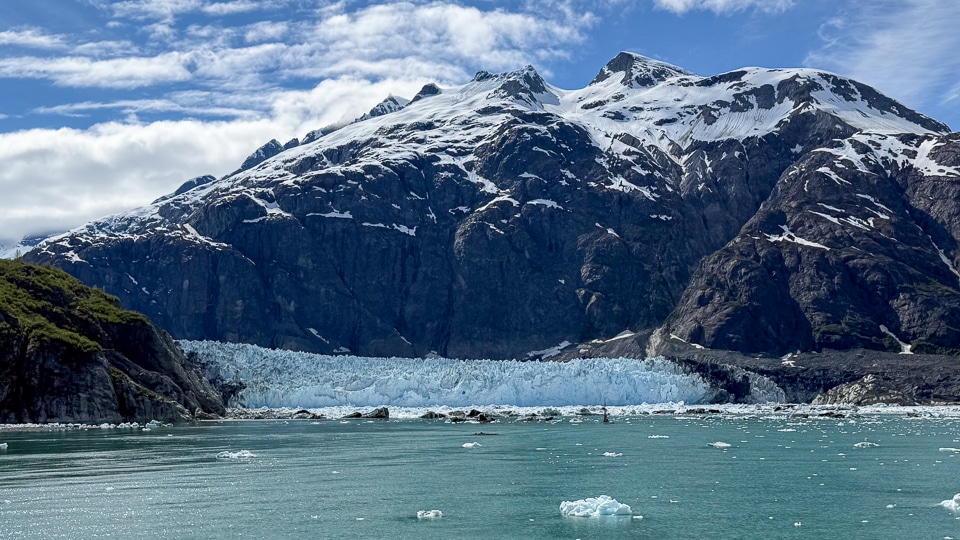
With the help of knowledgeable naturalists on board, we were clued to glaciers’ finer points. Tidewater glaciers like Margerie define where the glacier meets the water, and we could see that the miles of ice behind were moving through a mountain valley. A huge shelf of ice under water makes the meeting of ice and water all the more volatile. Calving at water’s edge is caused by the pressure and movement of the glacier behind it. Glaciers can surge – move rapidly despite the old cliche about glacial speed – and when they do, calving becomes more active. Margerie glacier, in its steep narrow valley advances 12-14 feet every day.
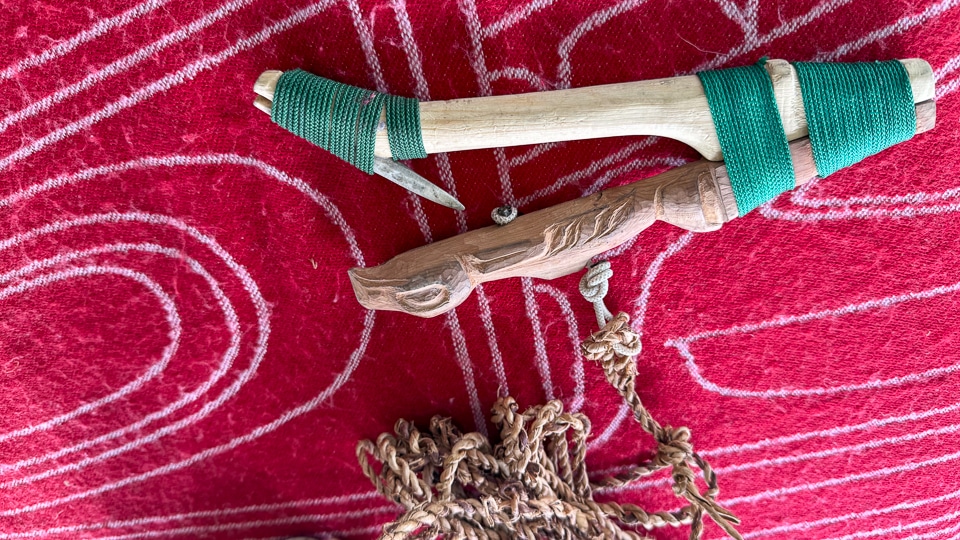
The Tlingit and Glacier Bay: A Story of Displacement and Return
Long before the ice advanced, the Huna Tlingit people lived in Glacier Bay — a homeland they called Sit’ Eeti Gheeyí, “the bay in place of the glacier.” When the Little Ice Age glaciers advanced in the 1700s, they were forced to abandon their villages and relocate south to what is now Hoonah. They carried with them the memory of their homeland in oral traditions, songs, and clan stories.
When the glaciers began retreating, the Huna Tlingit returned — only to encounter a very different reception. Alaska, for one, had been purchased from Russia by the United States in 1867. The area was declared a national monument in 1925. Subsequent land management banned the Huna Tlingit from hunting and fishing in their traditional homeland. It took generations of advocacy and decades of negotiation to begin restoring their presence and rights in the park.
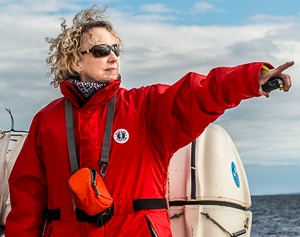
Today the relationship is evolving. The Huna Heritage Center at Bartlett Cove, opened in 2016, tells their story in their own words. Both park rangers and Tlingit descendants offer interpretative sessions at the park. Onboard our ship, both representatives accompanied us overnight and through the waterways, answering questions and contributing stories about local flora and fauna and about Tlingit lineage, daily life, and celebrations, bringing both sacred and personal items to exhibit.
In her description of the totem designed for Glacier Bay Lodge site, our park ranger pointed out, “on the sides of the pole, you’ll see these teardrops, representing the sadness of losing those parts of their culture, the halibut fishing, collecting wool from the mountain goats to make the Chilkat woven blankets….”
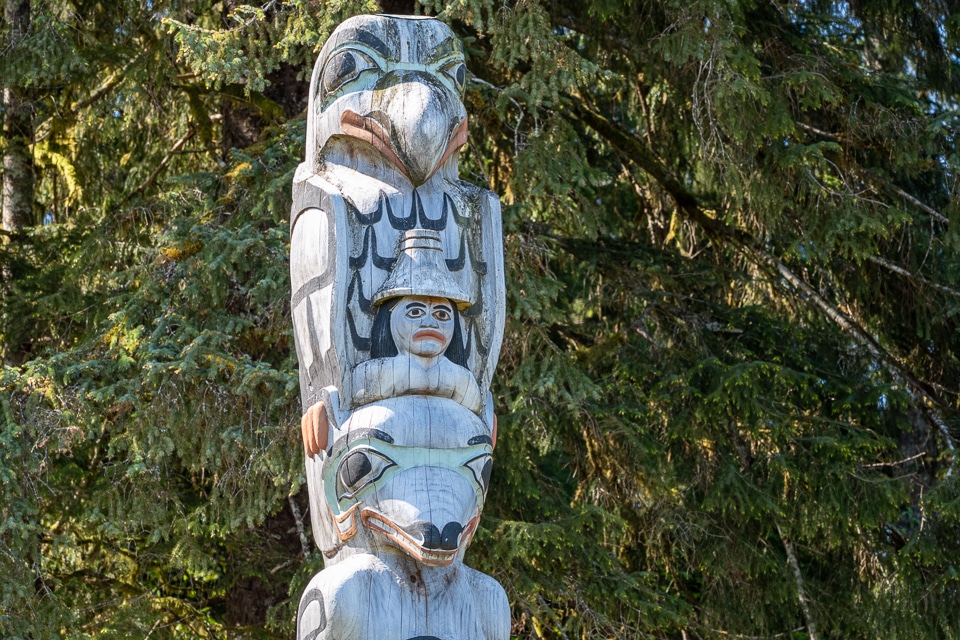
Note: For more about Tlingit culture, read our post about visiting Sitka National Historical Park.
The Wildlife: Reclaiming Habitats After the Little Ice Age
Because the landscape is so young — much of the upper bay exposed only in the last 200 years — the wildlife story is also a story of return and colonization. Of course you can never bank on seeing wildlife, but our small ship inner passage sailing with American Cruise Lines gave us maximum opportunities, especially in Glacier Bay.
Even as we entered Glacier Bay, informative presentations by our resident naturalist prepared us to be camera ready for these encounters.
- Nesting Steller Sea Lions, South Marble Island. Where bachelor sea lions go to hang out.
- Brown (Grizzly) Bear, Tidal Inlet. Foraging along shorelines in summer.
- Black Bear, Bartlett Cove.
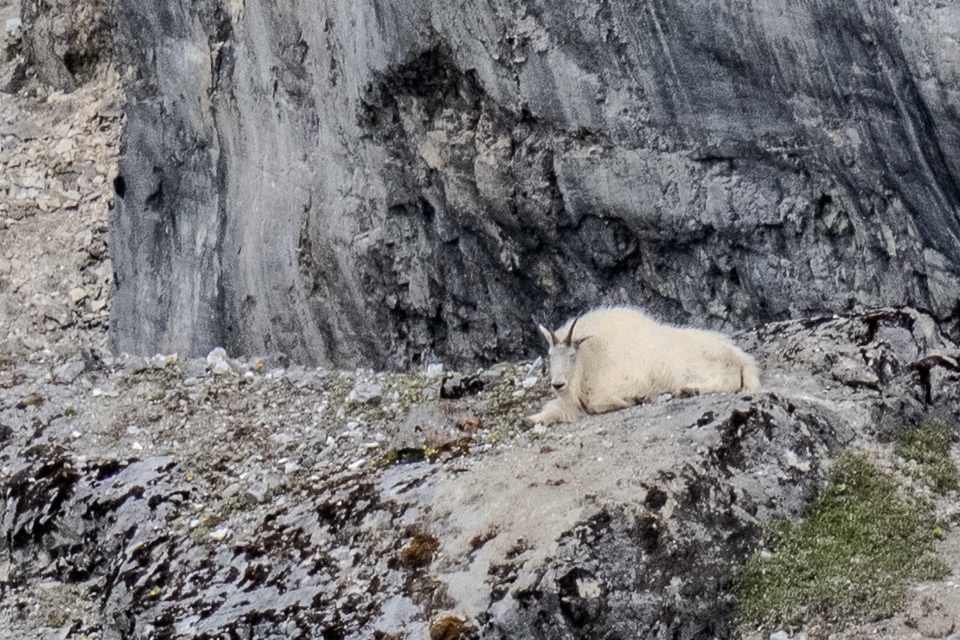
- Mountain Goats, Gloomy Knob. How did they get to that little shelf on the rock face?
- Harbor Seals, Tarr Inlet near Margerie Glacier. The females have their pups on floating berglets, safe from Orca whales who stay clear of the ice.
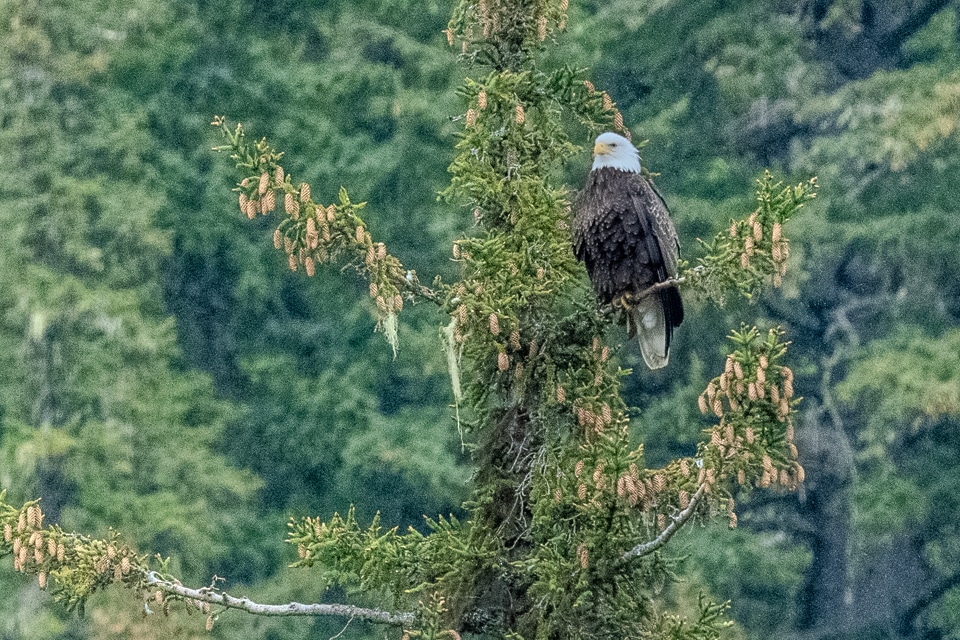
- Bald eagles, frequent sightings, especially on South Marble Islands.
- Seabirds: Puffins (both tufted and horned), Pigeon Guillemots, Murrelets, Murres, Kittiwakes, Arctic Tern, plus herons, loons and more.
- Humpback whales — Glacier Bay is one of the best places in Alaska to see them. If you are lucky, you might observe their teamwork feeding strategy, the bubble net, as our crew had seen the previous week.
- Orcas. We were lucky to spot a group of about a half dozen.
- Porpoises. A fleeting sighting, but a thrill.
- Moose. They are surprisingly common in the lower bay, but we didn’t spot any.
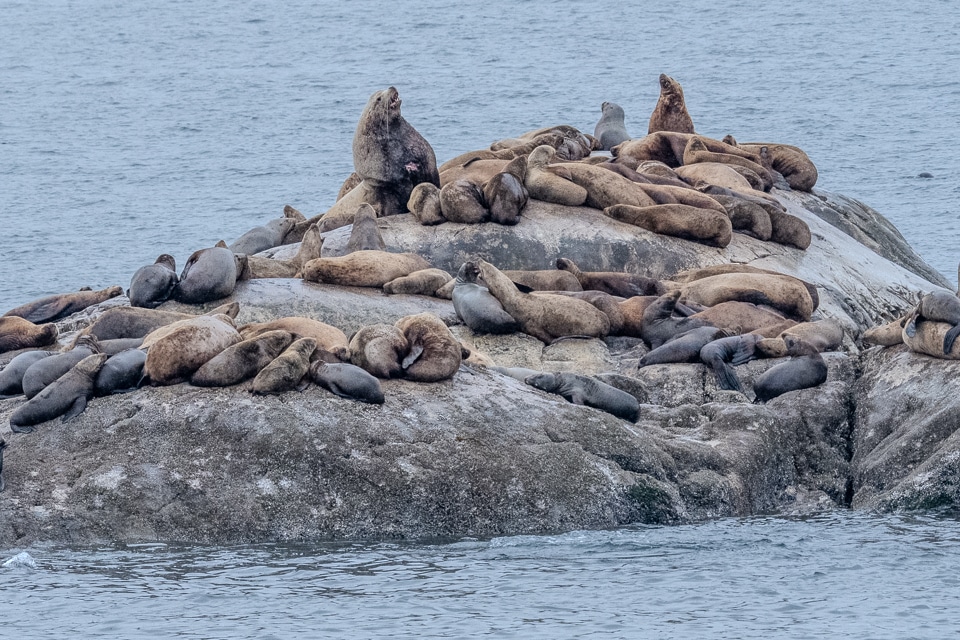
Scenery at Glacier Bay: Glaciers, Mountains, and Calving Ice
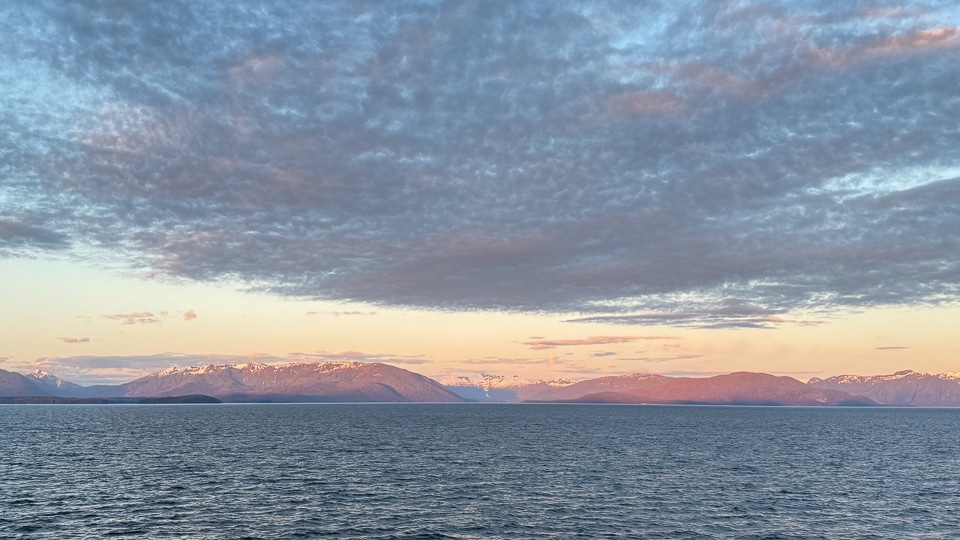
With a couple days in Glacier Bay National Park, you’ll have occasion to enjoy the scenery from the ship and also from land. Besides spotting wildlife, the scenery itself puts on a full time show. We were entranced by the Narrows, by the various islands, and by the steep jagged faces of rock that line the bay. (It really is confounding how Mountain Goats get about!) The scale of the surrounding mountains throws perception of distances way off. The massive landscapes are best captured at dawn or dusk, of course. Sunset was around 10 p.m. when we were there in early June.
As we gradually approached Margerie Glacier, it seemed we could reach over and touch chunks of newly calved ice that were shifting around us. Some were as small as small cars; others the size of houses or apartment blocks. Despite these close-ups, we were hours approaching the glacier and once stopped for a look, we were still two or three miles from the glacier’s face.
Above the Glacier rises the Fairweather Mountain Range, including 15,300-foot Mt. Fairweather, between the bay and the Pacific Ocean. The extent of that is masked, too, as our ship tucked into the closer range of peaks along the water’s edge.
For a change of scenery, enjoy the Visitor Center in Bartlett Cove where we spent a half day exploring the temperate rain forest. Groomed trails in the forest and along the shore are easy to navigate and invite a different set of sights.
And finally, the most prized sighting in Glacier Bay is of course a glacier – and extra points if you witness a glacier calving. Margerie Glacier, the most visited due to access by small ships like ours, is actively calving and displays a bright blue-white face some 400 feet high.
Nearby glaciers such as the Grand Pacific Glacier might be larger, but are also less dramatic given the ice takes on the gray tones of pulverized rock, dragged into the fold by the moving glaciers.
The dramatic scenery is enhanced by the ever-changing weather. It can be warm and sunny and cold and rainy in the same day. Don’t miss out on either type of view. Prepare yourself with layered clothing so you can enjoy the surroundings in all types of conditions.
Glacier Bay Lodge and the Bartlett Cove Experience
For those who want to stay longer, check out Glacier Bay Lodge for accommodations, restaurant, gift shop and more exhibits. Glacier Bay Lodge is the only lodging inside the park. It’s modest but well-situated, right on Bartlett Cove.
Though we didn’t stay overnight at Glacier Bay Lodge, we did enjoy the facilities for a day visit. Besides offering comfortable (not luxury) rooms and a dining room, the Lodge runs day-cruise boats into the bay, evening ranger programs, and serves as the home of the Huna Heritage Center.
We met a young family from Seattle who flew in just to spend five days in this one, beautiful spot. They will not be bored. Available activities include kayaking from Bartlett Cove, the Forest Loop Trail, other nearby forest and lake hikes, and, when the tide is right, some excellent beach-combing.
Some of the best things to do in Glacier Bay are found right here near the Lodge:
- Whale Skeleton. The remains of a Humpback Whale killed by a collision with a ship
were recovered and preserved for display here. - Totem Pole commemorating the history of the Tlingit and the partnership among the various land stewards.
- The Huna Heritage Center is a landmark you can walk around or admire from the beach. It’s sometimes open for education and special events. But it is a daily presences on the shore facing the Icy Strait at the base of Glacier Bay.
- The Forest Loop Trail takes you through the rain forest’s dense display of trees, shrubs, flowers, moss and more. During our June visit, many plants were flowering.
- Walking the shore at Glacier Bay Lodge you’ll find another grand view of the Bay’s abundance. Tides here range from 4 feet to 24 feet, depending on the phase of the moon. What’s left on shore between tides is a fascinating look at marine life. “When the tide is out, the table is set.” People, and bears, have foraged here for hundreds of years.
How to Get to Glacier Bay
The only access to Glacier Bay National Park is by water or air. There is no road access. A Glacier Bay cruise, generally as part of a longer Inside Passage cruise, is the most popular approach. The number of ships – cruise or expedition – is limited and permits are required for all vessels (including private) entering the bay between June 1 and August 31.
Your options might be any of the following:
- Cruise ship. The larger ships sailing the Inside Passage itineraries include a Glacier Bay day. Access to some inlets isn’t possible on the cruise ships, and sparse facilities ashore can be overwhelmed by a ship’s large number of passengers.
- Small ship / expedition cruise. Like our American Cruise Lines ship of 160 passengers, with onboard education. Longer time in the bay, closer approaches.
- Fly in. Small planes from Juneau (40 miles) via Alaska Airlines connector or charter. Seasonal service to Gustavus, then shuttle to Bartlett Cove.
- Ferry. The Alaska Marine Highway ferry serves Gustavus seasonally.
- Independent boat. Strict scheduling and permits require advance planning.
Practical Information
For travelers who’ve heard that Alaska requires rugged physical preparation, Glacier Bay is a revelation: it rewards curiosity and patience far more than endurance.
- Location: Gustavus, Alaska (gateway town); park headquarters at Bartlett Cove, 10 miles from Gustavus.
- Entrance fee: Free, but vessel permits required for private boats; cruise ship access regulated. While the vessel permits are also free, they are quite limited and can only be reserved 60 days in advnace. See the Park’s page for more info on boating.
- When to go: Mid-May through mid-September; peak season is June–August; May can offer fewer crowds and dramatic spring light.
- Getting there: Fly into Juneau (JNU), then small plane or ferry to Gustavus. Alaska Air round-trip flights for this route are under $300.
- Where to stay: Glacier Bay Lodge (inside the park) and a walk-in campground about a quarter mile from the lodge are National Park options. A superior room with king bed runs about $385. Best selection is booking a year in advance. Several B&Bs and small lodges are open seasonally in Gustavus. Or, easy does it sleeping on your small ship.
- The Glacier Bay Day Boat Tour from Bartlett Cove is about a 9-hour day, costing about $275 for adults and $150 for children.
- What to bring: Layers, waterproof jacket and pants, binoculars (essential), sunscreen (you’d be surprised), seasickness remedy if prone — these inner waterways are generally calm.
- Accessibility: Day cruise boat is accessible; Bartlett Cove trails are flat and accessible; kayaking requires physical ability.
- Bear safety: Standard back country bear protocols in effect for anyone hiking or camping.
Frequently Asked Questions: Glacier Bay National Park
What is Glacier Bay National Park known for?
Glacier Bay is one of the world’s most dramatic examples of glacial retreat and ecological renewal. Just 250 years ago, the entire bay was buried under a massive glacier. Today, it’s a 65-mile-long fjord lined with tidewater glaciers, snow-capped peaks, and wildlife-rich waters — all within a UNESCO World Heritage Site. It’s known for stunning calving glaciers, humpback whales, and one of the most remarkable geological transformation stories on earth.
How do you get to Glacier Bay?
There are no roads into Glacier Bay — that’s part of what makes it special. Most visitors arrive by cruise ship or small expedition vessel. Independent travelers can fly from Juneau (about 40 miles away) on a small prop plane to the tiny town of Gustavus, then take a short shuttle to park headquarters at Bartlett Cove. The Alaska Marine Highway ferry also serves Gustavus seasonally. Whichever way you arrive, the journey itself sets the tone.
Can you visit Glacier Bay without a cruise?
Yes, indeed. Fly into Gustavus from Juneau, stay at Glacier Bay Lodge inside the park, and book a seat on the lodge’s own day-cruise boat into the bay. You can also kayak, hike the forest trails at Bartlett Cove, and visit the Huna Heritage Center — all without ever setting foot on a cruise ship. For travelers who want more time and immersion than a cruise day allows, this is a wonderful option.
What is the best time of year to visit Glacier Bay?
Mid-May through mid-September is the visitor season. June through August is peak, with the best wildlife activity — humpbacks are feeding, bears are visible along shorelines, and the days are extraordinarily long. May is a sweet spot for smaller crowds, dramatic light, and the landscape feeling freshly awakened. Come prepared for rain at any time of year; this is a temperate rain forest environment, and a grey drizzly day on the water can be just as atmospheric as a sunny one.
What is the Huna Tlingit connection to Glacier Bay?
Glacier Bay is the ancestral homeland of the Huna Tlingit people, who called it Sit’ Eeti Gheeyí — “the bay in place of the glacier.” They lived here for generations before the advancing Little Ice Age glaciers forced them south to Hoonah in the 1700s. When they returned after the ice retreated, they found their homeland had become a national monument, and were banned from hunting and fishing there for decades. Today, the Huna Heritage Center at Bartlett Cove tells their story in their own voice, and Huna Tlingit descendants work alongside NPS rangers as interpreters. It’s a complicated history, and an essential part of understanding this place.
What wildlife will I see at Glacier Bay?
More than you might expect. Humpback whales are the headline act — the bay is one of Alaska’s best viewing spots, and bubble-net feeding is occasionally witnessed. Harbor seals haul out on ice floes near calving glaciers. Brown bears forage along the shoreline, mountain goats pick their way across high ridges, and moose are surprisingly common in the lower bay. Bald eagles are a constant presence overhead. Bring binoculars and expect to use them constantly — this is one of those places where something is always happening on the water or the shore.
What is Glacier Bay Lodge like?
It’s the only lodging inside the park, and it delivers exactly what you’d hope for: comfortable but unpretentious rooms, a dining room with views, and a genuine sense of being in the wilderness. Don’t expect luxury — expect clean beds, good food, evening ranger programs, and the incomparable experience of waking up inside one of America’s great national parks with no road connecting you to the outside world. The lodge is the launching point for the park’s day-cruise boat, kayak rentals, and the lovely Forest Loop Trail at Bartlett Cove.
Is Glacier Bay part of an Inside Passage cruise?
Many Inside Passage itineraries include a Glacier Bay day, but not all — and access is regulated. The National Park Service limits the number of cruise ships permitted to enter the bay each season, so it’s worth checking your itinerary carefully before booking. Large ships typically spend a full day cruising the bay with a park ranger on board providing narration. Small expedition ships often have more flexibility and can spend more time in the upper bay near the glaciers. Either way, a day in Glacier Bay tends to be the highlight of any Alaska cruise.
How long do you need in Glacier Bay?
A single day by cruise ship gives you the broad sweep and is genuinely memorable. But two to three nights at Glacier Bay Lodge — with a full day on the water, time to kayak or hike, and an evening at the Heritage Center — transforms it from a highlight into an experience. The park rewards slowness. The light changes, the wildlife surprises you, and the scale of the place takes time to sink in.
Is Glacier Bay accessible for travelers with mobility limitations?
Somewhat, with planning. The lodge’s day-cruise boat is accessible, and the flat Forest Loop Trail at Bartlett Cove works well for those with limited mobility. The lodge itself is accessible. Kayaking and back country hiking require physical ability. Getting there involves small planes or ferry travel, which may present challenges for some travelers. It’s worth calling the lodge directly before booking to discuss your specific needs — the staff are generally helpful and realistic about what works.
Final Thoughts: A Landscape Reclaiming Itself
Each day, up and down Glacier Bay, I found myself taking in the surrounding peaks and imagining these valleys and waterways and even all the rounded mountain tops – all but the highest sharp peaks – under a mile of ice. Each day was a marvel to see all the life that has reclaimed the Glacier Bay area, taking it back from the Little Ice Age.
Every beautiful sunset is all the more vibrant when thinking of the weight of the ice, the slip of the glaciers, the scraping reformation of the landscape and the resurgence of trees, birds, sea life and large mammals. It’s as if we are all new here. Because we are.
Yes, this visit to Glacier Bay National Park does count, because it is the entry point to Alaska’s essential geological wonders and to its important natural and cultural history.