
This post is part of our Travel Skills for Travelers Over 50 guide — including everything we’ve learned about managing money, avoiding fees, and getting the best exchange rates when you travel internationally.
In our recent post on how to get the best exchange rates when you travel, we mentioned Wise as a newer option worth knowing about — particularly for travelers visiting multiple countries in one trip or anyone who wants to hold foreign currency in a digital wallet at the real exchange rate.
We’ve had occasion to use Wise several times for money transfers to pay for tours in Europe, to pay for small expenses when a small business owner has balked at the high fees he has to pay when you use an American credit card, and when someone wanted to pay us for our services in Euros. It works perfectly for all those, and there is no conversion fee.
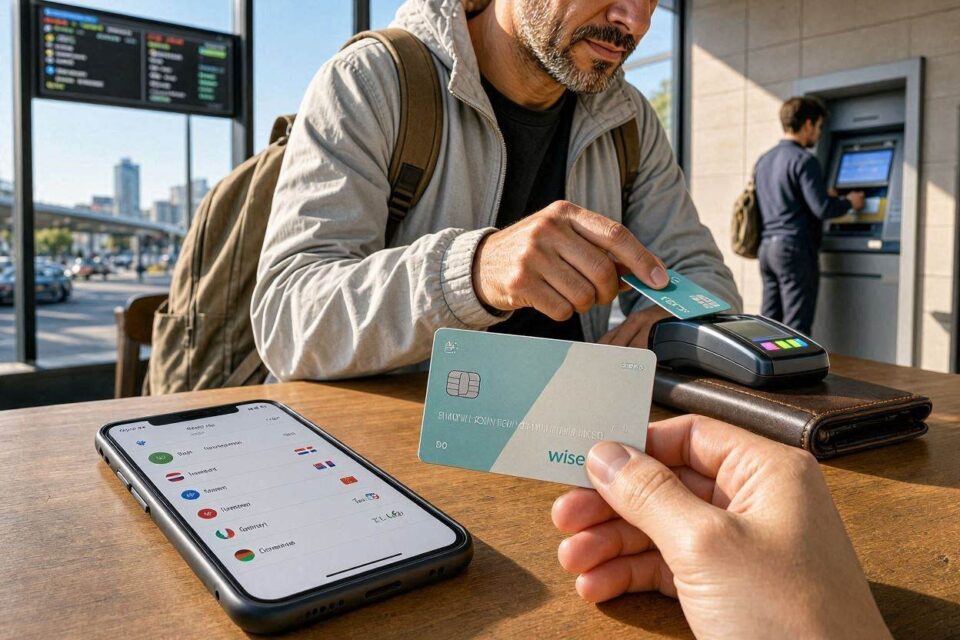
Several readers asked for more detail, so here it is: a complete practical guide to Wise, from opening an account to using the Wise debit card abroad.
The short version: Wise is not a bank account and it’s not a credit card. It’s a multi-currency digital wallet that lets you hold, send, and spend money in over 40 currencies at the mid-market exchange rate — the same rate you see when you Google “euros to dollars.” Most banks and card issuers mark up that rate by 2–4 percent and keep the difference as profit. Wise doesn’t. That difference adds up fast on a long international trip.
What Wise Is — and What It Isn’t
Wise (formerly TransferWise, founded in 2011) is a licensed financial technology company that operates as a regulated money services business in the United States and holds equivalent licenses in every country where it operates. As of 2026, it has over 16 million customers and moves more than $12 billion in cross-border transactions every month.
What makes Wise different from your bank is one specific thing: it uses the mid-market exchange rate — the real rate, the one that appears when you search “euros to dollars” on Google — rather than a marked-up rate that generates profit for the bank. When you convert money through Wise, you pay a small, transparent fee (typically 0.41%–1.75% depending on the currency pair) and receive the real rate. Most bank cards embed a 2–4% markup into every foreign transaction and never show it to you as a fee — it’s invisible, which makes it easy to miss and difficult to compare.
A few things Wise is not: it’s not a traditional bank account, so your balance is not FDIC-insured in the standard sense (more on safety below). It’s not a credit card — you can only spend what you’ve loaded. And it doesn’t earn points or miles. Think of it as a very smart, very transparent digital wallet for people who deal with multiple currencies.
Wise vs. Charles Schwab: Which Should You Use?
Since we already recommend the Charles Schwab debit card in our exchange rates guide, the natural question is: which should you use? The honest answer: they solve slightly different problems, and many frequent travelers use both.
The Schwab card is better for cash withdrawals. It reimburses all ATM fees charged by foreign banks at the end of each month — unlimited, with no cap. If you need a lot of cash on a trip (rural Spain, markets in Morocco, restaurants in Italy that still prefer cash), the Schwab card is unbeatable. It requires opening a linked Schwab brokerage account, but there’s no minimum balance and no monthly fee.
The Wise card is better for: travelers visiting multiple countries (you can hold euros, British pounds, Swiss francs, and other currencies simultaneously), anyone who wants to lock in an exchange rate before a trip when the rate is favorable, travelers who also want to send money internationally, and anyone whose specific bank doesn’t offer a card with no foreign transaction fees. The free ATM withdrawal allowance is limited ($100/month for US cardholders), so it’s less ideal than Schwab for heavy cash users.
If you travel internationally more than twice a year, having both is worth considering. Use Wise for card purchases abroad (best rate, minimal fees) and Schwab for ATM withdrawals (fee reimbursement).
How to Open a Wise Account
Opening a Wise account takes about five minutes. Here’s exactly how:
- Go to wise.com (or download the Wise app from the App Store or Google Play). Do not search for “Wise” in your browser and click on sponsored results — go directly to wise.com to avoid the broker/scam sites that mimic legitimate financial services.
- Click “Register” and choose “Personal account.” (Wise also offers business accounts; for travel purposes, a personal account is what you want.)
- Enter your email address and create a password. You can also sign up with a Google or Apple account.
- Verify your identity. Wise is required by law to verify who you are. You’ll need to provide:
- Your full legal name, date of birth, and address
- A government-issued photo ID — either a US passport or a US driver’s license
- In some cases, a selfie or short video to confirm you match the ID
This verification usually completes within minutes, occasionally within a few hours. If Wise needs additional documentation it will email you.
- Your account is open. You now have a Wise multi-currency account. You can send money internationally immediately. To spend with a card, you’ll need to order the debit card (next section).
Note: Wise is available to US residents in all 50 states, with one exception — the physical debit card carries a $9 one-time fee for US cardholders (except in Nevada, where state regulations apply differently). If you only need the digital card on your phone, there is no charge. The account itself is always free to open.
How to Get the Wise Debit Card
Once your account is open and verified:
- In the Wise app or website, go to “Cards.”
- Select “Get a card.” For US accounts, the physical card costs $9 — a one-time fee, never a recurring charge. The virtual only card on your phone is free.
- Confirm your mailing address. The physical card is a Mastercard debit card and will be mailed to you. Delivery typically takes 5–10 business days for US addresses.
- Get your virtual card immediately. While you wait for the physical card to arrive, Wise gives you a virtual card — the full card number, expiry date, and CVV — that you can use immediately for online purchases and can add to Apple Pay or Google Pay for contactless payment in stores. This is genuinely useful: if you’re traveling within a week of opening your account, add the virtual card to your phone’s wallet and you can use it immediately.
- Activate your physical card when it arrives by following the instructions in the app — typically just entering the last few digits or making a PIN-verified transaction.
Set your PIN: Before traveling, set or verify your PIN in the Wise app (Cards → Manage card → PIN). You’ll need this for ATM withdrawals and for chip-and-PIN payments in Europe, where tap-to-pay sometimes requires PIN confirmation for larger amounts.
How to Fund Your Wise Account
Wise supports several ways to add money to your account. For US customers:
ACH Bank Transfer (Recommended)
Connect your US bank account and transfer funds via ACH direct debit. This is free — no fee from Wise, and most US banks don’t charge for outgoing ACH transfers either. It’s the cheapest and most straightforward way to fund your account. Transfers typically take 1–3 business days to arrive in your Wise account. Set this up a few days before you travel.
Wire Transfer
You can also wire money from your US bank to Wise. This is faster (usually same-day or next-day) but your bank will likely charge a wire fee of $15–$30. Only use this if you need funds in a hurry and ACH is too slow.
Debit Card
You can add money using a US debit card instantly. Wise charges a small fee for this (around 0.27 percent + $0.50 for US Visa/Mastercard debit cards). Useful in a pinch but ACH is better for planned transfers.
Credit Card
Wise accepts credit cards to fund your account, but this is not recommended. Most credit card issuers treat a transfer to Wise as a cash advance, triggering immediate interest charges and a cash advance fee — potentially 3–5 percent of the amount. Check with your card issuer before attempting this. Stick to ACH or debit card.
How much to load? A good rule of thumb: estimate your expected spending for the trip, add 20 percent as a buffer, and load that amount a few days before departure. You can always top up the account while traveling via the app (ACH transfers work internationally, you just need internet access).
Loading Foreign Currencies Before You Travel
This is one of Wise’s most useful features for international travelers — and one that the Schwab card and most travel credit cards can’t match.
Before your trip, you can convert some or all of your USD balance into the currency of your destination, locking in today’s exchange rate. If you’re going to Spain and the dollar-euro rate is favorable right now, you can convert $500 into euros today and those euros sit in your Wise account ready to spend when you arrive — regardless of what the rate does between now and your trip.
To convert currencies in Wise:
- In the app or website, go to your account balances
- Select “Convert” or tap the currency you want to acquire
- Enter the amount in USD (or whatever you’re converting from)
- Wise will show you the exact mid-market rate and the exact fee before you confirm
- Confirm, and the converted currency appears in your account immediately
You can hold up to 40+ currencies simultaneously in your Wise account. For a Spain-plus-UK trip, you could hold both euros and British pounds and spend from the appropriate balance in each country with no conversion fee at the moment of purchase.
One practical note: if you spend in a currency you haven’t pre-loaded, Wise automatically converts from your largest existing balance using the real-time mid-market rate plus a small conversion fee. You don’t need to pre-load currencies — it’s just a way to lock in a rate you like.
Using the Wise Card Abroad
Using the Wise card for purchases abroad is straightforward — it works like any Mastercard debit card.
For in-store card purchases:
- Tap, insert, or swipe as you would any card
- When asked whether to pay in local currency or US dollars, always choose the local currency — this is the dynamic currency conversion (DCC) trap we cover in our exchange rates guide, and it applies to Wise just as much as any other card. Choosing USD lets the merchant’s bank do the conversion at a terrible rate; choosing local currency lets Wise do it at the real rate.
- You’ll receive an instant push notification on your phone showing the amount in local currency and your home currency — very useful for tracking spending
For online purchases in foreign currencies:
- Use the Wise card details as you would any debit card
- If the site offers to charge you in your home currency, decline it — same DCC principle applies online
- The virtual card details (available in the app) are useful for online purchases even before the physical card arrives
Apple Pay and Google Pay:
The Wise card works with both Apple Pay and Google Pay. Add it to your phone’s wallet just as you would any other card. Contactless phone payments are widely accepted across Europe, the UK, Australia, and many other destinations — often faster and more convenient than carrying the physical card.
ATM Withdrawals with Wise
Wise allows ATM withdrawals in local currency abroad, with the following fee structure for US cardholders as of 2026:
- Free withdrawals: Up to $100 USD equivalent per month, across a maximum of 2 withdrawals
- After the free allowance: Wise charges $1.50 per withdrawal plus 2 percent of the amount withdrawn
- Third-party ATM fees: The ATM’s own bank may charge its own fee on top of this — Wise does not reimburse these fees (unlike Schwab)
This is why we recommend using Wise primarily for card purchases abroad and keeping the Schwab card for ATM withdrawals if you need significant amounts of cash. If you only need small cash amounts (taxi from airport, tips, a market stall), the $100/month free allowance may be sufficient and the fees are still lower than most US bank cards would charge.
ATM best practices with Wise:
- Use ATMs connected to major local banks — ideally on the exterior wall of a bank building
- Avoid Euronet machines and standalone airport kiosks — their exchange rates are poor regardless of which card you use
- Always choose to withdraw in the local currency, not USD
- Withdraw larger amounts less frequently to minimize the per-withdrawal fee
Wise Fees: What You’ll Actually Pay
Wise is unusually transparent about fees — they’re always shown before you confirm any transaction. Here’s a summary of what US cardholders pay as of 2026:
Account fees
- Opening and maintaining a Wise account: Free
- Receiving money in USD: Free
- Holding currency balances: Free for major currencies
Card fees
- Physical debit card: $9 one-time fee (US accounts)
- Virtual card: Free
- Replacement card: approximately $5–$9
- Spending in a currency you already hold: Free (no conversion, no fee)
- Spending in a currency you don’t hold (auto-conversion): 0.43%–0.70% conversion fee
- ATM withdrawals within free allowance ($100/month, 2 withdrawals): Free
- ATM withdrawals beyond free allowance: $1.50 + 2% of amount
Transfer fees (sending money internationally)
- Variable percentage fee + small fixed fee depending on currency pair and sending method
- ACH bank transfer: lowest fee option
- Example: sending $1,000 USD to euros typically costs approximately $5–$8 total
- Always shown upfront before you confirm — no hidden charges
For comparison: a typical US bank card charges 2–4 percent on every foreign transaction, embedded invisibly in the exchange rate. On a $2,000 two-week trip, that’s $40–$80 in invisible fees. The same spending on a Wise card, with currencies pre-loaded, costs nothing in transaction fees and a small conversion fee when you first loaded the currency.
Sending Money Internationally with Wise
Beyond the debit card, Wise’s original core function — international money transfer — is worth knowing about for TP50 readers who have family abroad, own property in another country, or occasionally need to send larger sums internationally.
To send money:
- In the Wise app, tap “Send”
- Enter the amount and select the destination currency
- Wise shows you the exact mid-market rate, the exact fee, and exactly how much the recipient will receive — before you confirm anything
- Enter the recipient’s bank details (account number, routing/IBAN, SWIFT code)
- Fund the transfer from your Wise balance or directly from your linked US bank account via ACH
- Confirm and send
Transfer times vary by country and funding method: most major currency corridors (USD to EUR, USD to GBP, USD to CAD) arrive within 1–2 business days. Some arrive within hours. Wise shows you an estimated arrival time before you confirm.
Compare this to a standard bank wire: typical cost of $25–$45 in wire fees plus a 2–3 percent exchange rate spread, meaning the recipient might receive €880–€895 instead of €920 on a $1,000 transfer. The same transfer through Wise would cost approximately $5–$8 in fees, with the recipient receiving close to the full mid-market equivalent.
Is Wise Safe?
This is a reasonable question for anyone used to FDIC-insured bank accounts. Here’s the honest answer:
Wise is regulated by FinCEN as a licensed money services business and holds state money transmitter licenses in all 50 US states. By US regulation, Wise must hold all customer funds in segregated accounts at FDIC-member banks or in US Treasury money market funds — separate from Wise’s own operating funds. This means that if Wise were to go bankrupt, your money would be protected and returned to you. This is not the same as FDIC insurance (which protects against bank failure, not the money services company’s failure), but it does provide meaningful protection.
For practical security while traveling:
- Freeze your card instantly in the app if it’s lost or stolen — you don’t need to call anyone. Unfreeze it the same way if you find it.
- Order a replacement card from within the app if the card is lost — fee is approximately $5–$9
- Use the virtual card for online purchases rather than the physical card number — adds a layer of security since virtual card details can be cancelled and reissued independently
- Enable push notifications for every transaction — you’ll know immediately if an unauthorized charge occurs
- Enable two-step verification on your Wise account — essential security practice for any financial app
- Don’t use a VPN when logging into Wise — it can trigger additional verification steps
Practical Tips for Using Wise on Your Trip
A few things we’d want to know before using Wise for the first time:
Set up before you go, not at the airport. The physical card takes 5–10 business days to arrive, and ACH funding takes 1–3 business days. Open your account and order your card at least two weeks before departure. Fund it via ACH a few days before you leave.
Add the card to your phone wallet immediately. The virtual card is available the moment your account is verified — add it to Apple Pay or Google Pay before your physical card arrives. You can use it for tap payments in most European countries, the UK, and Australia without needing the physical card at all.
Pre-load your main travel currency when the rate is favorable. If you’re going to Europe and the dollar is strong against the euro, lock in that rate now by converting a portion of your balance to euros. Watch the rate in the weeks before your trip and convert when it looks good.
Keep the Schwab card as your ATM backup. As noted above, Wise’s free ATM allowance ($100/month) is limited. If you need more cash than that, Schwab’s unlimited ATM fee reimbursement is the better tool. Carry both.
Your Wise card may occasionally be declined. Some merchants — particularly smaller vendors, certain fuel stations, and some accommodation providers who hold deposits — have systems that don’t recognize Wise. This is rare but happens. Always carry a backup card (your travel credit card or Schwab card) for exactly this situation.
The app is your control center. Every notification, every freeze/unfreeze, every currency conversion, every balance check — it all happens in the app. Download it, log in, and familiarize yourself with it before you travel. There’s no phone number to call if something goes wrong; Wise’s customer support is chat-based through the app.
If you’re sending money internationally, compare to current rates first. Wise is usually the cheapest option but not always — for some currency corridors, Revolut or a specialist transfer service may occasionally be cheaper. Wise’s fee transparency makes comparison easy: check the total cost before confirming.
This post is part of our Travel Skills for Travelers Over 50 guide. Related reading: How to Get the Best Exchange Rates When You Travel and How to Choose the Right Travel Credit Card.
Frequently Asked Questions: Wise Debit Card for Travel
What is the Wise debit card and how does it work for travel?
The Wise debit card is a Mastercard debit card linked to a Wise multi-currency account. When you spend in a foreign currency, Wise converts at the mid-market exchange rate — the real rate, the same one you see on Google — rather than the marked-up rate most banks use. This means no hidden foreign transaction fees. The card works in 200+ countries anywhere Mastercard is accepted, supports contactless tap payment, and sends instant spending notifications to your phone. It’s one of the most cost-effective ways to manage spending in multiple currencies.
How much does the Wise card cost?
Opening a Wise account is free. The physical Wise Mastercard debit card costs $9 as a one-time fee for US cardholders (no monthly or annual fees after that). The virtual card — available immediately on approval for use with Apple Pay and Google Pay — is free. There are no foreign transaction fees when you spend in a currency you’ve already loaded. When Wise needs to convert currencies at the point of spending, it charges a small transparent fee of approximately 0.43%–0.70%, always shown before you confirm.
How do I fund my Wise account?
The best way for US customers is via ACH bank transfer, which is free and typically takes 1–3 business days. Connect your US checking account in the Wise app, enter the amount, and the funds arrive in your Wise account in a few days. You can also fund via US debit card (small fee, instant) or bank wire (faster but your bank will charge a wire fee). Do not use a credit card to fund Wise — most credit card issuers treat this as a cash advance and charge immediate interest.
Is the Wise card better than the Charles Schwab debit card for international travel?
They’re best used together. The Schwab card is better for ATM cash withdrawals — it reimburses all ATM fees worldwide with no monthly cap, making it ideal if you need significant cash. Wise is better for multi-currency management: you can pre-load euros, pounds, or other currencies at favorable exchange rates and hold them until you spend. Wise is also the better tool if you want to send money internationally or if you’re visiting multiple countries and want to hold different currency balances. Many frequent international travelers carry both.
Can I use the Wise card at ATMs abroad?
Yes. Wise allows ATM withdrawals in local currency at any ATM that supports Mastercard. US cardholders receive $100 per month in free withdrawals (across a maximum of 2 transactions). After that, Wise charges $1.50 per withdrawal plus 2% of the amount. Note that the ATM’s own bank may also charge its own fee, which Wise does not reimburse. For this reason, if you need significant cash, the Schwab card’s unlimited ATM fee reimbursement is the better choice. As always with any card abroad, choose to withdraw in local currency, not US dollars.
Is Wise safe to use for travel money?
Yes. Wise is regulated in all 50 US states as a licensed money services business and is required by law to hold all customer funds in segregated accounts at FDIC-member banks or US Treasury money market funds — separate from Wise’s own operating funds. Your money is protected in the event of Wise’s insolvency. The Wise app also lets you freeze and unfreeze your card instantly if it’s lost or stolen, and sends real-time notifications for every transaction. Enable two-step verification on your account before traveling.
How long does it take to get a Wise card?
Opening a Wise account takes approximately five minutes online. Identity verification usually completes within minutes to a few hours. The physical debit card takes 5–10 business days to arrive by mail for US addresses. However, a virtual card is available immediately on verification — add it to Apple Pay or Google Pay and you can use it for contactless payments and online purchases right away, without waiting for the physical card. Plan to open your account at least two weeks before you travel.
What happens if my Wise card is lost or stolen while traveling?
Open the Wise app and freeze the card immediately — this takes about five seconds and works from anywhere in the world with internet access. No phone call required. If the card is confirmed lost, you can order a replacement through the app for approximately $5–$9; it will be shipped to your home address. In the meantime, your virtual card remains active and usable through Apple Pay or Google Pay. This is one of the strongest arguments for setting up the virtual card on your phone before you travel — it’s your backup if the physical card is ever lost.
Disclosure: This post contains a referral link to Wise. If you open a Wise account through our link, you may receive a fee-free first transfer and Travel Past 50 may receive a small referral credit. We recommend Wise because we believe it is genuinely useful for international travelers — not because of any referral arrangement. As always, we only recommend products and services we would use ourselves.