

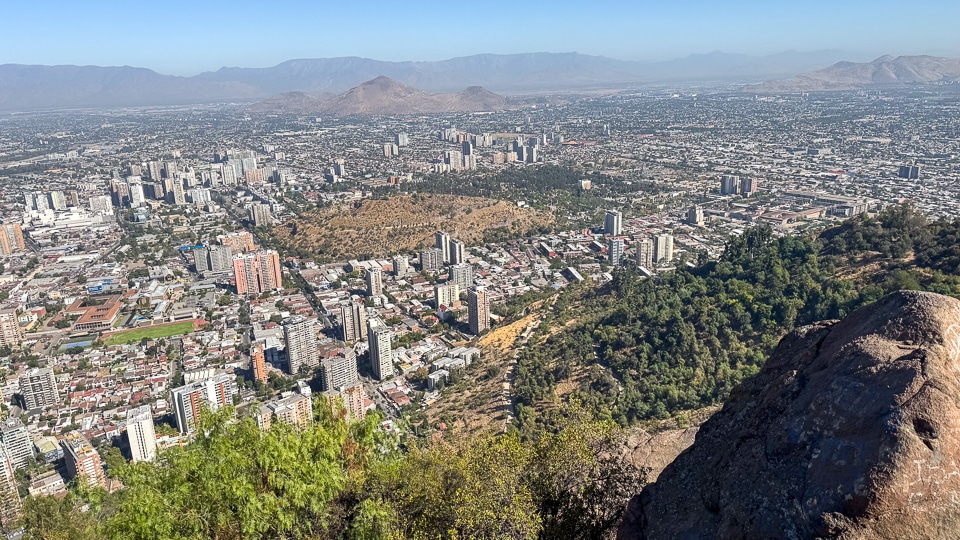
The first time we visited Santiago, we ended up staying for four months. That was back in 2011, a year after the February 2010 earthquake and tsunami, and before we even thought of visiting Patagonia in the South or Chile’s northern Atacama Desert.
Fifteen years later, we were back in Santiago, with time to visit the old neighborhood and discover new parts of the city. We prepared by reading Tales from the Sharp End: A Portrait of Chile, by Natascha Scott-Stokes, and were glad to have her insights – particularly about the social unrest in 2019 – to help bring us up to date. (The book reads more like a series of interesting essay than a travelogue or history text. Recommended.)
We benefited, too, from a guided city tour by Say Hueque, a group we worked with to arrange a tour of South America for friends of Travel Past 50 Tours. This trip to Chile reminded us of why we’ve been encouraging travel to South America: for wine, culture, value, and a chance to get to know an important part of the world not nearly as overrun by tourists as Europe.
Let’s not forget that we were able to escape North America’s winter for Chile and Argentina’s summer. And that the flight, though long, only spans two or three time zones for most North Americans.
Yes, Santiago has changed several times over in the past two decades, protests and COVID notwithstanding. But the heart of the city keeps its unique beat even as it’s still growing quickly. 2026 population is estimated around 7 million.
Some sections of the city are etched with shiny glass skyscrapers, fancy hotels and wide commercial streets. Other corners are lined with dusty doorways and rusty gates, patched together with colorful murals. In many neighborhoods, stately homes of the previous century might be interspersed with new shopping and entertainment centers or pop-up container shops.
Parks are busy with joggers, bikers, and families, and on Sundays major thoroughfares are closed to traffic to free pedestrians and cyclists to enjoy the outdoors without dodging cars. It's a pleasant metro area to visit, not intimidating but welcoming.
Table of Contents
Santiago de Chile Attractions
To get to know Santiago, start at the foundation – the city’s historic center and oldest institutions — to see how Santiago grew from a colonial outpost to this modern metropolis.
Plaza de Armas
Santiago begins at the Plaza de Armas, laid out in 1541 by Spanish founder Pedro de Valdivia. Relief sculptures on the pavement of the square show the growing city’s progress over the centuries. The Santiago Metropolitan Cathedral and the Central Post Office Building dominate two sides of the plaza, and a colonnade of shops and restaurants borders another. The Cathedral is enormous if slightly stark by European standards. You might be entertained by street performers, but this isn’t the area to hang out in (as it might have been at one time). Mind your belongings.
San Cristóbal Hill and Metropolitan Park
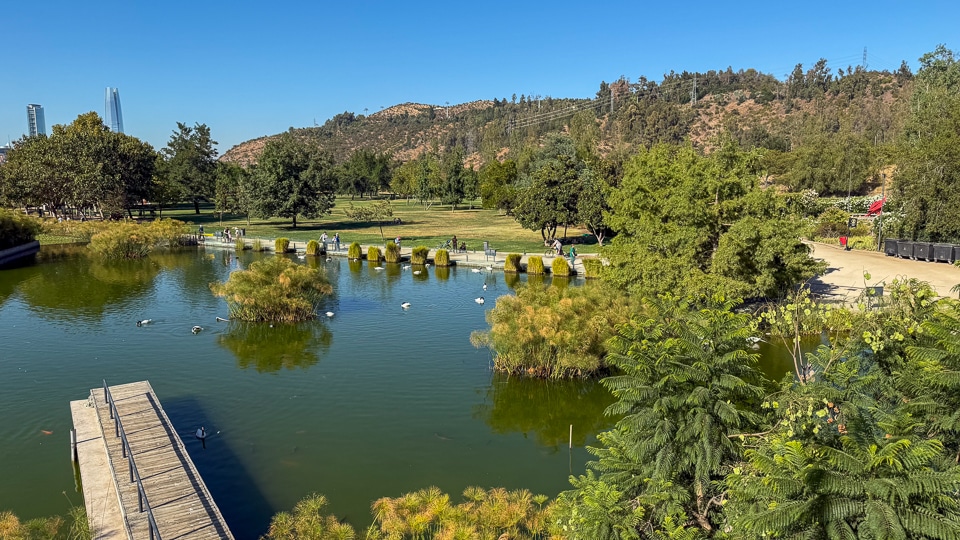
Santiago’s most visible landmark – and the best place to get an overview of the city – is Cerro San Cristóbal, the hill smack dab in the city and forming the face of the enormous Parque Metropolitano de Santiago. From the summit, you can view nearly all of Santiago as well as the snow-capped Andes Mountains to the east.
Long ago we tried to walk up to San Cristobal by way of the zoo. We know better now. You can reach the top by funicular or cable car, but walkers and cyclists are accommodated more than ever. Along the way you’ll pass picnic areas, botanical gardens, and Santiago families enjoying the outdoors.
Museum of Memory and Human Rights
The Museo de la Memoria y los Derechos Humanos opened in 2010, but we failed to visit when we lived there. So we were interested in seeing this contemporary take on the years of repression during the military dictatorship of Augusto Pinochet, following the 1973 Chilean coup d'état that overthrew President Salvador Allende and up to 1990.
It’s not an easy museum visit, but the documentation of events over this period, through photographs, letters, testimonials, videos, and memorials, tells the story of thousands of people who disappeared or were imprisoned. Especially moving was the narrative embroidery work of prisoners.
Most of the museum’s didactic is in Spanish, so we recommend the audio guide for English speakers. (We can’t comment on the audio tour, though, because we didn’t use it.) As a whole, the Museum of Memory and Human Rights provides essential context for understanding modern Chile and the political energy you still feel in the city’s streets. And as the museum's mission states, it exists “to make known the systematic human rights violations by the Chilean state between 1973 and 1990…so that these events that attack human dignity be never again be repeated.”
Chilean Museum of Pre-Colombian Art
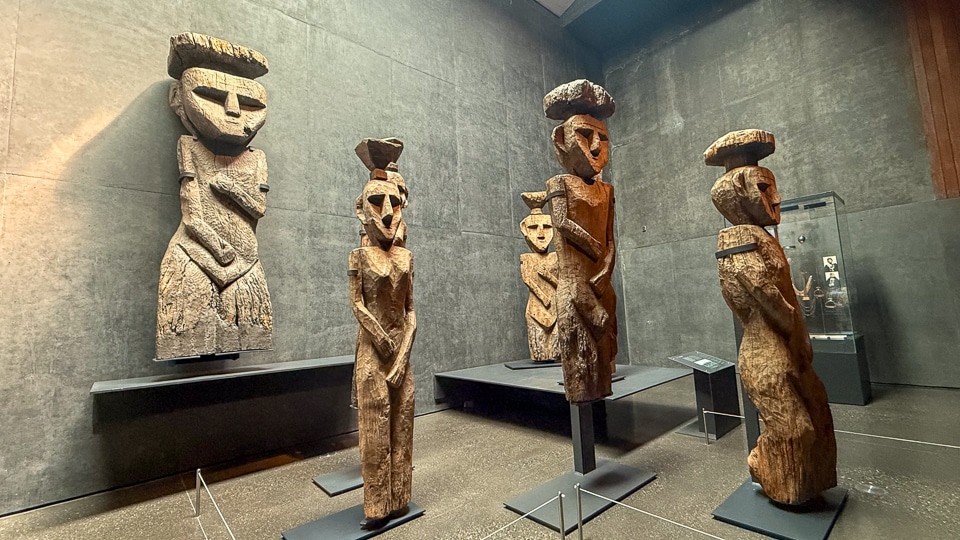
The Chilean Museum of Pre-Colombian Art is a great little museum, with a well-displayed collection of art and artifacts from throughout indigenous South and Central America. The impressive textiles, ceramics, masks, and gold work demonstrate the extraordinary craftsmanship and sophisticated societies existing here long before the Spanish arrived.
Add to this the Museum of Visual Arts in the Lastarria area, and the Museo de Arts Colonial de San Francisco near Plaza de Armas.
Santiago Neighborhoods
Like many large cities, Santiago is best understood neighborhood by neighborhood.
Bellavista
The most colorful is Barrio Bellavista, squeezed between the Mapuche River and the slopes of San Cristóbal Hill. This is where we lived back in 2011 so we’re partial to the location amongst university buildings and more than plenty bars, cafes and tiny shops, centered around Patio Bellavista.
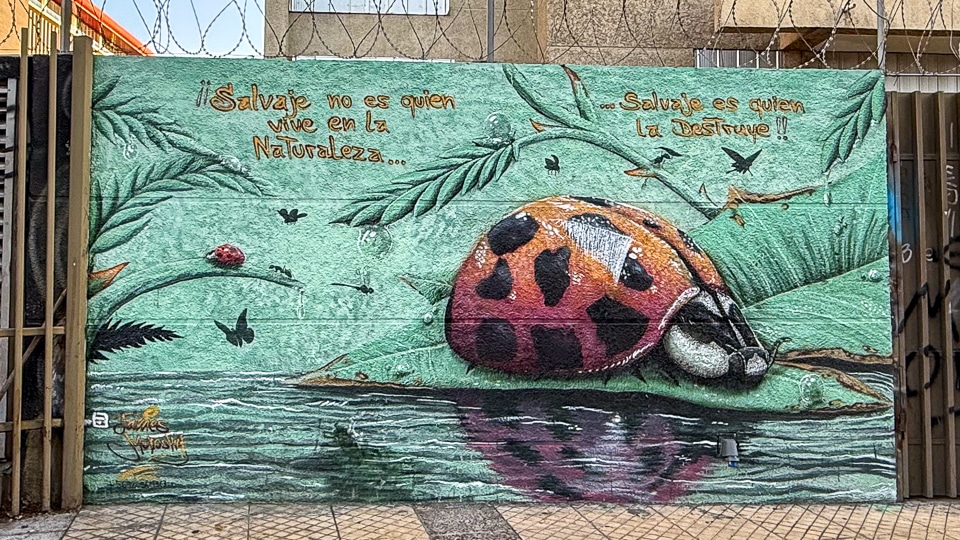
The highlight of Bellavista is the street art – the murals and the immediate sense of conversation as you walk this neighborhood. Murals cover entire buildings or frame tiny little windows. The messages are sometimes political, sometimes surreal, sometimes humorous, sometimes just pretty.
This open air gallery is also home to La Chascona, the quirky former house of Chilean poet Pablo Neruda, open for tours. Learn more about this house and the Bellavista neighborhood in our photo posts.
Las Condes and Providencia
Most international visitors stay in the modern eastern districts, Las Condes and Providencia. The hotels and area are sleek and contemporary: wide avenues, business towers, shopping centers, and international restaurants. It’s convenient, comfortable, and well connected by Santiago’s efficient metro system.
Lastarria
Close to the city center, Barrio Lastarria has become one of Santiago’s most pleasant walking neighborhoods. Boutique hotels, small art galleries, bookstores, and a cluster of restaurants line leafy streets. In the center of Lastarria is Santa Lucía Hill, a nicely landscaped park offering views across downtown, if you can manage the climb.
Calle Italia
A bit further east, situated between Lastarria and Las Condes, Barrio Italia is where creative Santiago seems to be gathering these days. Former warehouses and auto shops have been transformed into design studios, antique stores, bakeries, and wine bars. It’s a relaxed area to wander in the afternoon.
Santiago Day Trips
Within a couple of hours from Santiago, you can travel to the Pacific coast, to Chile’s wine country, or to the high mountains.
Day Trip: Colchagua Valley Wineries
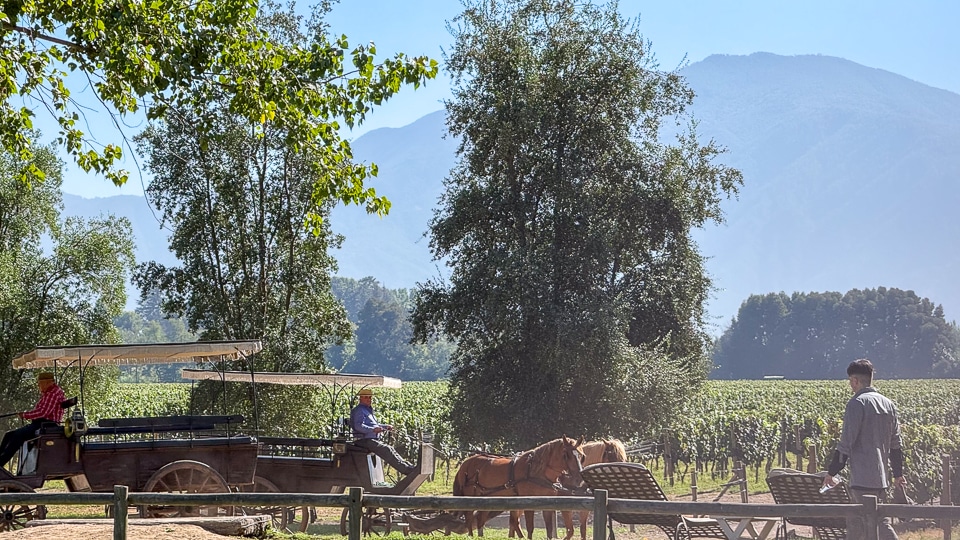
Chile’s most famous wine region, the Colchagua Valley, is just two hours south of Santiago. If you want to explore wineries over several days, you might stay in the small town of Santa Cruz, as we did in 2011. More recently, we simply made a day tour to the valley from Santiago, visiting two wineries.
First stop was Viu Manent which provided an excellent introduction to Chile’s terrain and wines. A display of old vine roots indicated how altitude and soil affect the grapes and production and a useful intro to Chile’s vineyards. We sampled a surprising rosé and Viu Manent’s Secreto label carménère, an excellent play on Chile’s signature grape. That and another gran reserva, a malbec, were crowd favorites, as were the syrah and cabernet savignon selections. Maybe we were easy to please!
We hopped on a couple horse-drawn carriages for a look around the property, and to see where the estate grapes, always hand-picked, are grown.
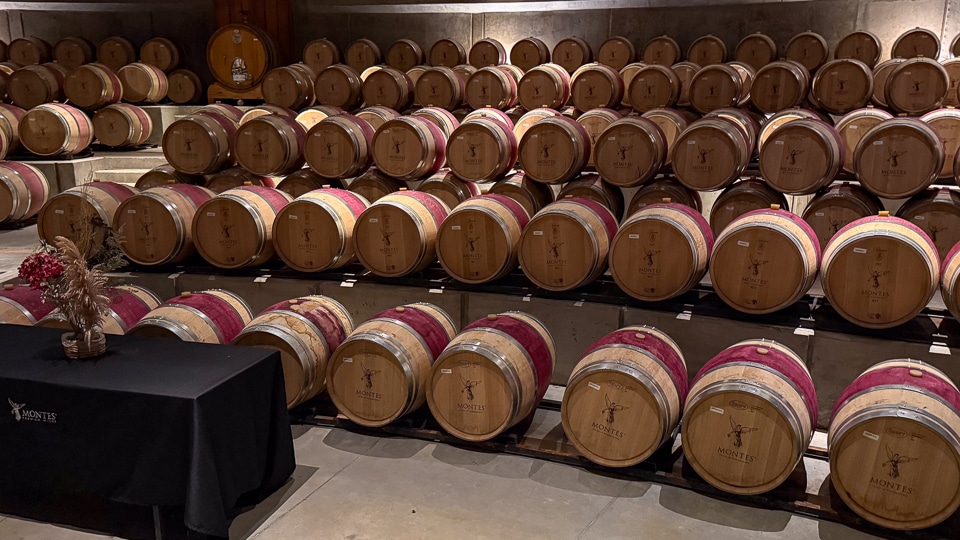
The next winery we visited, Viña Montes, had been recommended to us by a friend, particularly for their restaurant. The kitchen and dining area are open to the vineyard all around, and we enjoyed the chefs' show in the wonderful Fuegos de Apalta Restauranteven before we even began the wine tour. Cooking over open wood fires and the locally sourced ingredients are this restaurant's trademarks, presented with flare. I'll remember the fresh tomato salad and sea bass, while others were impressed with their steaks.
We piled into the back of an open truck to circle various blocks of vines spread over quickly changing elevations. After the tour of the bodega and tasting, we can recommend Montes' Alpha Montes (red and white varietals) and Purple Angel (focusing on Carménère) selections.
At both wineries, the wine tasting (in English) was relaxed, informative, and personable.
Back in 2011, we visited a winery walking distance from our stay in Santa Cruz, the small Laura Hartwig winery, with a surprising chardonnay among its featured wines. You can read about that long ago visit here.
Day Trip: Santiago to Isla Negra
Never having enough of Pablo Neruda and his idiosyncratic homes and collections, we opted for a stop in Isla Negra ‘on our way' to Valparaiso. (Actually the route then becomes a triangle.) The rocky shore of Isla Negra – a town, not an island – inspired Neruda’s ship-like home overlooking the Pacific. It’s about 90 minutes west of Santiago.
Neruda’s Casa de Isla Negra is remarkable for its location, but also for the maritime curiosities – ship figureheads, bottles, maps, and shells. Audio tours are included with tours. The poet and his wife are buried in the garden overlooking the sea.

Day Trip: Santiago to Valparaíso
About two hours away, the port city of Valparaíso is one of South America’s most visually striking places. Hills rise steeply above the harbor, covered in colorful houses connected by stairways, elevators, and narrow streets. The historic quarter is recognized as a UNESCO World Heritage Site. Street art flourishes here as well.
We enjoyed walking down (not up) Templeton Street in the Alegria neighborhood, and ended up at a nice restaurant overlooking the port. Inquilino backs up its beautiful views with delicious dishes. Try the salads and seafood.) Valpariaso’s fortunes have shifted many times. Once the largest port on South America's Pacific coast, the completion of the Panama Canal led to its decline.
Downhill Skiing
In winter (June–September), Santiago residents can drive less than two hours to ski resorts high in the Andes, including Valle Nevado. Summer trips to the mountains offer a refreshing change from the city. It’s not many capitals where you can have lunch downtown and be skiing that same afternoon.
Food and Wine Notes
Chile’s food scene has expanded quickly in recent years, and Santiago is at the center of that evolution. The cuisine, in general, is a mix of Spanish and indigenous (Mapuche) heritage, with a touch of Italian and German influence. Typical dishes are empanadas, choclo (corn) sometimes served in the husk as humitas, stews, and fresh seafood. Portions were really huge, and we learned quickly to share a plate.
Of course Chilean sea bass is the pinnacle of Chilean cuisine. Locals will advise you to skip salmon, as the farm-raised variety is a big environmental issue down the coast. But expect excellent seafood, strong grilling traditions, and a wine culture that rivals Europe in quality while often remaining much better value.
See our wine visit notes above, based on winery day trips from Santiago. Definitely look for Carménère, Cabernet Sauvignon, and increasingly impressive white wines from cooler coastal regions.
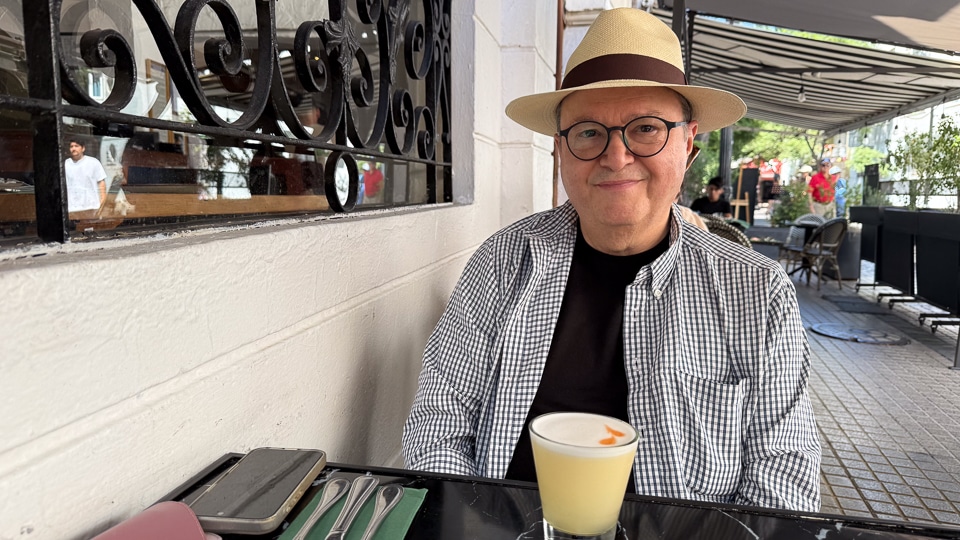
Besides the fine wines, you can order a schop, a cold tap beer pronounced ‘shop', almost anywhere, as well as classic and inventive cocktails, with or without alcohol. And did we mention Pisco? Do not escape without trying a Pisco Sour, practically the national drink of Chile, no matter what Peru says.
In Santiago, we recommend:
Bocanariz. Our favorite meal in Santiago, designed to share.
Chipe Libre. Next door to Bocanariz, some friends entered here by mistake and completely enjoyed the food and piscos.
Diablo Vino y Fuego Restaurante. A newer restaurant in Las Condes neighborhood.
Silvestre Bistro. For a regular, local experience in the Calle Italia neighborhood. We enjoyed the patio seating and cold beers.
Where to Stay
Most travelers choose hotels in Providencia or Las Condes for convenience and safety. Lately, more options are appearing in Lastarria and other central neighborhoods, offering easier access to museums and historic sights.
W Hotel Santiago. We felt like we were punching above our weight, but thoroughly enjoyed the rooftop bar, the lounge, and the spacious breakfast area to meet up with our new friends. (Skip the popular and pricey Sky Costanera views if you are lucky enough to be staying at the W Santiago.)
Hotel Boutique Castillo Rojo. In Bellavista, because we couldn't not stay in our old neighborhood, we were thrilled to find this cool boutique hotel in an historic old home. Steps from Patio Bellavista and from La Chascona, but also from a whole bunch of new loud restaurants.
How to Get There, How to Get Around
International flights arrive at Arturo Merino Benítez International Airport (SCL), about 20 minutes from the city center. It's served by many airlines from destinations domestic and international.
Note, when flying from the United States, you’ll be likely to have an overnight flight, departing late in the day and arriving next day in Santiago. Chances are, you’ll get in early and need to wait for your hotel room. Beware when planning your arrival day activities.
Santiago’s Metro is modern, inexpensive, and easy to use. Taxis and ride-share services are widely available as well.
Questions? Contact us. We enjoying helping travelers discover this amazing corner of the world.
Up Your Travel Skills
Looking to book your next trip? Use these resources that are tried and tested by us. First, to get our best travel tips, sign up for our email newsletter. Then, be sure to start your reading with our Resources Page where we highlight all the great travel companies and products that we trust. Travel Accessories: Check out our list of all the accessories we carry to make getting there and being there a lot easier. Credit Cards: See our detailed post on how to choose the right travel rewards credit card for you. Flights: Start finding the very best flight deals by subscribing to Thrifty Traveler. Book your Hotel: Find the best prices on hotels with Booking.com. See all of the gear and books we like in one place on our Amazon shop. If you use any of the links in our posts to purchase our recommended products, we'll receive a small commission at no extra charge to you.Got a comment on this post? Join the conversation on Facebook, Instagram, or Threads and share your thoughts!