
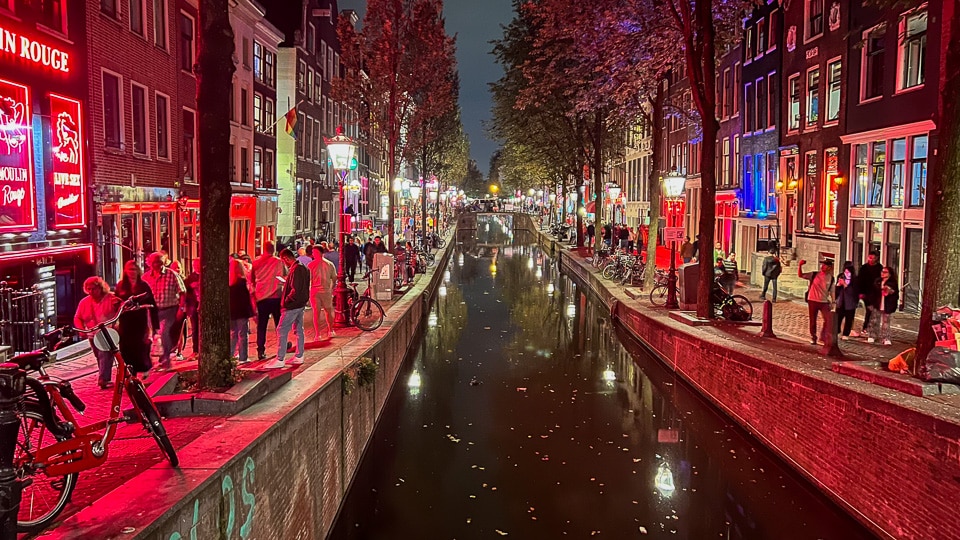
I’ve been to the city of Amsterdam many times, including on Kris’ and my very first time in Europe together in 1975. I’m not sure what first attracted us, but after recently spending a week there, I did some thinking about why I keep coming back. Yes, the Dutch capital’s central area and its iconic canals is a UNESCO World Heritage Site. But that alone isn’t the best reason to stop in Amsterdam.
Here’s what I came up with: Amsterdam is an example of a progressive living philosophy with a backdrop of what seems like a movie set out of the 1600s.
Combine that with several excellent museums, eclectic shopping for antiques and modern fashion, restaurants for every taste, and a very walkable city, and it’s easy to see why a week in Amsterdam flies by.
First time here? Visit our Start Here page → to get oriented and get a link to our 50 best travel tips.
What to do day by day in Amsterdam
Days 1-3: Amsterdam museums
The plethora of museums in Amsterdam can easily fill the better part of three days, or even more depending on how long you like to linger before extraordinary art. From Rembrandt to Steen and Vermeer, through Van Gogh to Banksy and Basquiat, Amsterdam has something for every taste.
The Rijksmuseum
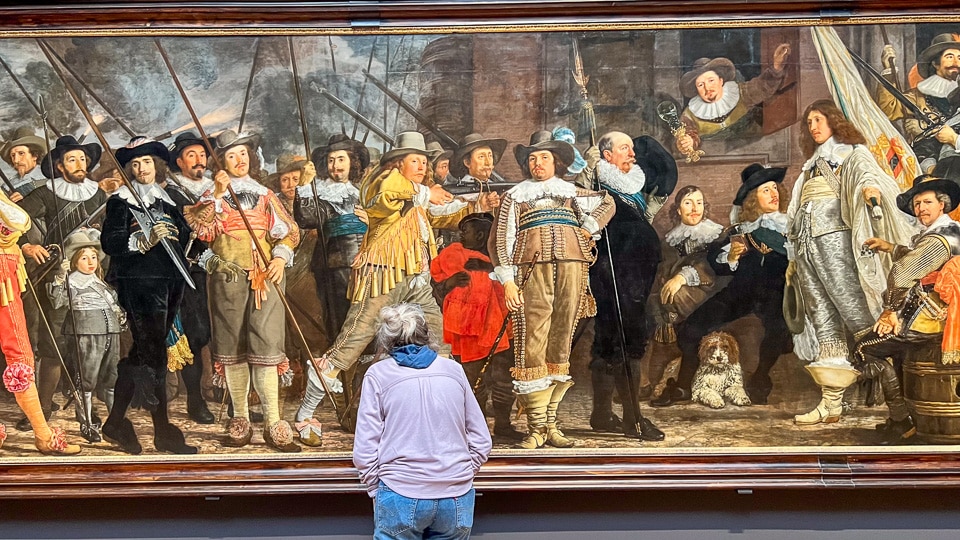
The Rijksmuseum is the must-visit for anyone interested in Dutch art and history. Its collection spans 800 years, showcasing masterpieces from the Dutch Golden Age, including Rembrandt’s The Night Watch, (unfortunately currently mostly behind some scaffolding while it’s being restored) and the glimmering Isaac and Rebecca, The Milkmaid by Johannes Vermeer, a beautiful depiction of domestic life, and several by one of my favorites, Jan Steen, also depicting everyday life in Holland. In addition to the seminal works of the Dutch Masters, the museum also houses an impressive collection of decorative arts and historical artifacts, including some very detailed models of 17th Century sailing ships. You can easily spend 4-5 hours in this museum alone.
The Van Gogh Museum
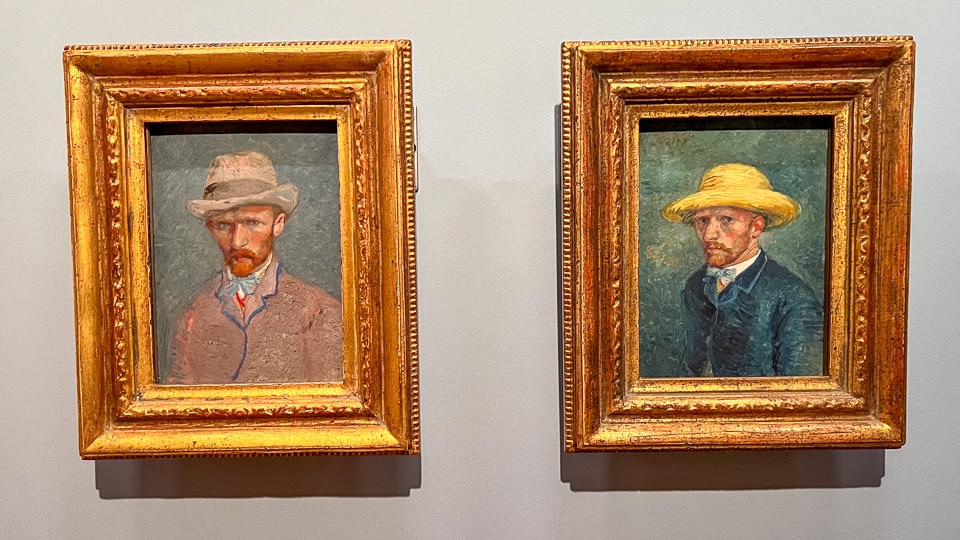
The Van Gogh Museum is home to the largest collection of works by Vincent van Gogh in the world, offering a deep dive into the life and evolving style of the artist. Among its treasures are Sunflowers, one of Van Gogh’s most famous series, and The Bedroom, an intimate portrayal of his living quarters in Arles, France. The museum also offers insight into Van Gogh’s personal struggles through excerpts from his letters and notebooks displayed along with the paintings.
The Stedelijk Museum
For modern and contemporary art, the Stedelijk Museum features an extensive collection of 20th and 21st-century works, with pieces from iconic artists such as Piet Mondrian and Kazimir Malevich. Mondrian’s famous Composition with Red, Blue, and Yellow is a standout piece – the primary example of the abstract, geometric style of the De Stijl movement. The museum also features an extensive photography collection.
The MoCo Museum
The MoCo Museum is known for its collection of modern, contemporary, and street art. The museum frequently features works from internationally renowned artists like Banksy, whose iconic Girl with Balloon and Laugh Now pieces are standout attractions. Add some Basquiat and you’ve got a combo that provokes your imagination. The museum also hosts rotating exhibitions from other influential contemporary artists, creating a vibrant, ever-evolving experience.
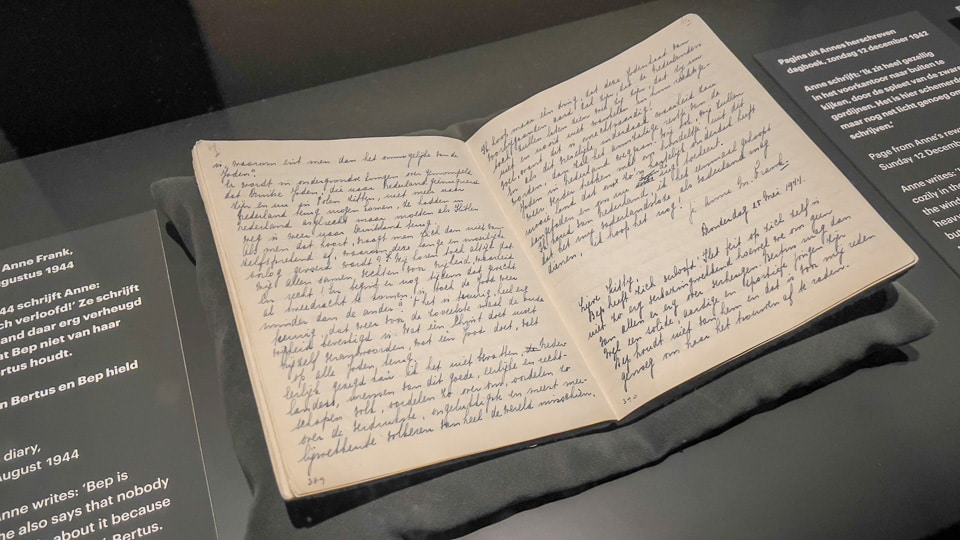
The Anne Frank House
The Anne Frank House preserves the hidden annex where Anne Frank wrote her famous diary while hiding with her family from the Nazis during World War II. The entries to Anne Frank’s House sell out long in advance. You should make reservations five to six weeks in advance of your visit to Amsterdam. All entries are timed. The House is open daily from 9 a.m. to 10 p.m. and I suggest aiming for early morning entry, when there are fewer visitors. Tickets are €16.50 for adults; children 10-17 are €7; children 9 and under are €1. There’s no senior discount.
Visitors can walk through the preserved rooms of the annex, gaining some insight into the Frank family’s struggle and the broader history of the Holocaust. The original books of Anne Frank’s diary are on display and underscore the cost to the world of this very talented girl’s horrible death in the concentration camps.
The Dutch Resistance Museum
The Dutch Resistance Museum (Verzetsmuseum) offers insight into the courage and resilience of the Dutch people during World War II and the German occupation and helps put the Anne Frank exhibit in more context. You are led through immersive exhibits that recount the stories of ordinary citizens who resisted Nazi occupation – from sabotage to hiding Jewish families. The museum, to its credit, also does not shy away from the stories of those who collaborated with the Germans.
Note: for all these museums, be sure to check their websites for prices and opening hours. They sometimes change by the season and on holidays.
Since most of these tickets are timed and booked on your phone, it helps to have data from the moment you land. An eSIM Plus can be installed before your flight, so you can check entry slots, opening hours, and your ticket QR codes without roaming charges or hunting for a local SIM.
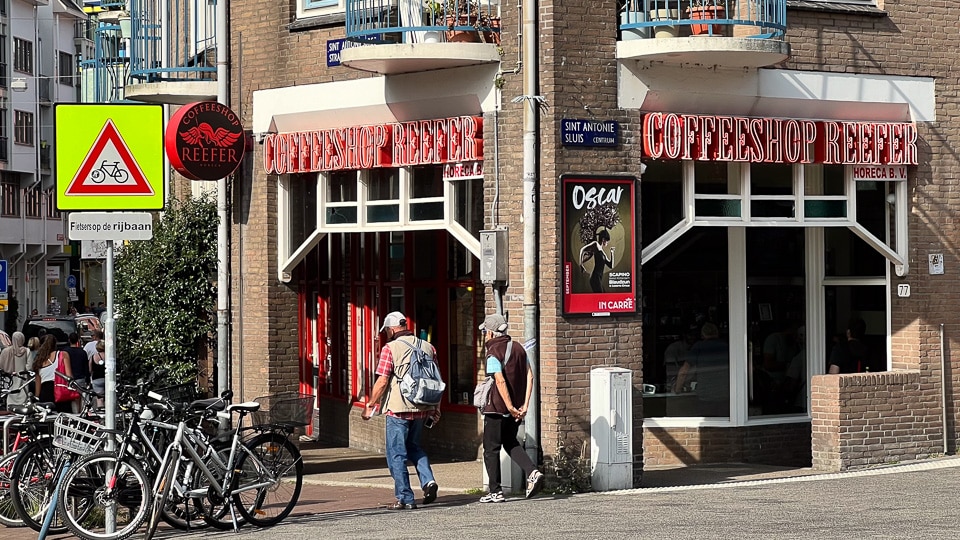
Days 4-5: The Red Light District
Coffee Shops and the Red Light District
The most obvious example of the progressive living philosophy I mentioned above is the liberal attitude about marijuana and prostitution, both of which are featured in the Red Light District, in the city center near the port and Amsterdam Centraal train station. Historically, it’s where the sailors who manned the famous Dutch trading fleet which plied the world since the 15th Century hung out. Today, instead of sailors, it’s tourists who fill the streets, ethnic restaurants, bars, and “coffee shops” (the euphemism for bars that allow smoking of cannabis, and also usually sell it.)
But what distinguishes this Amsterdam landmark neighborhood from seedy counterparts in other cities of the world is that said marijuana use and prostitution are wide open, obvious, and tightly regulated.
As a practical matter, that means the prostitutes are on display, usually behind a glass door, rather than walking and soliciting on one of the main streets in town. They are required to submit to regular medical exams, and have buttons that can summon the police if anything gets out of hand.
As for weed, although you’ll often catch a whiff of its distinctive aroma, the only legal place to buy it and smoke it is in the regulated “coffee shops.” Which is really a good way to do it, if you ask me. If you’re not interested, don’t go in. Simple. (BTW, be sure you know the difference between a café, which actually serves coffee, and a “coffee shop” or you could be in for a surprise.)
These “coffee shops” will usually have a menu of their various smokable and edible offerings and will be ordered by strength. If you’re like me and think of marijuana as being like what was available on campus 50 year ago, think again. If you want to inhale or injest, start with the weakest dose and work your way up later if you like. As for the edibles, be very careful to read the label. Most edibles contain enough THC to stone a large contingent of erstwhile hippies. Share with your friends.
Two Churches in the District
Two other sites worth noting that border the Red Light District are, perhaps ironically, churches. The Our Lord in the Attic Museum and The Oude Kirk, (The Old Church.)
The Our Lord in the Attic is literally a church in a tiny attic hidden in the narrow Amsterdam streets. It served as a 17th Century hideout for the celebration of Catholic Mass when such things were forbidden in the strictly Protestant Holland. It’s now a museum, and you’ll need to pay €18 to enter; €7.50 for children 5-17.
The Oude Kirk is the oldest building in Amsterdam and is still a functioning Calvinist church. It currently also serves as an exhibit space for contemporary art; check the website for what’s currently on view. Prices are €14.50 for adults, and €7.50 for students and children 13-17. Children under 12 are free.
Days 6-7: Day Trips to Leiden and The Hague
The Netherlands boast an efficient train network that will take you anywhere quickly, although not necessarily cheaply.
I took two day trips on the excellent Dutch train system while I was staying in Amsterdam – to The Hague and Leiden, both times mostly to see their excellent museums.
The Hague
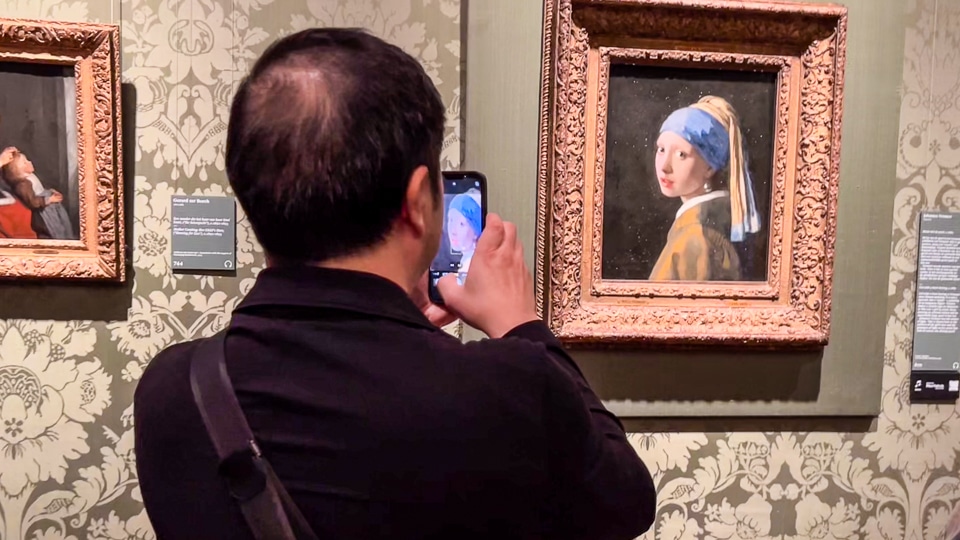
The train to The Hague cost €28.20 round trip, and took about 55 minutes, and another 15 minute walk to the small but highly significant Mauritshuis Museum. The Mauritshuis houses the “Royal Cabinet” collection of paintings and features Rembrandt, Franz Hals, Jan Steen, and Hans Holbein the Younger. But the highlights are Vermeer’s famous Girl With the Pearl Earring and The Goldfinch by Carel Fabritius, which inspired one of my favorite books, Donna Tartt’s The Goldfinch.
The Mauritshuis is open Monday from 1 p.m. to 6 p.m. and Tuesday – Sunday from 10 a.m. – 6 p.m. You can book your entry in advance on the website. Tickets can be combined with an entry to the associated Prince William V Gallery. Entry to both is €24 for adults. Entrance to just the Mauritshuis is €21. Note, the Prince William is closed Mondays and has shorter opening hours the rest of the days. I had no problem entering the museum after I arrived, but again, it’s a good idea to book online in advance, just in case.
Leiden
Another day, I took the train to Leiden (about 40 minutes and €22.20 round trip,) to to explore at a leisurely pace and to meet some Dutch friends for dinner. Leiden is an historic city, and features the Pieterkirk, which was the church of the Pilgrims before they moved to America. But the real highlight of the visit was the SieboldHuis Japan Museum, which at the time was featuring two wonderful exhibits: Hokusai’s famous Great Wave, complementing their already extraordinary collection of Japanese woodblock prints, and a Kimono exhibit featuring 20th Century designs. Also, the museum encompasses a private shop where you can buy actual Japanese prints.
The Museum, despite its excellence, was not crowded when I was there. You should be able to walk right in and get a ticket. But you can book in advance on the website. It never hurts to be prepared. Adults are €12. The Museum is open Tuesday to Sunday 10 a.m. – 5 p.m.
In case you go to Leiden, I highly recommend dinner at Waag. Make a meal out of the delectable small plates, which are mostly a modern take on traditional Dutch cuisine.

Amsterdam food and drink
Amsterdam features cuisine from everywhere in the world. Indonesian food (a happy legacy from Holland’s colonial past) is perhaps the best overall, but the native bitterballen, herring, apple pie, stroopwaffels, mashed potatoes with lots of onions, and the Edam and Gouda cheeses are musts to try.
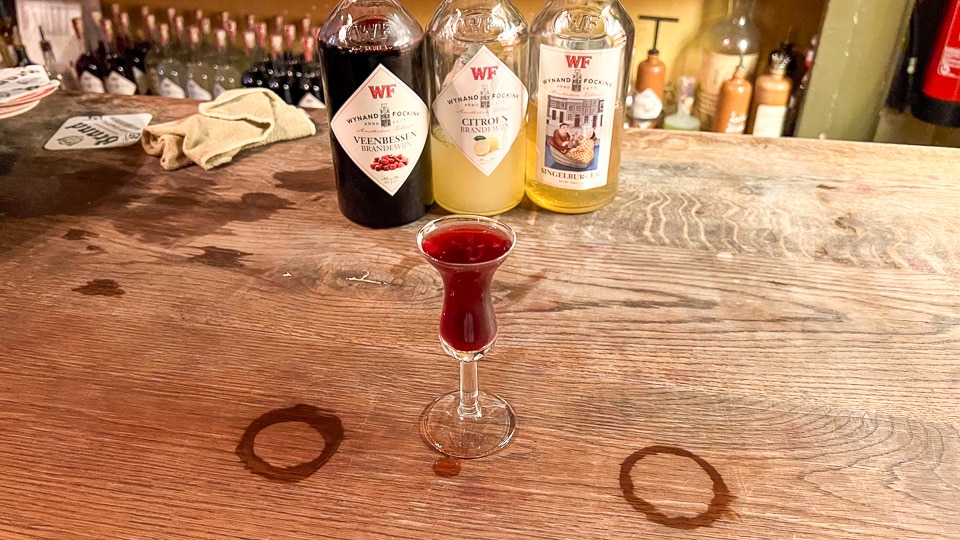
But before you get down to eating, Amsterdam is home to one of the most unique bars in the world. In fact, it’s my favorite bar in the world.
Wynand Fockink
Sometimes you just need a good, no-frills bar, and that is the iconic Wynand Fockink, near Dam Square. The bar, which is just about big enough for eight people to stand in, features about 80 jenevers and other spirits, and, more important, a crew of stellar bartenders who really know how to make a drink. In general, it goes something like this. The bartender doesn’t really ask you what you want; they ask you how you’re feeling. Are you happy, pensive, tired, exhilarated? And depending on your answer, that is what you’ll get expertly poured into their distinctive glass until the surface tension of the liquid actually suspends the concoction over the brim. Then, you’re expected not to pick up the glass, but rather “bow to the bar” and take your first sip from the glass on the bar. Only then, can you pick up the glass and savor the rest.
I visited Wynand Fockink twice in my week in Amsterdam, and tried eight different drinks. The alcohol content is way lower than you’d think, so four drinks in a night is not too much. The ones I got the recipes for were the “Little Bitch” for when I wanted something to wake me up a bit. That was a combo of lemon and ginger infused jenevers, with a smidge of cranberry to make it ever more tart. The other memorable one came after I’d just had dinner, and so I asked for something along the lines of a dessert. That request yielded a drink that started with tobacco bitters, angostura bitters, and then a rum-style jenever, and then separate jenevers infused with coffee and chocolate. Dessert indeed.
The atmosphere of Wynand Fockink is unique. You’ll end up in conversations with the bartenders and the other customers that will make you want to stay as long as you like. But, unusual for a bar, Wynand Fockink closes promptly at 9 p.m. When I asked why, I was told, “We don’t want a bunch of drunks in here.” I love that place. Honestly, it’s probably my favorite bar in the world.
An Amsterdam food tour
A good idea for sampling the traditional cuisine and getting an idea of what Amsterdam food is about is to take a food tour. We took a tour with Devour, which unfortunately doesn’t seem to be offering tours in Amsterdam currently. The Devour took us for a walk around Amsterdam for three hours and a sample of many traditional Dutch foods. We visited the Hans Egdort Bakkerij for Stroopwaffel, Café de Zwart, for Appeltaart, Jonk Volendammer, for salted herring and fried cod – the ultimate Amsterdam street food, and finally, the Wegewijs Cheese Shop for a plate of young, medium, aged, and truffle-infused Dutch cheeses.
If you’re thinking of a tour, check out Secret Tours, which is very well reviewed. I haven’t personally tried them, but I’d consider it on my next visit.
Here are some of the restaurants I enjoyed in Amsterdam.
Blushing
Blushing, Paulus Potterstraat 30A, simple breakfast, delicious scrambled eggs, with salad and a coffee latte. Also a selection of smoothies. Very near the Hotel Aalders, where I stayed. Open for breakfast and lunch only.
The Seafood Bar
At the Seafood Bar, I had a heaping (much more than I could eat) plateau of smoked fish, bread with a delicious herb butter, and a glass of tart Albariño – perfect with seafood. It came to €33. It was also an easy walk from the Aalders Hotel.
The Pantry
My first foray into the famous hearty Dutch cuisine was at The Pantry. Two beers, hutspot (mashed potatoes teeming with onions) with sausage, and an Appletaart for dessert came to €33.
Cafe Luxembourg
Another famous spot for traditional cuisine is Cafe Luxembourg, where I had shrimp croquettes, a salad, two beers and a brandy, and a delightful conversation with the Dutch couple at the next table. Total: €34.50.
Tashi Deleg
For the signature Indonesian meal, I chose Tashi Deleg, based on a friend’s recommendation. It’s actually billed as an Indonesian/Tibetan restaurant There, a friend and I shared the signature Indonesian Rijsttafel (literally rice table,) which included eight small dishes, eggroll, rice, etc. That came to about €80 for the two of us, with drinks and dessert.
The Foodhallen
The Foodhallen, or Food Hall, as the name suggests, is a large open space filled with about 20 different opportunities to taste, well, about 20 different things. I settled for two dishes, the highlight though was a felafel sandwich.
Lavinia Good Food
After all the rich food, I was very happy to run across the aptly named Lavinia Good Food. A lunch of a caprese toast with arugula was just what my overtaxed digestive system needed. With tea, about €20.
TheSandwichShop
Along those healthy lines, I’m also glad I ran across TheSandwichShop (one word,) on the same street as the Hotel Luxer. Yogurt and fruit, or one of their smoothies make a great breakfast.
Shopping and wandering
When walking around Amsterdam, the street level attractions are constant. I browsed everything from imaginative t-shirt shops, to candy stores, to Delft porcelain. My favorite street for shopping though was Nieuwe Spiegelstraat, which proceeds directly from the front of the Rijksmuseum and showcases dozens of top notch art galleries, antique shops, shops specializing in old maps, and more. Well worth a couple of hours poking around. My friend bought a Picasso lithograph.
The Nieuwe Spiegelstraat is worth a few hours. As I said, there are several galleries featuring original art, both from contemporary Dutch artists as well as prints from more well-known giants such as Picasso, Miro, and Dali. There are several antique shops, some of which specialize in one of my favorite decorative arts: old maps. It’s fascinating, especially in a city that was the home to the great early Dutch seafarers to see the evolution of world maps over the centuries.
Finally, if you like Dutch porcelain, and that means mostly the delicate blues of Delft china, this is the place to find just the right decorative piece for your home.
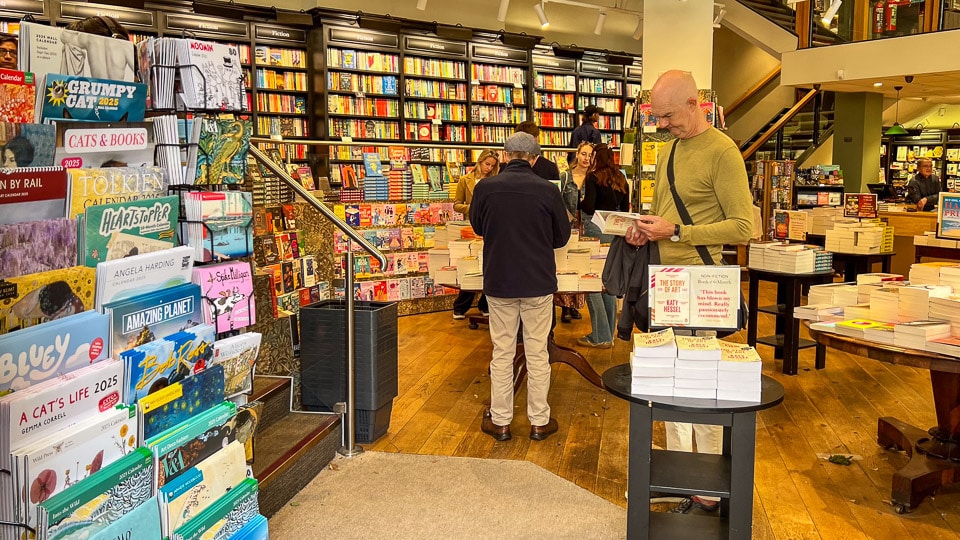
Another pleasant surprise was stumbling upon Waterstones English bookstore, that can really fill the gap when you’ve just finished the book you brought with you. A great selection of both classical and popular fiction and non fiction.
Frequently Asked Questions About Amsterdam
How many days do you need in Amsterdam?
A week gives you time to explore the major museums, wander the neighborhoods, take a day trip or two, and still enjoy the food and nightlife without feeling rushed. Three to four days is the minimum to hit the highlights.
Do you need to book Amsterdam museums in advance?
The Anne Frank House absolutely requires advance booking — tickets sell out 5–6 weeks ahead. The Rijksmuseum and Van Gogh Museum are also popular and benefit from timed-entry reservations, especially in summer. The Mauritshuis in The Hague is easier to walk into, but booking online is still wise.
Is Amsterdam a good destination for travelers over 50?
Very much so. It’s extremely walkable, the museums are world-class, the restaurant scene is diverse and relaxed, and the city is compact enough that you never feel overwhelmed. Trams and canal boats mean you’re never far from a rest if the cobblestones take their toll.
What is the best time of year to visit Amsterdam?
April through June offers mild weather and tulip season. September is excellent — fewer crowds than summer, still warm, and all museums fully open. July and August are busy and more expensive. Winter is atmospheric but cold.
What is a “coffee shop” in Amsterdam?
In Amsterdam, a “coffee shop” is a licensed establishment where adults can legally purchase and consume cannabis on the premises. They are distinct from cafés, which serve actual coffee. If you walk into one expecting a latte, you may be surprised by the menu.
How do you get from Amsterdam Airport (Schiphol) to the city center?
The cheapest option is the 397 express bus, which costs around €6.50 and drops you near many central hotels — you can pay by tapping a credit card. A taxi to the center typically runs €65–80. The train from Schiphol to Amsterdam Centraal is also fast (15–20 minutes) and costs around €5.
Hotels I stayed in
I split my stay in Amsterdam between two hotels, and both had their charms.
After I arrived at the Amsterdam airport, I took the advice that the Aalders Hotel kindly sent me to take the 397 bus into the city from right in front of the airport, which let me off about a block from the hotel. The bus cost €6.50, which you can pay by touching your credit card as you enter and exit the bus. As I was checking in, another American couple arrived from the airport via taxi, which they said cost them €75. I’m so glad I read the hotel’s email.
The Aalders is what I’d call a boutique hotel, with a quaint curving stairway leading up to my first floor room. An elevator was available, too, which I used when I was carrying my luggage. The room was quite small and I had to do a bit of squeezing to get around the bed, but the room was adequate with a nice bathroom, a desk, and a luggage rack and wardrobe for my gear. They also had a very nice European style breakfast of eggs and bacon, cured meats and cheeses, yogurt and fruit, and nice pastries for a charge of €15. Worth it, I’d say.
The Aalders, by the way, is located about two blocks from the Rijksmuseum on a quiet street mostly featuring similar hotels. There are a few restaurants recommended by the hotel within easy walking distance.
This would be my recommendation for a quiet hotel on a quiet street near the central museums and the upscale shopping streets.
After a few days, I moved closer to the “action” to the Hotel Luxer, nearer the central train station, and more or less on the edge of the Red Light District. The Luxer’s room was much the same as the Aalders, on the small side, but comfortable and well insulated from the somewhat noisier street. The Luxer’s breakfast was minimal, a basket of absolutely some of the best croissants I’ve ever had outside Paris, and a coffee machine. The nice feature was that the breakfast was free.
Like I said above, the Luxer Hotel is closer to the nightlife of the Red Light District. It’s also an easy walk to the Centraal Station when it’s time to leave Amsterdam for your next destination.

Hi Tom, really enjoyed this guide! The mix of Amsterdam’s museums, neighborhoods, and nearby day trips makes it very practical. Thanks for the great tips!
You’re welcome. It’s a very fun place to visit. We keep going back.